
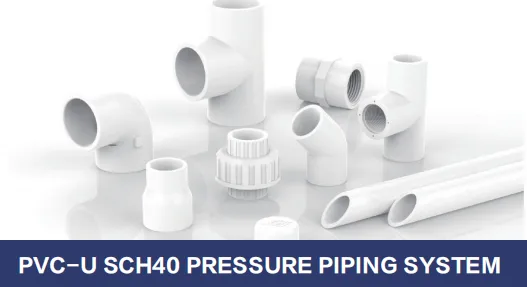
In the world of construction and infrastructure, few elements are as critical yet overlooked as the piping systems that form the circulatory system of any building. Whether it's delivering clean water to a residential complex, transporting chemicals in an industrial plant, or irrigating a commercial landscape, the reliability of these systems directly impacts safety, efficiency, and long-term performance. Among the myriad options available, the PVC-U SCH40 pressure piping system has emerged as a cornerstone choice for engineers, contractors, and project managers—and for good reason. As a leading PVC-U SCH40 pressure piping system supplier , we've witnessed how this robust solution transforms projects by combining durability, cost-effectiveness, and adaptability. In this article, we'll dive deep into the key components that make up this system, their essential functions, and why they're the backbone of modern piping solutions across industries.
Before we explore the components, let's take a moment to understand what makes PVC-U SCH40 unique. PVC-U, or Unplasticized Polyvinyl Chloride, is a rigid, chemically resistant thermoplastic that's been engineered to withstand high pressure—hence the "SCH40" designation, which refers to its pressure class (a standard set by the American Society for Testing and Materials, ASTM). Unlike flexible PVC, which contains plasticizers, PVC-U is stiff and strong, making it ideal for applications where pressure resistance and structural integrity are non-negotiable.
What truly sets PVC-U SCH40 apart is its balance of performance and practicality. It's lighter than metal pipes, easier to install, and resistant to corrosion, rust, and chemical degradation—issues that plague traditional materials like steel or copper. For PVC-U SCH40 pressure piping system solutions , this translates to lower installation costs, reduced maintenance needs, and a longer service life, even in harsh environments. Now, let's break down the system into its core components and explore how each piece contributes to its overall functionality.
A PVC-U SCH40 pressure piping system is more than just a collection of pipes—it's a carefully engineered network of components designed to work in harmony. Each part has a specific role, from directing flow to regulating pressure, and together, they ensure the system operates safely and efficiently. Below, we'll explore the most critical components and their functions.
| Component | Description | Primary Function |
|---|---|---|
| PVC-U SCH40 Pipes | Rigid, cylindrical tubes made from unplasticized PVC, available in various diameters (½" to 24"+). | Serve as the main conduit for fluid/gas flow, designed to withstand SCH40-rated pressure (up to 450 psi at 73°F for 12" pipes). |
| Fittings | Elbows, tees, couplings, reducers, caps, and crosses, all made from PVC-U to match pipe material. | Connect pipes, change flow direction, split flow, adjust pipe size, or seal ends. |
| Valves | Ball valves, gate valves, check valves, and globe valves, constructed with PVC-U bodies and compatible internals. | Control flow rate, shut off flow, prevent backflow, or regulate pressure within the system. |
| Flanges & Gaskets | Flat, circular discs with bolt holes (flanges) and rubber/neoprene seals (gaskets) for high-pressure connections. | Connect pipes to equipment (pumps, tanks) or other pipe sections, ensuring leak-proof seals under pressure. |
| Hangers & Supports | Clamps, brackets, and straps made from metal (galvanized steel) or plastic, designed for PVC-U pipes. | Secure pipes in place, prevent sagging/vibration, and maintain proper alignment to avoid stress on joints. |
At the heart of the system are the PVC-U SCH40 pipes themselves. These aren't just any tubes—they're precision-engineered to handle the rigors of pressurized flow. The "SCH40" rating refers to the pipe's wall thickness, which increases with diameter to maintain pressure capacity. For example, a 2" SCH40 pipe has a wall thickness of 0.154", while a 10" pipe thickens to 0.365" to withstand the same pressure class. This design ensures that whether you're moving water, wastewater, or non-corrosive chemicals, the pipe won't buckle or burst under operational stress.
What makes these pipes so reliable? Their material: PVC-U is inherently resistant to corrosion, rust, and degradation from most acids, alkalis, and salts—unlike metal pipes, which can rust or corrode over time. This resistance makes them ideal for both underground and above-ground installations, even in harsh environments like coastal areas (saltwater exposure) or industrial zones (chemical fumes). As a PVC-U SCH40 pressure piping system supplier , we often highlight this longevity to clients: a well-installed PVC-U SCH40 system can last 50+ years with minimal maintenance.
A pipe is only as useful as its ability to connect to other components, and that's where fittings come in. Think of them as the "joints" of the piping system—without them, you'd have a collection of disconnected tubes instead of a functional network. As a trusted pipes fittings supplier , we emphasize that fittings must match the pipe's material (PVC-U) and pressure rating (SCH40) to ensure compatibility and safety. Let's break down the most common types:
Each fitting is designed with precision threads or socket ends to ensure a tight, leak-proof bond when joined with solvent cement—a specialized adhesive that fuses PVC-U surfaces at the molecular level. This fusion creates a joint that's often stronger than the pipe itself, eliminating the risk of leaks that plague threaded metal connections.
While pipes and fittings form the "roads" of the system, valves are the "traffic controllers." They regulate flow, shut it off during maintenance, or prevent dangerous backflow. In PVC-U SCH40 systems, valves are typically made from the same material as pipes and fittings to ensure chemical compatibility and pressure resistance. Common types include:
Key Valve Types & Their Roles:
Valves are often the most interactive component of the system, so durability is key. Our PVC-U SCH40 pressure piping system solutions include valves with reinforced handles, corrosion-resistant internals, and pressure ratings that exceed the system's operating limits to ensure safety.
Even the strongest pipes and fittings can fail if not properly supported. Hangers and supports prevent sagging, reduce vibration, and maintain the correct slope for drainage (in gravity-fed systems). They come in various designs: pipe clamps for overhead installations, floor stands for vertical runs, and wall brackets for horizontal lines. The spacing between supports depends on pipe diameter—for example, a 2" SCH40 pipe requires support every 5 feet, while a 10" pipe needs support every 12 feet to avoid stress on joints.
As a supplier, we often remind clients that skimping on supports is a false economy. A sagging pipe can strain fittings, leading to leaks, or create low points where debris accumulates, reducing flow efficiency. Quality supports, paired with proper installation, ensure the system stays aligned and functional for decades.
The versatility of the PVC-U SCH40 system is one of its greatest strengths. Its resistance to pressure, corrosion, and chemicals makes it suitable for a wide range of applications:
Delivers potable water from municipal lines to homes, offices, and retail spaces. Its smooth interior reduces friction, ensuring consistent water pressure.
Safely moves non-corrosive chemicals (acids, bases, solvents) in manufacturing plants, thanks to PVC-U's chemical resistance.
Distributes water to farms, golf courses, and landscaping, withstanding outdoor elements like UV radiation and temperature fluctuations.
Carries graywater and blackwater in residential and commercial buildings, resisting clogs and corrosion from organic matter.
When comparing piping systems, PVC-U SCH40 stands out for its unique blend of benefits:
For example, in a 100-unit residential complex, choosing PVC-U SCH40 over copper pipes can cut material costs by 40% and installation time by 30%—savings that directly impact project timelines and budgets. As a PVC-U SCH40 pressure piping system supplier , we often share these case studies to help clients see the long-term value.
Even the best components can fail with poor installation. Here are key tips to ensure success:
PVC-U SCH40 systems are low-maintenance, but regular checks ensure longevity:
The quality of your PVC-U SCH40 system depends heavily on the components you use—and that starts with choosing a reputable supplier. A reliable PVC-U SCH40 pressure piping system supplier doesn't just sell products; they provide solutions tailored to your project's needs. Look for suppliers who:
What to Look for in a Supplier:
The PVC-U SCH40 pressure piping system is more than a collection of parts—it's a testament to engineering ingenuity, designed to deliver reliable, efficient flow in the most demanding environments. From the robust pipes that form its backbone to the precision fittings that connect them, every component plays a vital role in ensuring the system's success. As a PVC-U SCH40 pressure piping system supplier , we take pride in offering solutions that empower projects to thrive—whether it's a small home renovation or a large-scale industrial complex.
So, the next time you turn on a tap or walk through a commercial building, take a moment to appreciate the invisible network working behind the scenes. And when it's time to build or upgrade your own piping system, remember: the right components, from a trusted supplier, are the first step toward a project that stands the test of time.
Recommend Products












