
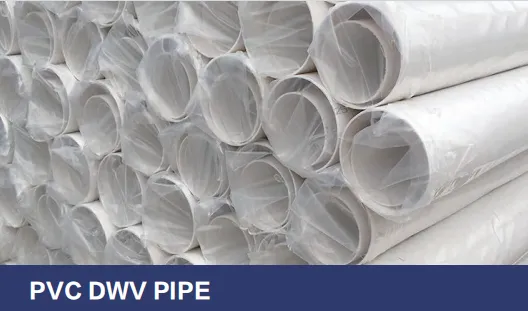
Let's be honest: when you're knee-deep in a home renovation or building project, the last thing on your mind is probably the fine print of a warranty. You're focused on deadlines, budgets, and making sure the walls go up straight. But here's the thing: the warranty that comes with your PVC DWV pipes might just be the most important document you'll sign after your mortgage. These pipes—responsible for carrying away wastewater, managing waste, and venting harmful gases—are the unsung heroes of your home's plumbing system. And if they fail? You could be looking at water damage, mold growth, and a repair bill that makes your eyes water. That's why understanding what to expect from a PVC DWV pipe supplier 's warranty isn't just smart—it's essential. Let's break down everything you need to know, from coverage periods to hidden exclusions, and why choosing a supplier with solid PVC DWV pipe solutions (and a warranty to back them up) is non-negotiable.
Before we dive into warranties, let's make sure we're all clear on what we're actually talking about. DWV stands for Drain, Waste, and Vent—and no, it's not a new acronym for a plumbing-themed superhero team (though maybe it should be). These pipes work together to keep your home's plumbing system healthy: Drain pipes carry gray water from sinks and showers, Waste pipes handle the heavy lifting (toilet flushes, we're looking at you), and Vent pipes release sewer gases outside while balancing pressure to prevent gurgling drains or siphoning. Without them, your home would smell like a sewer, and your sinks would back up faster than you can say "plumber's emergency."
PVC (polyvinyl chloride) is the go-to material for DWV systems these days, and for good reason. It's lightweight, so it's easy to install without needing a team of weightlifters. It's corrosion-resistant, meaning it won't rust or degrade when exposed to the chemicals in wastewater. And it's affordable, which is music to any homeowner's ears. But here's the catch: not all PVC DWV pipes are created equal. A cheap pipe from a fly-by-night supplier might look the part, but skimp on material thickness or cut corners in manufacturing. That's where the warranty comes in—it's the supplier's way of saying, "We stand behind this product." But what exactly does that "stand behind" promise entail?
Warranties can feel like they're written in a foreign language—full of legalese and fine print that makes your head spin. But at their core, most PVC DWV pipe warranties boil down to a few key elements. Let's unpack them one by one, so you know exactly what you're getting (and what you're not).
The first question to ask is, "How long does this warranty last?" You'll see a range here, and it's not just a random number. A shorter warranty (say, 5-10 years) might signal that the supplier isn't confident in their product's longevity. A longer warranty—15, 25, or even 50 years—tells you they expect those pipes to hold up for decades. Some suppliers even throw around the term "lifetime warranty," but we'll get to why that's not always as great as it sounds later.
Here's a real-world example: A reputable PVC DWV pipe supplier might offer a 25-year warranty on their pipes, while a budget brand might only cover you for 10. That extra 15 years isn't just a marketing gimmick—it's a reflection of the materials used. Thicker walls, higher-quality PVC resin, and stricter manufacturing standards all contribute to a longer lifespan, and the warranty period should reflect that.
Warranties are all about what is covered, and this is where things get tricky. Most warranties cover manufacturing defects —think cracks that form because the pipe was poorly extruded, weak spots from inconsistent material density, or fittings that leak because the threads were cut incorrectly. These are issues that stem from how the product was made, not how you used it.
But here's where it gets murky: What about damage caused by something else? Let's say you accidentally drill through a pipe while hanging a shelf (we've all been there). That's not a manufacturing defect—that's user error. Similarly, if a plumber installs the pipes at the wrong angle, leading to clogs and pressure buildup, that's an installation issue. Most warranties won't cover these scenarios, and that's fair. The supplier can't control how you (or your contractor) handle the product once it leaves their warehouse.
Some PVC DWV pipe solutions providers, however, sweeten the deal by offering limited coverage for installation errors— if the installation was done by their certified professionals. It's a nice perk, but it'll cost you extra. If you're hiring your own plumber, make sure they're licensed and experienced with PVC DWV systems—otherwise, you might void the warranty without even knowing it.
Exclusions are the warranty's way of saying, "We cover this, but not that ." And if you're not careful, these exclusions can turn your "peace of mind" warranty into a useless piece of paper. Let's walk through the most common ones you'll see:
The key here is to read the exclusions carefully. If a warranty has more exclusions than a fancy restaurant has "no substitutions" clauses, run. A reputable supplier will be upfront about what they don't cover, not hide it in a paragraph of legal jargon.
So, let's say the worst happens: You notice a wet spot on the ceiling, trace it back to a cracked PVC DWV pipe, and it's clearly a manufacturing defect. Now what? The warranty should spell out exactly what the supplier will do to make it right. There are three common remedies:
Here's a pro tip: Look for warranties that include "labor costs" in the remedy. If you have to hire a plumber to replace the failed pipe, some suppliers will cover that expense. Without it, you're on the hook for the labor, which can cost more than the pipe itself. A truly customer-focused PVC DWV pipe supplier will include this—it shows they care about more than just selling you a product; they care about your experience after the sale.
Warranties aren't just about coverage—they're about how you use them. Two factors can make or break your experience: whether the warranty is transferable, and how easy it is to file a claim.
Let's say you install PVC DWV pipes with a 25-year warranty, then sell your house 10 years later. Does the new homeowner get the remaining 15 years of coverage? Some warranties are non-transferable , meaning they only apply to the original purchaser. Others are transferable, but only if you jump through hoops (like notifying the supplier in writing within 30 days of the sale). Why does this matter? Because a transferable warranty can boost your home's resale value. Buyers love knowing that critical systems like plumbing are still under warranty, and it gives them peace of mind. If a supplier's warranty isn't transferable, it's not a dealbreaker, but it's something to consider—especially if you don't plan on staying in the house forever.
Ever tried to file an insurance claim and felt like you needed a law degree to navigate the process? The same can happen with warranty claims—if you let it. A good supplier will make filing a claim as easy as possible: a dedicated phone line, online claim forms, and clear instructions on what documentation you need (photos of the damage, proof of purchase, etc.). A bad supplier? They'll make you jump through so many hoops—sending samples to a lab, getting multiple contractor estimates, filling out 10-page forms—that you'll give up out of frustration.
Here's how to test this: Before you buy, call the supplier's customer service line and ask, "What's the process for filing a warranty claim?" If the representative sounds confused, or gives you a vague answer like, "We'll handle it if it happens," that's a red flag. A reputable PVC DWV pipe supplier will have a step-by-step process they can walk you through in 5 minutes or less. If they don't, imagine how hard it'll be to get help when you're staring at a flooded basement.
To make this concrete, let's compare three hypothetical PVC DWV pipe suppliers and their warranties. This will show you how the details stack up, and why choosing the right one matters.
| Feature | Supplier A (Budget Brand) | Supplier B (Mid-Range) | Supplier C (Premium) |
|---|---|---|---|
| Coverage Period | 10 years | 20 years | 25 years (transferable) |
| Covered Issues | Manufacturing defects only | Manufacturing defects, material failure | Manufacturing defects, material failure, corrosion (under normal use) |
| Exclusions | Installation errors, chemical damage, temperature extremes, physical damage, normal wear | Installation errors, chemical damage, physical abuse | Chemical damage, intentional misuse |
| Remedy | Replacement of defective part only | Replacement + up to $200 labor reimbursement | Replacement + full labor reimbursement, secondary damage coverage (up to $5,000) |
| Claims Process | Mail-in form, 6-8 week processing | Online claim, 2-3 week processing | 24/7 hotline, on-site inspection within 48 hours |
| Additional Perks | None | Free technical support for installers | System-wide warranty (covers pipes + fittings), certified installer network |
Notice the difference? Supplier C isn't just offering a longer warranty—they're offering peace of mind . Transferable coverage, minimal exclusions, fast claims processing, and even secondary damage coverage? That's a supplier who stands behind their PVC DWV pipe solutions and understands that a warranty is more than a piece of paper. Supplier A, on the other hand, is basically saying, "We'll replace the pipe if it breaks, but good luck proving it's our fault."
At this point, you might be thinking, "Okay, so I need to find a supplier with a good warranty." But here's the truth: The warranty is only as good as the supplier behind it. A fly-by-night company with a flashy 50-year warranty might go out of business in 5 years, leaving you with a worthless piece of paper. That's why choosing a reputable, established PVC DWV pipe supplier is just as important as the warranty itself.
Look for suppliers with a track record—10+ years in business, positive reviews from contractors and homeowners, and certifications from organizations like the International Association of Plumbing and Mechanical Officials (IAPMO) or ASTM International. These certifications mean the products meet strict industry standards, and the supplier has invested in quality control.
Another thing to consider: Do they offer more than just pipes? A supplier that provides PVC DWV pipe solutions —including fittings, adhesives, and even technical support—shows they understand the entire system. Pipes and fittings that are designed to work together reduce the risk of leaks and failures, and a supplier that offers system-wide warranties (covering both pipes and fittings) is a sign they're confident in the entire package.
And don't forget about pipes fittings supplier partnerships. Many PVC DWV pipe suppliers work closely with fittings manufacturers to ensure compatibility. If you buy pipes from one supplier and fittings from another, you might run into issues if they're not designed to work together—and if a failure occurs, each supplier might blame the other. Choosing a supplier that offers both pipes and fittings under one warranty eliminates this finger-pointing and ensures you're covered.
There's a lot of misinformation floating around about warranties, so let's set the record straight with a few quick myths:
At the end of the day, a PVC DWV pipe warranty is more than just a sales tool—it's a promise. It's a promise that the supplier believes in their product, that they'll be there if something goes wrong, and that they value your trust. When you're choosing a PVC DWV pipe supplier , don't just compare prices or pipe thickness—compare warranties. Ask questions. Read the fine print. And don't be afraid to walk away if a supplier can't (or won't) explain their warranty clearly.
Your home is probably the biggest investment you'll ever make, and the plumbing system is its circulatory system. Protecting that investment with a solid warranty from a supplier that offers reliable PVC DWV pipe solutions isn't just smart—it's essential. So the next time you're staring at a stack of pipe samples, remember: The one with the best warranty might cost a little more upfront, but it could save you thousands (and a lot of stress) down the line. And isn't that peace of mind worth every penny?
Recommend Products












