
If you've ever walked into a home or commercial building and marveled at its design, chances are you didn't spare a thought for what lies behind the walls and under the floors. Yet, the unsung heroes of any structure—its Drain-Waste-Vent (DWV) system—are hard at work, quietly carrying away wastewater and ensuring proper ventilation. As a building material supplier with years of experience, we've seen firsthand how choosing the right DWV piping can make or break a project. Today, we're diving into a common dilemma our clients face: PVC DWV pipe vs. cast iron. Let's unpack the pros, cons, and everything in between to help you make the best choice for your next build.
Before we compare materials, let's get clear on what DWV systems do. DWV stands for Drain, Waste, and Vent—three critical functions in one. The "drain" carries wastewater from sinks, showers, and toilets; the "waste" removes solid waste; and the "vent" equalizes pressure to prevent gurgling and ensure smooth flow. Without a reliable DWV system, you're looking at clogs, leaks, and even structural damage. So, when it comes to piping, the stakes are high.
At the heart of this debate are two materials with decades of use in construction: polyvinyl chloride (PVC) DWV pipe and cast iron pipe. Let's start with the basics of each.
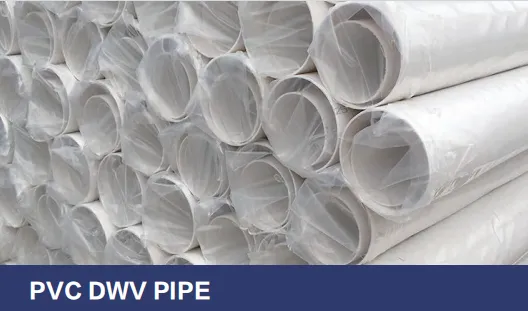
PVC DWV pipe is a type of plastic piping made from polyvinyl chloride, a durable thermoplastic polymer. It's manufactured by extruding molten PVC into hollow tubes, then cutting them to standard lengths. Known for its lightweight nature and versatility, PVC DWV has become a staple in modern construction. As a PVC DWV pipe supplier , we often highlight its adaptability—whether you're working on a small residential renovation or a large commercial complex, PVC DWV pipe solutions are designed to fit seamlessly into diverse projects.
Cast iron, on the other hand, is an alloy of iron and carbon, cast into shape by pouring molten metal into molds. For over a century, it's been the go-to for DWV systems, prized for its strength and sound-dampening properties. Traditional cast iron pipes are heavy, with a rough interior surface, though modern versions may include coatings to improve performance. In heritage buildings or projects where durability is non-negotiable, cast iron still holds its ground.
When clients ask us to recommend a material, we start by breaking down performance factors that matter most: durability, corrosion resistance, flow efficiency, and noise levels. Let's compare.
Cast iron is legendary for its brute strength. It can withstand heavy loads, impacts, and even minor earthquakes without cracking—hence its use in high-rise buildings and industrial settings. However, it's brittle: a sharp blow (like from a construction tool) can cause it to shatter. PVC DWV pipe, while not as rigid, is surprisingly durable. It flexes under pressure, making it resistant to cracking from impacts or ground movement. We've seen PVC pipes last 50+ years in well-maintained systems, which is comparable to cast iron's lifespan in ideal conditions.
Here's where PVC shines. Wastewater is full of chemicals—acids from food, cleaning agents, even mild alkalis—and cast iron is no match for prolonged exposure. Over time, cast iron pipes can rust from the inside out, leading to leaks and reduced flow. PVC, being a plastic, is completely immune to corrosion. Whether it's carrying kitchen grease or bathroom chemicals, PVC DWV pipe remains unaffected. This is a huge selling point for clients in areas with aggressive soil or high mineral content in water.
Ever noticed how a smooth slide is faster than a bumpy one? The same principle applies to pipe interiors. PVC DWV pipe has a slick, non-porous surface that lets wastewater flow freely, reducing the risk of clogs. Cast iron, by contrast, has a naturally rough interior (even with coatings), which can trap debris over time. We've had clients report fewer clogs after switching from cast iron to PVC, especially in commercial kitchens where grease buildup is common.
Cast iron's density makes it an excellent sound insulator. Water rushing through cast iron pipes is barely noticeable, which is why it's preferred in luxury homes or hotels where quiet is key. PVC, being lighter, transmits more noise. However, this is easily fixed: we often recommend insulating PVC pipes with foam sleeves, which brings noise levels close to cast iron at a fraction of the cost. For clients on a budget, this is a no-brainer.
As a building material supplier, we know installation costs can make or break a project budget. Let's talk about how PVC and cast iron stack up here.
Cast iron pipes are heavy—really heavy. A 10-foot section of 4-inch cast iron pipe can weigh over 70 pounds, requiring two or more workers to carry. This not only slows down installation but also increases labor costs. PVC DWV pipe, by comparison, is lightweight: the same 10-foot section weighs around 10 pounds. One worker can easily carry multiple lengths, cutting down on installation time and crew size. We recently worked with a contractor who switched to PVC for a multi-story apartment complex and saved 30% on installation labor alone.
Cutting cast iron requires specialized tools like snap cutters or angle grinders, which add to project costs. Fitting it also demands precision: misalignment can lead to leaks. PVC, however, is a DIY-friendly material. It can be cut with a simple handsaw or PVC cutter, and fittings slide on easily. Our team often provides on-site demos for contractors new to PVC, showing them how quick and straightforward the process is.
Cast iron pipes are joined using rubber gaskets (for modern systems) or molten lead and oakum (a traditional method that's labor-intensive and messy). Both require skill to ensure a watertight seal. PVC DWV pipe uses solvent cement: apply the cement to the pipe and fitting, twist, and hold for 30 seconds—it's that simple. The bond sets in minutes and cures fully in 24 hours, allowing crews to move on to the next task quickly.
Let's talk numbers. Clients always ask, "Which is cheaper?" The answer depends on the full lifecycle, not just the initial price tag.
Cast iron is more expensive upfront. A 10-foot section of 4-inch cast iron pipe can cost 2–3 times more than PVC DWV pipe. For a large project, this adds up fast.
PVC's lightweight and easy installation slash labor costs. We estimate that installation for PVC DWV systems is 30–50% cheaper than cast iron, thanks to fewer workers and faster setup.
Cast iron may require repairs over time (rust, leaks), and its rough interior makes clogs more likely—meaning higher maintenance costs. PVC is low-maintenance, with minimal risk of corrosion or clogs. Over 20 years, PVC often ends up being the more cost-effective choice.
Nobody wants to deal with pipe repairs, so maintenance is a big concern. Cast iron requires regular inspections, especially in older buildings, to check for rust or scale buildup. If you notice slow drains, it might be time to snake the pipes or even replace sections. PVC DWV pipe, by contrast, is a "set it and forget it" material. We tell clients: as long as you avoid flushing harsh chemicals (which damage any pipe) and keep drains clear of large debris, PVC will run trouble-free for decades.
Today's clients care about sustainability, and we're here to help them make eco-friendly decisions. Cast iron is 100% recyclable, and its long lifespan reduces the need for replacement. However, its weight means more fuel is used for transportation, and manufacturing cast iron requires high temperatures, consuming more energy. PVC DWV pipe is also recyclable, and its lightweight design cuts down on transportation emissions. Modern PVC production is more energy-efficient than ever, and many of our PVC DWV pipe solutions are made from recycled materials. For clients prioritizing carbon footprint, PVC often comes out ahead.
There's no one-size-fits-all answer, so we help clients match the material to their project:
| Feature | PVC DWV Pipe | Cast Iron Pipe |
|---|---|---|
| Material | Polyvinyl chloride (plastic) | Iron alloy (cast metal) |
| Durability | Flexible, resistant to impacts | Rigid, strong but brittle |
| Corrosion Resistance | Excellent (immune to chemicals) | Poor (susceptible to rust) |
| Flow Efficiency | High (smooth interior) | Moderate (rough interior) |
| Noise Level | Higher (can be insulated) | Lower (natural sound insulation) |
| Installation | Lightweight, easy to cut/fit | Heavy, requires specialized tools |
| Initial Cost | Lower | Higher |
| Maintenance | Low (no corrosion, few clogs) | Moderate (rust checks, potential clogs) |
Choosing between PVC DWV pipe and cast iron isn't just about materials—it's about your project's unique needs, budget, and long-term goals. As a building material supplier with years of experience, we're here to guide you every step of the way. Whether you need PVC DWV pipe solutions for a residential build or are exploring cast iron for a heritage restoration, we'll help you weigh the pros and cons to make an informed decision.
At the end of the day, both materials have their place, but PVC DWV pipe has earned its spot as the go-to for most modern projects, thanks to its affordability, durability, and ease of use. Ready to start your project? Reach out to our team—we're happy to share samples, answer questions, and help you design a DWV system that works for you.
Recommend Products












