
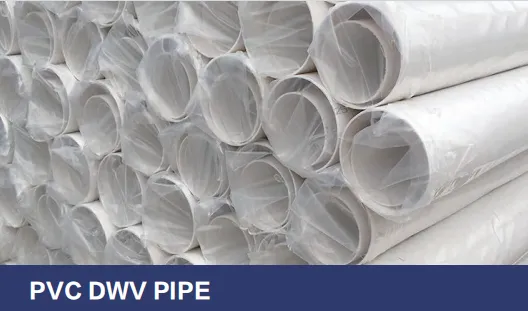
Walk into any home, office, or commercial building, and you'll likely take for granted the silent network working tirelessly behind the walls and under the floors. We're talking about the plumbing system—the unsung backbone of modern infrastructure. At the heart of this system, carrying away waste, managing ventilation, and preventing costly leaks, are PVC DWV pipes. Short for Drain, Waste, and Vent, these pipes are more than just pieces of plastic; they're the guardians of hygiene, structural integrity, and daily convenience. But what makes a reliable PVC DWV pipe? The answer lies not just in the material, but in the rigorous testing standards that suppliers adhere to. Let's dive into the world of PVC DWV pipe testing, why it matters, and how the best suppliers ensure every pipe meets the mark.
Before we get into testing, let's make sure we're all on the same page. PVC (Polyvinyl Chloride) DWV pipes are specifically designed for three key functions: draining wastewater, removing solid waste, and venting sewer gases to the outside. Unlike pressure pipes (which carry water under force, like those in your shower), DWV pipes operate under gravity. That might sound simple, but it comes with unique challenges—they need to handle varying temperatures, corrosive substances (think soap scum, food particles, and cleaning chemicals), and constant exposure to moisture without cracking, warping, or leaking.
Why PVC? For decades, PVC has been the go-to material for DWV systems, and for good reason. It's lightweight, easy to install, resistant to corrosion, and cost-effective compared to metal alternatives like cast iron. But here's the catch: not all PVC is created equal. A cheap, poorly made DWV pipe might save a few dollars upfront, but it could lead to clogs, leaks, or even structural damage down the line. That's where suppliers step in—not just as sellers, but as gatekeepers of quality.
When you're building a home, renovating a restaurant, or constructing a high-rise in a bustling city like Riyadh, the last thing you need is a plumbing disaster. That's why choosing the right pvc dwv pipe supplier is about more than comparing prices. A reputable supplier doesn't just deliver pipes—they deliver peace of mind. They understand that their products are part of a larger promise: that the building will function safely and efficiently for years to come.
Take, for example, a saudi arabia building materials supplier operating in a market where construction standards are strict and environmental conditions (like extreme heat) demand durability. Such a supplier knows that cutting corners on testing isn't just unethical—it's a risk to their reputation and their clients' projects. From residential complexes to commercial malls, every project relies on DWV pipes to keep spaces clean and dry. And when paired with quality pipes fittings solutions , these systems become even more robust—after all, a pipe is only as strong as its connections.
So, what exactly do suppliers test for? PVC DWV pipes are subject to a battery of tests, each designed to simulate real-world conditions and ensure the pipes can handle the stress of daily use. These tests are governed by international standards, local regulations, and industry best practices. Let's break down the most critical ones.
In North America and many parts of the world, ASTM D2665 is the benchmark standard for PVC DWV pipes. Developed by the American Society for Testing and Materials (ASTM), this standard outlines everything from material composition to dimensional tolerances and performance requirements. Suppliers who comply with ASTM D2665 don't just meet a checklist—they prove their pipes can withstand the demands of real-world plumbing.
What does ASTM D2665 test for? Let's start with dimension control . Pipes must have consistent outer and inner diameters, wall thickness, and length to ensure they fit with pipes fittings supplier products seamlessly. A pipe that's too narrow might cause clogs; one with uneven walls could weaken under pressure. Then there's the impact resistance test —a classic "drop test" where pipes are cooled to freezing temperatures (to simulate cold climates) and struck with a weighted pendulum. If the pipe cracks, it fails. This ensures the pipe can handle accidental bumps during installation or temperature fluctuations in the ground.
Chemical resistance is another big one. ASTM D2665 requires pipes to resist corrosion from common household and commercial chemicals, like acids in food waste or alkalis in cleaning products. Suppliers test this by submerging pipe samples in chemical solutions for extended periods and checking for signs of degradation. Finally, there's the heat distortion test , which exposes pipes to high temperatures (up to 60°C) to ensure they don't warp or lose structural integrity—critical for buildings in hot regions like Saudi Arabia.
While ASTM dominates in North America, ISO 1452-2 is the international standard for unplasticized PVC (PVC-U) pipes used in soil and waste discharge systems. Adopted by countries across Europe, Asia, and the Middle East, this standard aligns testing protocols to ensure consistency no matter where the pipe is manufactured or installed. For a pvc dwv pipe supplier operating globally, complying with ISO 1452-2 is non-negotiable—it means their products can be trusted in projects from Dubai to Paris.
ISO 1452-2 overlaps with ASTM D2665 in many areas but adds unique requirements, such as hydraulic performance testing . This test measures how efficiently water flows through the pipe, ensuring minimal friction and reduced risk of clogs. It also includes stricter checks on joint tightness , since leaks at the joints are a common failure point in DWV systems. Suppliers must prove that their pipes, when paired with compatible fittings, create a watertight seal that can last for decades.
Beyond international standards, suppliers must also comply with local regulations. For example, in Saudi Arabia, the Saudi Standards, Metrology, and Quality Organization (SASO) sets strict guidelines for building materials, including PVC DWV pipes. A saudi arabia building materials supplier knows that SASO standards often go above and beyond global benchmarks, especially when it comes to durability in harsh desert conditions. This might include additional testing for UV resistance (to prevent degradation from intense sunlight) or higher impact resistance to handle the region's occasional sandstorms.
Similarly, in Europe, the CE marking (Conformité Européenne) is mandatory for PVC DWV pipes, indicating compliance with EU health, safety, and environmental requirements. For suppliers exporting to multiple markets, juggling these regional standards can be complex—but it's a necessary part of ensuring their products fit seamlessly into local construction ecosystems.
| Standard | Primary Market | Key Test Parameters | Why It Matters |
|---|---|---|---|
| ASTM D2665 | North America, Global | Impact resistance, chemical resistance, heat distortion, dimensions | Ensures pipes handle cold climates, household chemicals, and installation stress. |
| ISO 1452-2 | International (EU, Asia, Middle East) | Hydraulic performance, joint tightness, material composition | Promotes global consistency and reliable flow/waterproofing. |
| SASO (Saudi Arabia) | Saudi Arabia, GCC Countries | UV resistance, sand impact, high-temperature stability | Adapts to extreme desert conditions and local safety codes. |
| CE Marking (EU) | European union | Health, safety, environmental impact | Guarantees compliance with strict EU consumer and environmental laws. |
Testing standards are just words on paper unless suppliers have robust processes to enforce them. The best pvc dwv pipe supplier doesn't wait for third-party inspectors to flag issues—they build quality into every step of production. Here's how they do it:
It all begins with the resin. PVC pipes are made from PVC resin mixed with additives like stabilizers (to prevent degradation) and impact modifiers (to boost strength). Suppliers test every batch of resin for purity, melt flow rate (how easily it can be molded), and thermal stability. A single batch of low-quality resin could compromise an entire production run, so skipping this step is never an option. Some suppliers even source resin from certified manufacturers to ensure consistency—because when it comes to pipe quality, the foundation matters.
Top suppliers invest in state-of-the-art in-house testing labs, where they can monitor production quality in real time. During extrusion (the process of melting resin and shaping it into pipes), technicians pull random samples every hour to check dimensions, wall thickness, and surface smoothness. A laser gauge measures outer diameter to within thousandths of an inch, ensuring it meets ASTM or ISO specs. If a pipe is too thin in one section, the production line is adjusted immediately—no defective pipes make it past this stage.
Impact testing is also done in-house. Samples are chilled to -10°C (mimicking cold weather) and struck with a pendulum. If the pipe doesn't crack, it passes. Suppliers keep detailed records of every test, creating a traceable history for each batch—so if a problem arises later, they can pinpoint exactly when and why it happened.
Even with in-house testing, reputable suppliers seek third-party certifications to validate their claims. Organizations like NSF International (which certifies products for public health safety) or the International Pipe and Fittings Association (IPFA) conduct rigorous audits of production facilities and test samples to ensure compliance with global standards. For a pipes fittings supplier , an NSF certification isn't just a badge—it's proof that their products are safe for use in drinking water systems (though DWV pipes don't carry potable water, the same level of scrutiny applies to ensure no harmful chemicals leach into the environment).
Before pipes are shipped to customers, suppliers conduct one last round of sampling. A small percentage of pipes from each batch are subjected to long-term hydrostatic pressure testing, where they're filled with water and pressurized (even though DWV pipes aren't designed for high pressure, this test ensures there are no hidden weak spots). Other samples are buried in soil simulating real installation conditions for months to check for corrosion or deformation. Only when every test is passed do the pipes get the green light for delivery.
Ensuring compliance with testing standards isn't always smooth sailing. Suppliers face a handful of challenges, from market pressures to evolving regulations. Here's how the best ones navigate these hurdles:
In a market where low-cost alternatives flood the market, some suppliers might be tempted to skimp on testing to reduce prices. But reputable suppliers know that this is a false economy. Instead, they focus on efficiency—investing in automated testing equipment to reduce labor costs, negotiating bulk deals with resin suppliers, and optimizing production processes to minimize waste. By streamlining operations, they can offer competitive prices without sacrificing quality. As one senior quality control manager at a leading saudi arabia building materials supplier put it: "A pipe that fails in five years costs the customer far more than the savings from buying cheap. We'd rather lose a sale than lose a client's trust."
Building codes and testing standards are constantly updating, driven by new research, environmental concerns, or safety incidents. For example, in recent years, there's been a push to reduce lead content in pipe fittings—a change that required suppliers to reformulate materials and retest products. To stay ahead, suppliers join industry associations, attend trade shows, and maintain close relationships with regulatory bodies. This proactive approach ensures they're never caught off guard by new requirements.
Counterfeit PVC DWV pipes are a plague in the industry. These knockoffs mimic the look of reputable brands but skip testing, using recycled or low-quality resin that fails prematurely. To combat this, suppliers use anti-counterfeiting measures like holographic labels, QR codes that link to batch test reports, or unique serial numbers that customers can verify online. Some even offer training to contractors and builders on how to spot fakes—because an informed customer is the best defense against counterfeit products.
You might be thinking, "I'm not a builder or a plumber—why should I care about PVC DWV pipe testing standards?" The truth is, these pipes impact everyone. A leaky DWV pipe can lead to mold growth in your home, costly repairs, or even structural damage. In commercial buildings like hospitals or schools (where class a fireproof cpl inorganic board for hospital and school supplier products are also critical for safety), a plumbing failure could disrupt operations and put lives at risk. By choosing a supplier that prioritizes testing, you're not just investing in pipes—you're investing in the long-term health and safety of your space.
For contractors and developers, working with a reliable pvc dwv pipe solutions provider means fewer callbacks, happier clients, and a reputation for excellence. In a competitive industry, quality is the differentiator that turns one-time projects into lifelong partnerships.
PVC DWV pipes might not be the most glamorous part of construction, but they're essential. And behind every reliable pipe is a supplier who takes testing standards seriously—from raw material checks to third-party certifications, from in-house labs to post-production sampling. These suppliers don't just sell products; they sell confidence. They understand that when you choose their pipes, you're trusting them with the integrity of your building, your home, or your business.
So the next time you're planning a project, whether it's a small renovation or a large-scale commercial build, take a moment to ask your supplier about their testing processes. Look for certifications like ASTM, ISO, or SASO. Ask to see batch test reports. A supplier who's proud of their quality will be happy to share. After all, in the world of plumbing, peace of mind starts with a pipe that's built to last—and backed by rigorous testing.
Recommend Products












