
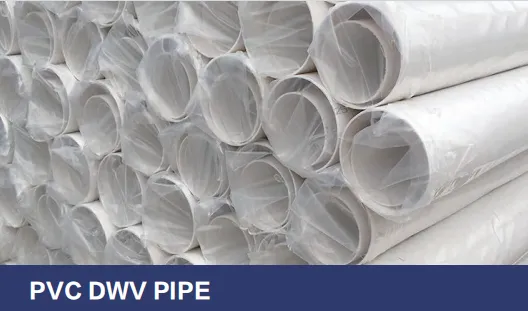
In the world of construction, some components work tirelessly behind the scenes, ensuring our buildings function smoothly without fanfare. PVC DWV pipes are exactly that—quiet heroes of plumbing systems, responsible for carrying away wastewater, managing drainage, and maintaining proper ventilation in homes, offices, hospitals, and commercial spaces. Short for Drain, Waste, and Vent, these pipes are the unsung backbone of any structure, but their reliability hinges on two critical factors: strict adherence to industry standards and partnering with a trustworthy PVC DWV pipe supplier. In this guide, we'll explore why these standards matter, how they shape quality PVC DWV pipe solutions, and what to look for when choosing a supplier who prioritizes compliance.
PVC (Polyvinyl Chloride) DWV pipes are designed specifically for non-pressurized plumbing applications. Unlike pressure pipes used for water supply, DWV pipes handle gravity-fed flows—think sink drains, shower runoff, and toilet waste. Their unique design includes features like larger diameters to prevent clogs, smooth interiors to promote efficient water flow, and chemical resistance to withstand the corrosive nature of wastewater. But none of these benefits matter if the pipes themselves are poorly made or fail to meet safety standards.
Imagine a residential building where DWV pipes crack under temperature fluctuations, causing leaks in walls and ceilings. Or a hotel where clogs become frequent because the pipe interior isn't smooth enough, leading to frustrated guests and costly repairs. These scenarios aren't just inconveniences—they can lead to mold growth, structural damage, and even health risks. That's why choosing the right PVC DWV pipe solutions isn't just about cost; it's about investing in long-term durability and safety.
Standards for PVC DWV pipes are developed by global and regional organizations to ensure uniformity, safety, and performance. These guidelines cover everything from material composition to dimensional accuracy, ensuring that pipes can withstand the demands of real-world use. Let's break down the most critical standards and what they entail.
In North America, the American Society for Testing and Materials (ASTM) sets the benchmark with ASTM D2665, the standard specification for PVC DWV pipes. This document outlines strict requirements: pipes must be made from rigid PVC compounds free of harmful additives, have consistent wall thickness to prevent collapse, and pass rigorous impact tests to ensure they can handle temperature changes and minor physical stress. For example, ASTM D2665 mandates that pipes withstand a "drop test" where they're cooled to 0°F (-18°C) and dropped from a specified height—failure here means the pipe isn't fit for installation.
Globally, the International Organization for Standardization (ISO) offers ISO 1452-2, which covers unplasticized PVC (uPVC) pipes for soil and waste discharge systems. Like ASTM, ISO 1452-2 specifies dimensional tolerances, chemical resistance, and long-term hydrostatic strength (the ability to maintain integrity under constant water pressure over time). These standards aren't just suggestions—they're legally required in most countries to ensure public safety.
Beyond global standards, regional regulations play a key role, especially in markets with unique construction challenges. Take Saudi Arabia, for instance, where extreme temperatures (reaching over 120°F in summer) and strict building codes demand pipes that can withstand harsh conditions. The Saudi Arabian Standards Organization (SASO) enforces SASO 1051, a standard that aligns with ASTM and ISO guidelines but adds local requirements, such as resistance to UV radiation (critical for pipes installed in unconditioned spaces like attics) and compatibility with regional plumbing practices.
For a Saudi Arabia building materials supplier specializing in PVC DWV pipes, compliance with SASO 1051 isn't optional—it's a legal requirement. Projects ranging from residential towers in Riyadh to shopping malls in Jeddah must use pipes certified to meet these standards, ensuring they can handle the country's climate and meet the expectations of clients and regulators alike.
| Standard | Region | Key Requirements | Testing Focus |
|---|---|---|---|
| ASTM D2665 | North America | Rigid PVC composition, dimensional accuracy, impact resistance | drop tests at low temperatures, wall thickness uniformity |
| ISO 1452-2 | Global | Hydrostatic strength, chemical resistance, flow efficiency | Long-term pressure testing, corrosion resistance to wastewater |
| SASO 1051 | Saudi Arabia | UV resistance, compatibility with local plumbing systems | Heat aging tests, UV exposure trials |
| BS EN 1451-1 | Europe | Fire safety, acoustic performance (reducing noise from water flow) | Sound transmission tests, flame spread resistance |
Non-compliant PVC DWV pipes might seem like a budget-friendly option upfront, but they come with hidden costs that far outweigh the savings. Let's look at the real-world consequences of choosing substandard solutions:
Case Study: The Cost of Cutting Corners in Jeddah
A mid-sized hotel in Jeddah once opted for a low-cost PVC DWV pipe supplier to reduce construction expenses. Within two years of opening, guests began complaining about slow drains and unpleasant odors. Plumbers discovered that the pipes had warped under the city's high temperatures, creating narrow points that trapped debris. The hotel had to shut down three floors for repairs, incurring $200,000 in costs and losing revenue from canceled bookings. "We thought we were saving money," said the hotel manager, "but in reality, we traded short-term savings for long-term headaches." After switching to a supplier certified in ASTM D2665 and SASO 1051, the issues resolved entirely.
A top-tier PVC DWV pipe supplier does more than deliver products—they act as partners in your project's success. They understand that every building has unique needs, whether it's a hospital requiring extra chemical resistance or a high-rise needing lightweight yet durable pipes. Here's what sets reputable suppliers apart:
Trustworthy suppliers don't just claim compliance—they prove it. They'll readily share third-party test reports, ISO 9001 quality management certifications, and regional approvals (like SASO for Saudi Arabia projects). For example, a leading PVC DWV pipe supplier might display ASTM D2665 and SASO 1051 certificates on their website, along with batch-specific test results for tensile strength, impact resistance, and chemical compatibility.
The best suppliers offer more than pipes—they provide tailored solutions. This includes technical support to help you select the right pipe size and configuration, guidance on installation best practices, and even custom solutions for unique projects. For instance, a hospital in Riyadh might need DWV pipes with extra smooth interiors to prevent bacterial buildup; a knowledgeable supplier would recommend specialized formulations and provide installation training to the contractor.
Compliance isn't a one-time check—it's a process. Top suppliers invest in in-house testing labs where every batch of pipes undergoes inspections for wall thickness, diameter consistency, and impact resistance. They also conduct regular audits of their manufacturing facilities to ensure processes align with global standards. Some even use advanced technologies like X-ray imaging to detect hidden defects in pipes before they reach customers.
A Saudi Arabia building materials supplier, for example, understands the unique challenges of the local market—extreme heat, strict regulations, and the need for pipes that work with regional plumbing systems. They'll offer products specifically engineered for these conditions, such as UV-stabilized PVC DWV pipes that resist sun damage in unshaded installations, or pipes with reinforced joints to handle the country's occasional seismic activity.
With so many suppliers claiming to offer "high-quality" solutions, it's easy to feel overwhelmed. Here's a checklist to help you separate the best from the rest:
The world of PVC DWV pipes is evolving, driven by sustainability goals and technological advancements. Leading suppliers are at the forefront of these changes, offering solutions that align with modern construction needs:
Sustainable Materials: Many suppliers now use recycled PVC in their DWV pipes, reducing environmental impact without compromising strength. For example, a Saudi Arabia-based supplier recently introduced a line of DWV pipes made with 30% recycled content, certified by the Gulf Organization for Research and Development (GORD) for green building projects.
Smart Manufacturing: AI-powered quality control systems are becoming standard, allowing suppliers to detect defects in real time. Cameras and sensors monitor pipe extrusion, flagging issues like uneven wall thickness before products leave the factory.
Enhanced Durability: New formulations, like impact-modified PVC, are making pipes more resistant to temperature extremes and physical damage. This is especially valuable in regions like Saudi Arabia, where temperature swings between day and night can stress traditional pipes.
PVC DWV pipes may not be glamorous, but they're the lifeline of any building's plumbing system. When it comes to ensuring their reliability, cutting corners on standards or choosing an unproven supplier is never worth the risk. By prioritizing compliance with global and regional standards—and partnering with a PVC DWV pipe supplier who shares that commitment—you're not just building a structure; you're building a foundation for long-term success.
Whether you're constructing a residential complex in Riyadh, a hospital in Jeddah, or a commercial tower in Dammam, remember this: the best PVC DWV pipe solutions are those backed by rigorous standards and a supplier who stands behind their products. After all, in the world of plumbing, peace of mind flows from quality—one compliant pipe at a time.
Recommend Products












