
Picture this: a bustling construction site in the heart of a growing city. Cranes tower overhead, workers hustle to meet deadlines, and piles of materials—wood, concrete, metal—dot the landscape. Amidst the chaos, there's something else you might notice: mounds of discarded debris. Broken bricks, scrap metal, and yes, even sections of pipes that didn't quite fit or got damaged during installation. It's a scene repeated at construction sites worldwide, and it's a problem we can no longer ignore.
The construction industry is one of the largest generators of waste globally, with the United Nations estimating it accounts for over 30% of all waste produced annually. From excess packaging to materials that fail prematurely, this waste clogs landfills, emits greenhouse gases as it decomposes, and depletes finite resources. But what if the solution to cutting down this waste starts with something as as the pipes running through our walls and under our floors? Enter PVC DWV pipes—drainage, waste, and vent systems that are quietly revolutionizing how we build sustainably.
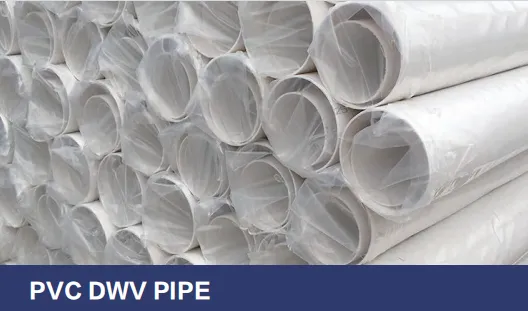
First, let's get acquainted with the unsung heroes of building plumbing: DWV pipes. Short for Drainage, Waste, and Vent, these pipes form the circulatory system of any structure, carrying away wastewater, preventing harmful gases from seeping into living spaces, and ensuring proper ventilation to keep drains flowing smoothly. Without them, our homes, offices, and hospitals would be uninhabitable.
For decades, builders relied on heavy materials like cast iron or clay for DWV systems. Cast iron is durable, sure, but it's also prone to rust and corrosion over time. Clay pipes, while natural, are brittle and crack easily during transport or installation. Both require extra care, more labor to install, and—you guessed it—generate more waste when things go wrong. That's where PVC DWV pipes step in, offering a lightweight, resilient alternative that's changing the game for sustainability.
To understand why PVC DWV pipe solutions matter, let's put construction waste into perspective. In the Middle East alone, rapid urbanization has led to a construction boom, with countries like Saudi Arabia leading the charge. But this growth comes with a price: the region generates over 100 million tons of construction and demolition waste each year, according to the Arab Forum for Environment and Development. Much of this waste ends up in open dumps, polluting soil and water, or is incinerated, releasing toxic fumes.
Pipes might seem like a small part of this problem, but consider this: traditional cast iron pipes are heavy—so heavy that transporting them requires more fuel, increasing carbon emissions. Their weight also makes them harder to handle on site; a single misstep can crack a pipe, turning a usable material into trash. Clay pipes, meanwhile, often arrive with cracks from rough handling, and their rigid design means cutting them to size results in more scrap. Add to that the waste from frequent repairs—rusted cast iron pipes need replacing every 20-30 years, while clay can degrade even faster—and it's clear that old-school piping is a major contributor to site waste.
So, what makes PVC DWV pipes different? Let's break it down. PVC, or polyvinyl chloride, is a thermoplastic polymer celebrated for its strength, chemical resistance, and versatility. When formulated for DWV systems, it's engineered to withstand the harshest conditions: corrosive wastewater, extreme temperatures, and the test of time. This durability is key—if a pipe lasts longer, it needs replacing less often, which means less waste over the building's lifecycle.
Take lifespan, for example. A well-installed PVC DWV pipe can last 50-100 years, compared to 20-30 years for cast iron and 30-40 years for clay. That's decades of avoiding the waste from digging up old pipes, transporting replacements, and disposing of the old ones. And because PVC is lightweight—a 10-foot section of 4-inch PVC DWV pipe weighs just 15 pounds, versus 70 pounds for cast iron—transportation is more efficient. Less fuel burned, fewer trucks on the road, and a lower carbon footprint. Plus, lighter pipes are easier to carry up ladders or through tight spaces, reducing the risk of drops and breakage on site. No more watching a $200 pipe shatter on the concrete because it slipped from a worker's grip.
But the real sustainability superpower of PVC DWV pipes lies in their recyclability. Unlike some plastics that degrade when recycled, PVC is a thermoplastic, meaning it can be melted down and reshaped repeatedly without losing structural integrity. This is where a forward-thinking PVC DWV pipe supplier becomes a crucial partner in the circular economy. Many suppliers now offer take-back programs: when a building is renovated or demolished, old PVC pipes are collected, cleaned, and reprocessed into new pipes or other PVC products. It's a closed-loop system that keeps PVC out of landfills and reduces the need for virgin raw materials—materials that require energy-intensive extraction and processing.
Let's walk through the lifecycle of a PVC DWV pipe to see how it stacks up in waste reduction. It starts at the manufacturing plant, where modern facilities use energy-efficient processes and non-toxic additives (goodbye, old concerns about harmful phthalates—today's PVC DWV pipes are formulated with safe, lead-free stabilizers). The lightweight nature of PVC means less material is needed to achieve the same strength as cast iron, cutting down on raw material use from the start.
Next, transportation: as we mentioned, lighter pipes mean fewer trucks, lower fuel use, and fewer emissions. On the construction site, installation is a breeze. PVC DWV pipes are easy to cut with standard tools, and their smooth surfaces ensure tight, leak-free connections—no need for messy sealants that can fail over time. This precision reduces the "oops" moments: no more cutting a pipe too short and having to throw it away, or struggling to fit a misaligned joint that results in leaks (and later, costly repairs and waste).
Then there's the long middle phase: in use. PVC's resistance to corrosion, rust, and chemical damage means it requires almost no maintenance. No need for periodic pipe replacements or repairs, which saves both money and materials. Finally, at the end of its life, the pipe can be recycled. A responsible PVC DWV pipe supplier will work with waste management companies to ensure old pipes are collected and sent to recycling facilities, where they're ground into pellets and reused to make new products—maybe even new DWV pipes. It's a cycle that turns "waste" into a valuable resource.
A pipe is only as good as its fittings, and here's where a reliable pipes fittings supplier comes into play. PVC DWV systems aren't just about the pipes—they include elbows, tees, couplings, and vent caps, all designed to work together seamlessly. When fittings are poorly made or incompatible, installers end up with gaps, leaks, or misalignments, which often mean cutting, adjusting, and discarding parts. But a quality pipes fittings supplier ensures every piece is precision-engineered to fit, reducing installation waste to almost zero.
Take, for example, a commercial project in Jeddah, where a contractor opted for a complete PVC DWV system from a trusted supplier. The package included pipes, fittings, and even installation guides. The result? The crew reported a 40% reduction in "scrap" fittings compared to their previous project, where they'd used mismatched parts from different brands. "We used to throw away at least 10% of our fittings because they didn't line up," said the site foreman. "Now, everything clicks into place. It's saved us time, money, and a lot of trips to the dumpster."
| Material | Weight (per 10ft section, 4-inch diameter) | Installation Waste (%) | Recyclability | Lifespan (years) | Maintenance Waste |
|---|---|---|---|---|---|
| Cast Iron | 70 lbs | 15-20% | Low (recyclable but energy-intensive) | 20-30 | High (rust, corrosion, frequent replacements) |
| Clay | 50 lbs | 10-15% | Low (limited recycling options) | 30-40 | High (brittle, prone to cracks) |
| PVC DWV | 15 lbs | 3-5% | High (closed-loop recycling possible) | 50-100 | Low (no corrosion, minimal maintenance) |
Let's look at a real-world example of how PVC DWV pipe solutions make a difference. In Riyadh, a new K-12 school was under construction, with a goal to meet LEED Silver certification—a standard that requires strict waste reduction targets. The project manager, Ahmed, was tasked with cutting construction waste by 25% compared to the district's previous schools. "We knew every material choice counted," he recalls. "When it came to the plumbing, we started by comparing options."
The team considered cast iron (the district's traditional choice) and PVC DWV. After crunching the numbers, they chose a local PVC DWV pipe supplier that offered recycled-content pipes and compatible fittings. "The math was clear," Ahmed says. "PVC was lighter, so we saved on transport costs and fuel. Installation was faster—our plumbers finished the DWV system in 3 weeks instead of the usual 5. And the waste? We generated just 800 pounds of pipe-related waste, compared to 2,200 pounds on the last school, which used cast iron."
The savings didn't stop there. Because PVC DWV pipes require no maintenance, the school district estimates it will save $15,000 over 20 years in repair costs. And when the school is eventually renovated decades from now, those pipes can be recycled. "It's not just about meeting a certification," Ahmed adds. "It's about building something that doesn't leave a trail of waste for future generations to clean up."
Despite its benefits, PVC has faced skepticism, often rooted in outdated information. Let's set the record straight. Early PVC production did use harmful additives like lead-based stabilizers, but today's industry has evolved. Reputable suppliers now use calcium-zinc stabilizers and phthalate-free plasticizers, making PVC DWV pipes safe for drinking water systems and indoor air quality. In fact, PVC is approved for use in hospitals and schools, where safety is paramount.
Another myth? That PVC can't be recycled. While it's true that recycling infrastructure varies by region, PVC is technically 100% recyclable. The challenge is building the systems to collect and process it. In Europe, for example, PVC recycling rates for construction materials exceed 80%, thanks to robust collection networks. In Saudi Arabia, progress is underway: the government's Vision 2030 includes investments in waste management, and suppliers are partnering with recyclers to expand capacity. As awareness grows, more construction companies are choosing to work with PVC DWV pipe suppliers that offer take-back programs, closing the loop on waste.
The future of PVC DWV pipes in the circular economy is brighter than ever. Suppliers are innovating on all fronts: developing pipes with higher recycled content (some now use 30% post-consumer recycled PVC), experimenting with bio-based additives to reduce reliance on fossil fuels, and designing thinner-walled pipes that use less material without sacrificing strength. There's even research into "self-healing" PVC, which could repair small cracks automatically, extending lifespans further.
Policy is also playing a role. Governments are starting to reward sustainable choices: in the EU, the Circular Economy Action Plan mandates that 70% of construction waste be recycled by 2030, creating demand for recyclable materials like PVC. In Saudi Arabia, green building codes now offer incentives for projects that use recycled or low-waste materials, making PVC DWV solutions an attractive option for developers.
Perhaps most exciting is the shift in mindset. Builders, architects, and homeowners are no longer asking, "What's the cheapest material?" but rather, "What's the most sustainable choice over the long run?" This shift is driving demand for suppliers that prioritize circularity—suppliers who don't just sell pipes, but partner with clients to reduce waste from cradle to grave.
Reducing construction waste isn't about grand, unaffordable gestures. It's about the everyday decisions: the pipes we choose, the suppliers we support, and the way we design and build. PVC DWV pipe solutions, when paired with responsible suppliers and a commitment to recycling, offer a tangible way to cut waste, lower costs, and protect the planet.
So, the next time you're on a construction site, or even just walking through a building, spare a thought for the DWV pipes hidden behind the walls. They might not be glamorous, but they're working hard—carrying away waste, yes, but also helping to reduce the waste we leave on this planet. And that's something worth celebrating.
After all, sustainability isn't a destination—it's a journey. And every pipe, every fitting, every choice to recycle is a step in the right direction.
Recommend Products












