
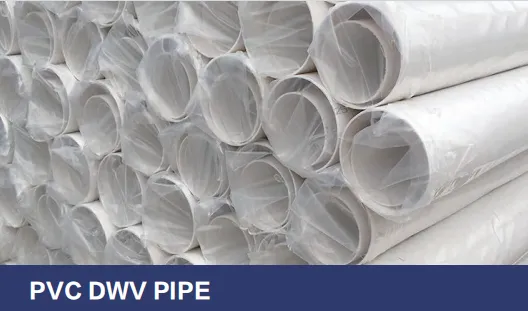
In any construction project, the drainage system is as critical as the foundation itself. A poorly designed or substandard drainage system can lead to leaks, blockages, structural damage, and costly repairs. That is why choosing the right pvc dwv pipe solutions is essential for residential, commercial, and industrial buildings alike. PVC DWV (Drain-Waste-Vent) pipes have become the industry standard for modern plumbing systems due to their durability, chemical resistance, and cost-effectiveness. In this guide, we will explore everything you need to know about PVC DWV pipe systems and how selecting the right building material supplier can make a significant difference to your project's outcome.
DWV stands for Drain, Waste, and Vent — the three core functions of a plumbing system. PVC DWV pipes are specifically designed to handle non-pressurized gravity-fed drainage applications. They are typically used to carry wastewater from sinks, showers, toilets, and appliances away from the building and into the sewer or septic system. The vent component allows air to enter the system, preventing vacuum formation that could slow or stop drainage.
Unlike pressure-rated pipes, DWV pipes have thinner walls and are optimized for low-pressure, gravity-flow environments. They are manufactured from unplasticized polyvinyl chloride (PVC-U), a material known for its strength, rigidity, and resistance to a wide range of chemicals commonly found in household and industrial wastewater.
PVC DWV pipes offer several advantages that make them the preferred choice for modern drainage systems:
Corrosion Resistance: Unlike metal pipes, PVC does not rust, corrode, or degrade when exposed to moisture, acidic wastewater, or alkaline substances. This ensures a long service life with minimal maintenance.
Lightweight & Easy Installation: PVC DWV pipes are significantly lighter than cast iron or copper alternatives, making them easier to transport, handle, and install. This reduces labor costs and speeds up construction timelines.
Smooth Interior Surface: The smooth inner walls of PVC pipes minimize friction and reduce the risk of clogs and buildup. Wastewater flows freely, and the system remains efficient over time.
Chemical Resistance: PVC resists a broad spectrum of chemicals, including detergents, bleach, and other household cleaning agents that pass through drainage systems daily.
Cost-Effectiveness: Compared to metal piping systems, PVC DWV pipes are more affordable in terms of both material cost and installation labor, delivering excellent value for construction budgets.
Noise Reduction: PVC DWV pipes produce less water-flow noise compared to metal pipes, contributing to a quieter living and working environment, especially in multi-story buildings.
PVC DWV pipes are used across a wide range of building types, including:
Residential Buildings: From single-family homes to apartment complexes, PVC DWV pipes handle all drainage needs — kitchen sinks, bathroom fixtures, laundry rooms, and main soil stacks.
Commercial Buildings: Office towers, shopping malls, and hotels rely on durable PVC DWV systems to manage high-volume wastewater from multiple floors and hundreds of fixtures.
Industrial Facilities: Factories and warehouses use PVC DWV pipes for chemical drainage, wash-down areas, and process wastewater, thanks to the material's excellent chemical resistance.
Hospitals & Schools: Institutional buildings require reliable, hygienic drainage — PVC DWV pipes meet these demands while being easy to maintain and repair.
When selecting drainage pipes for a project, it helps to understand how PVC DWV compares to other common materials:
| Material | Corrosion Resistance | Weight | Cost | Service Life | Best For |
|---|---|---|---|---|---|
| PVC DWV | Excellent | Light | Low | 50+ years | Gravity drainage, vent systems |
| Cast Iron | Moderate (rusts over time) | Heavy | High | 30-50 years | High-rise soil stacks, fire-rated assemblies |
| Copper | Good | Medium | Very High | 50+ years | Water supply lines (not typically DWV) |
| Galvanized Steel | Poor (rusts internally) | Heavy | Medium | 20-40 years | Legacy systems, being phased out |
| ABS | Good | Light | Low | 50+ years | Alternative to PVC, mostly in North America |
As shown above, PVC DWV pipes strike the best balance of durability, cost, and ease of installation for most drainage applications. They outperform metal alternatives in corrosion resistance and are far more economical over the lifecycle of a building.
Selecting the correct PVC DWV pipe for your project involves several considerations:
Pipe Size: DWV pipes come in various diameters (typically 1-1/2" to 6" for residential use). The size depends on the fixture unit load and local plumbing codes. Larger commercial buildings may require pipes up to 12" or more.
Wall Thickness: DWV pipes are specified by schedule (wall thickness). Schedule 40 is the most common for DWV applications, providing adequate strength for gravity drainage without the excess weight of thicker schedules.
Standards Compliance: Look for pipes that meet ASTM D2665 (for PVC DWV) or equivalent international standards. Compliance ensures the pipe has been tested for impact resistance, dimensional accuracy, and chemical resistance.
Fittings Compatibility: A complete DWV system requires elbows, tees, wyes, couplings, traps, and cleanouts. Ensure all pipes fittings solutions are compatible with your chosen pipe specification and are sourced from the same manufacturer for consistent quality.
Local Building Codes: Always consult local plumbing codes before purchasing. Some jurisdictions have specific requirements for pipe materials, slope, venting configuration, and fire-rated assemblies.
When it comes to sourcing high-quality PVC DWV pipes and fittings, choosing a reliable building material supplier is paramount. COLORIA GROUP, headquartered in Foshan, China, is a leading one-stop architectural solution provider serving clients worldwide. With a comprehensive product portfolio spanning 13 categories — from walls and flooring to pipes, sanitary fixtures, and electrical systems — COLORIA GROUP delivers complete building material solutions under one roof.
The company's pipe and fittings category includes a wide range of products beyond PVC DWV pipes, such as UPVC pipes, PPR pipes and fittings, PEX pipes, CPVC SCH80 high-pressure piping systems, PVC-U SCH40 pressure piping, and PVC transparent pipe fittings. Whether you need a single product or an entire plumbing system for a large-scale development, COLORIA GROUP has the capability and experience to supply it.
With a dedicated agent in Saudi Arabia and decades of industry experience, COLORIA GROUP is well-positioned to serve clients across the Middle East, Africa, Asia, and beyond. The company's commitment to quality, customer satisfaction, and continuous team development ensures that every order meets the highest standards.
Proper installation is key to maximizing the performance and lifespan of PVC DWV pipes. Here are some best practices:
1. Maintain Proper Slope: DWV pipes must slope downward at a minimum of 1/4 inch per foot (approximately 2%) to ensure gravity-driven flow. Insufficient slope leads to slow drainage and frequent clogs.
2. Use Appropriate Solvent Cement: PVC DWV joints require solvent cement specifically formulated for PVC. Follow the manufacturer's instructions for priming and curing — improper bonding is the most common cause of leaks.
3. Allow for Thermal Expansion: PVC expands and contracts with temperature changes. In long straight runs, consider expansion joints or flexible couplings to prevent stress on the system.
4. Support Pipes Adequately: Install pipe hangers or supports at intervals specified by local codes — typically every 4 feet for horizontal runs and every 10 feet for vertical stacks. Proper support prevents sagging and stress at joints.
5. Protect from UV Exposure: PVC can degrade with prolonged exposure to direct sunlight. If pipes must be installed outdoors, apply UV-resistant paint or enclose them in protective sleeves.
1. What does DWV stand for in plumbing?
DWV stands for Drain, Waste, and Vent. It refers to the system of pipes that removes wastewater from fixtures and vents sewer gases to the outside.
2. Can PVC DWV pipes be used for pressure applications?
No. PVC DWV pipes are designed for gravity-fed, non-pressurized systems only. For pressurized water supply lines, use schedule 80 PVC or other pressure-rated piping systems such as CPVC or PPR.
3. What is the difference between PVC DWV and PVC Schedule 40?
While both are often Schedule 40, DWV-specific pipes are designed and tested for drainage applications with fittings that have smooth, sweeping bends to facilitate gravity flow. Standard pressure-rated Schedule 40 pipes may have different fitting geometry.
4. How long do PVC DWV pipes last?
Under normal operating conditions, PVC DWV pipes can last 50 years or more. They are resistant to corrosion, chemical attack, and biological growth, contributing to their exceptional longevity.
5. Are PVC DWV pipes environmentally friendly?
Modern PVC pipes are manufactured with improved environmental standards. They are lightweight (reducing transportation emissions), durable (requiring fewer replacements), and recyclable at the end of their service life.
6. Where can I buy PVC DWV pipes in bulk?
For bulk orders and wholesale pricing, contact a reputable building material supplier like COLORIA GROUP. With a comprehensive inventory and global shipping capabilities, they can meet the needs of large-scale residential and commercial projects.
Looking for reliable PVC DWV pipe solutions for your next project?
COLORIA GROUP is a one-stop building material supplier offering high-quality PVC DWV pipes, fittings, and complete plumbing systems. With over 13 product categories and 560+ products, we provide everything you need — from walls and flooring to pipes, sanitary fixtures, elevators, and solar panels. Whether you are building a single-family home, a commercial complex, or a large-scale development, our team is ready to support your project with competitive pricing, fast delivery, and expert guidance.
Visit our website at www.coloriagroup.net to explore our full product range, or contact us directly at +86-13630185350 (WhatsApp/WeChat) to discuss your requirements. Together we build the future.
Recommend Products












