
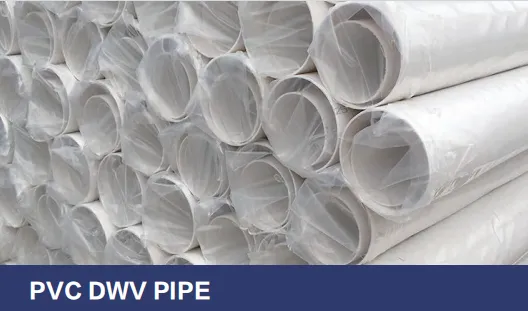
Picture this: You're knee-deep in a home renovation, or maybe you're overseeing the construction of a new commercial space. The framing is up, the electrical rough-in is done, and now it's time to install the plumbing. You stand in the supply room, staring at a stack of PVC pipes in various diameters—1.5 inches, 2 inches, 3 inches—and wonder, "Which one do I need here?" It's a question that's tripped up even experienced contractors, and for good reason: getting your PVC DWV pipe size wrong can lead to slow drains, gurgling sinks, sewage backups, or even expensive code violations. But fear not—this guide will walk you through the art and science of sizing PVC DWV pipes, so you can avoid those headaches and build a system that works seamlessly for years to come.
First, let's clarify what we're talking about. DWV stands for Drain, Waste, and Vent—the three critical functions these pipes serve. Drain pipes carry wastewater away from fixtures like sinks and toilets; waste pipes handle solid waste (think toilets); and vent pipes allow air to enter the system, preventing suction that can slow drainage or siphon water from traps (those U-shaped bends under sinks that keep sewer gases out of your home). Together, they form the unsung heroes of any building's plumbing, quietly ensuring hygiene and functionality.
PVC (Polyvinyl Chloride) has become the go-to material for DWV systems, and it's easy to see why. Unlike older materials like cast iron or copper, PVC is lightweight, resistant to corrosion, affordable, and simple to cut and connect with solvent cement. It's also widely available through pvc dwv pipe suppliers and building material suppliers across regions like Saudi Arabia, making it a practical choice for both residential and commercial projects. But even the best material can fail if the size is off—so let's dive into the factors that determine the right diameter for your pipes.
Sizing PVC DWV pipes isn't a one-size-fits-all process. It depends on a handful of variables that work together to ensure wastewater flows smoothly, without clogs or backups. Let's break them down:
If you've ever flipped through a plumbing code book, you've probably come across the term "Fixture Units" (FU). Think of FUs as a way to measure how much "work" a plumbing fixture puts on the DWV system. A small fixture like a lavatory sink might contribute 1 FU, while a toilet—with its larger volume of water and waste—could be 3 or more FUs. The total FU of all fixtures connected to a pipe determines the minimum diameter needed to handle the combined flow.
Pro Tip: Most pvc dwv pipe suppliers provide technical charts that map fixture units to pipe sizes, based on local codes (like the International Plumbing Code, or IPC). Keep one handy—your supplier's pvc dwv pipe solutions often include these resources to simplify sizing.
Water doesn't just trickle through DWV pipes—it needs to flow with enough velocity to carry solids (like toilet paper or food scraps) along without settling. If a pipe is too large for the flow rate, water might slow down, leading to clogs. Too small, and you risk backups. For example, a 2-inch pipe can handle about 12 gallons per minute (gpm), while a 3-inch pipe can manage up to 30 gpm. Knowing the expected flow from your fixtures helps narrow down the diameter.
Gravity is your DWV system's best friend, but it needs a little help from slope. Pipes must be installed at a slight angle so water flows downhill consistently. A steeper slope isn't always better—too steep, and water might race ahead, leaving solids behind. Most codes specify minimum slopes based on pipe diameter: for a 2-inch pipe, that's 1/4 inch per foot of run; for 3-inch and larger pipes, 1/8 inch per foot. Your pipes fittings supplier can also help here, offering elbows and bends designed to maintain proper slope.
Local plumbing codes are non-negotiable. They're designed to protect public health and safety, and they often dictate minimum pipe sizes for specific fixtures. For example, many codes require a 3-inch minimum diameter for toilet waste lines, even if the fixture units suggest a smaller pipe. Ignoring these rules can lead to failed inspections and costly rework—so always cross-check your sizing with local regulations.
Now that we've covered the "why," let's get to the "how." Below is a breakdown of common scenarios, with sizing guidelines to help you choose the right diameter.
Residential DWV systems are all about balancing fixture units from everyday appliances. Let's break down typical fixtures and their recommended pipe sizes:
Commercial spaces—like restaurants, hotels, or office buildings—have more fixtures and higher usage, so their DWV systems need larger pipes. For example:
To simplify, here's a handy table mapping total fixture units to minimum PVC DWV pipe diameters, based on IPC guidelines. Always confirm with local codes and your pvc dwv pipe supplier for project-specific needs:
| Total Fixture Units (FU) | Minimum Pipe Diameter (inches) | Minimum Slope (inches per foot) |
|---|---|---|
| 1-3 FU | 1.5 inches | 1/4 |
| 4-8 FU | 2 inches | 1/4 |
| 9-20 FU | 3 inches | 1/8 |
| 21-40 FU | 4 inches | 1/8 |
| 41-100 FU | 5 inches | 1/8 |
Even with guidelines, it's easy to slip up. Here are the most frequent errors and how to avoid them:
Vents are just as important as drains, but they're often an afterthought. A vent pipe that's too small can cause negative pressure, leading to gurgling drains or trap siphoning (where water is sucked out of the U-bend, letting sewer gases in). As a rule, vent pipes should be at least half the diameter of the drain they serve (e.g., a 3-inch drain needs a 1.5-inch vent).
Connecting multiple fixtures to a single drain line? You need to account for their combined fixture units. For example, a bathroom with a toilet (3 FU), sink (1.5 FU), and shower (2 FU) adds up to 6.5 FU—so a 2-inch drain (which handles up to 8 FU) works, but a 1.5-inch pipe (max 3 FU) would be way too small.
Even if your pipe diameter is correct, using incompatible fittings can restrict flow. For example, a 90-degree elbow in a tight space might slow water down—opt for a 45-degree bend instead. Your pipes fittings supplier can recommend fittings designed for DWV systems, ensuring smooth flow.
Sizing DWV pipes isn't a solo job. A reputable pvc dwv pipe supplier brings more than just materials to the table—they bring expertise. Here's how they can help:
For example, if you're working on a hospital or school project, where fire safety is paramount, your supplier might also guide you toward specialized solutions (though that's beyond DWV). But for DWV specifically, their role is to turn complex codes into clear, actionable advice.
Choosing the right PVC DWV pipe size boils down to understanding your fixtures, respecting gravity, and following the rules—but it's also about trusting the process. Start by calculating fixture units, cross-check with local codes, and lean on your pvc dwv pipe supplier for guidance. Remember: a well-sized DWV system is one you'll never notice. It won't gurgle, back up, or require constant repairs. It'll just work—quietly, reliably, and efficiently, for decades to come.
So the next time you're standing in that supply room, staring at those pipes, you'll know exactly which diameter to pick. And when you do, you'll be building more than a plumbing system—you'll be building peace of mind.
Recommend Products












