
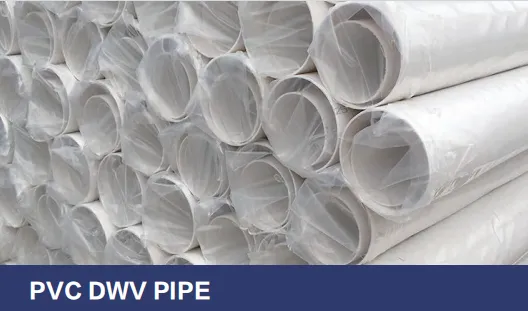
Walk into any modern home or commercial building, and you'll notice a common trend: spaces are getting smarter, but not always bigger. Open-concept layouts, compact living units, and multi-functional rooms mean every inch counts—including the hidden spaces where the "guts" of the building live. Among those critical components? PVC DWV pipes. Drain, waste, and vent (DWV) systems are the unsung heroes that keep our spaces clean and functional, but routing them in tight corners, under cabinets, or between floor joists? That's where the real challenge begins. Whether you're a contractor, a DIY enthusiast, or a project manager working with a residential building materials supplier or commercial building materials supplier , getting PVC DWV pipe routing right in cramped spaces isn't just about avoiding headaches during installation—it's about ensuring long-term performance, compliance, and peace of mind for everyone who uses the space.
Before diving into the nitty-gritty of routing, let's take a step back and appreciate what PVC DWV pipes bring to the table. For decades, they've been the go-to choice for drainage systems, and it's easy to see why. Unlike metal pipes, PVC resists corrosion from chemicals, wastewater, and even the occasional harsh cleaning product. It's lightweight, which makes and installation a breeze compared to heavy cast iron. And let's not forget cost—PVC DWV pipes are budget-friendly, a major plus for projects where every dollar is stretched thin. But here's the thing: as a pvc dwv pipe supplier , we've seen too many projects where teams focus solely on these benefits and overlook the unique demands of tight-space routing. The result? Kinked pipes, inefficient drainage, or worse, costly rework when a pipe blockage or leak crops up six months down the line.
DWV systems have three key jobs: removing wastewater (sinks, showers, toilets), venting sewer gases to the outside, and ensuring proper airflow to prevent siphoning that could disrupt drainage. Each of these functions relies on precise routing. In spacious utility rooms or commercial buildings with dedicated mechanical shafts, this might seem straightforward. But in a 500-square-foot apartment's bathroom, a kitchen with floor-to-ceiling cabinets, or a historic building with low ceiling heights? Suddenly, that "simple" pipe run becomes a puzzle with very little room for error.
Let's paint a picture. Imagine a small bathroom renovation: the vanity is 24 inches deep, the toilet is squeezed between the vanity and shower, and the only access to the main drain stack is through a wall shared with the neighbor. Now, add in electrical wires, HVAC ducts, and structural beams—all competing for the same limited space. Sound familiar? This is the reality for many contractors today, and it's why understanding the unique challenges of tight spaces is the first step to solving them.
In tight spaces, vertical and horizontal clearance is often measured in inches, not feet. A 3-inch PVC drain pipe might seem small, but when you factor in the slope required for drainage (more on that later), the fittings needed to change direction, and the space to connect to fixtures like sinks or toilets, those inches add up fast. For example, a standard P-trap under a bathroom sink needs at least 8–10 inches of vertical space to function properly. If your vanity cabinet only has 6 inches of clearance between the sink drain and the floor? You've got a problem.
Pipes don't exist in a vacuum. In tight spaces, they're sharing real estate with electrical conduits, HVAC vents, and even structural elements like floor joists or ceiling rafters. Drill a hole through a joist to run a pipe, and you might weaken the structure. Route a drain line too close to an HVAC duct, and condensation from the duct could drip onto the pipe, causing mold. As a pipes fittings supplier , we often remind clients: the best pipe routing plans are collaborative. You can't design a DWV system in isolation—you need to sit down with electricians, HVAC techs, and structural engineers early to map out who gets what space.
Here's a golden rule of DWV systems: wastewater doesn't flow uphill, and it doesn't flow well without enough slope. Most codes require a minimum slope of 1/4 inch per foot for horizontal drain lines (that's 2.5 inches over 10 feet) and 1/8 inch per foot for larger pipes (4 inches or more). In tight spaces, maintaining that slope can feel like a balancing act. If you route a pipe too flat, wastewater pools, leading to clogs and odors. If you slope it too steeply, water races through, leaving solids behind—another clog waiting to happen. And when you're working in a crawl space with only 2 feet of vertical clearance? Suddenly, even a 1/4-inch slope per foot becomes a major design consideration.
If there's one piece of advice we give every client as a pvc dwv pipe solutions provider, it's this: plan like your project depends on it—because it does. Tight-space routing isn't something you "wing"; it's a puzzle that needs to be solved on paper (or a screen) before a single pipe is cut. Here's how to approach it:
In tight spaces, a 1/2-inch miscalculation can derail an entire layout. Start by measuring the space with laser precision: height from floor to ceiling, width between walls, depth of cabinets or vanities, and the location of existing utilities. Don't just rely on blueprints—visit the site, take photos, and even create a rough sketch with dimensions noted. For complex spaces, consider 3D scanning or modeling tools. Software like SketchUp or AutoCAD can help you visualize the pipe route in 3D, allowing you to spot conflicts with beams or ducts before you ever pick up a tool.
Every DWV system has a "path of least resistance," and your job is to find it. Start by identifying the main drain stack—the vertical pipe that connects to the municipal sewer or septic system. From there, map out each fixture (sink, toilet, shower) and trace the shortest, most direct route to the stack. In tight spaces, "direct" might not mean straight; it might mean a gentle curve around a joist or a slight offset to avoid an electrical box. The key is to minimize the number of bends and fittings, as each one adds friction and takes up space.
| Fixture Type | Minimum Pipe Size (inches) | Recommended Slope (per foot) | Common Tight-Space Challenge |
|---|---|---|---|
| Bathroom Sink | 1.5 | 1/4 inch | Limited space under vanity cabinets |
| Shower | 2 | 1/4 inch | Sloping around shower pan and floor joists |
| Toilet | 3 | 1/4 inch | Clearance between toilet flange and wall |
| Kitchen Sink | 2 | 1/4 inch | Coordinating with garbage disposal and dishwasher drains |
We can't stress this enough: routing PVC DWV pipes in tight spaces is a team sport. Architects, contractors, electricians, and even the client need to be on the same page from day one. For example, if the architect specifies a 12-inch deep vanity, but the plumber knows a 1.5-inch drain line with a P-trap needs 10 inches of vertical space, that's a conflict that needs resolving before the cabinets are ordered. As a pvc dwv pipe supplier , we've seen projects saved by a single meeting where the team adjusted a wall location by 6 inches, freeing up just enough space for the pipe run. Don't wait until drywall is up to realize a pipe is blocked by a beam—collaborate early, and save yourself the hassle.
You wouldn't build a house with subpar lumber, so why skimp on pipes and fittings? In tight spaces, the quality and type of materials you use can make or break your routing success. Let's start with the pipes themselves. Most DWV systems use Schedule 40 PVC, which is lightweight, durable, and affordable. For areas with higher pressure or potential impact (like commercial kitchens or industrial settings), Schedule 80 PVC might be necessary, but it's thicker and stiffer—something to keep in mind when bending or fitting in tight corners.
Fittings are where the magic (or the mess) happens. As a pipes fittings supplier , we've curated a range of space-saving options that make tight routing possible. For example: 45-degree elbows instead of 90-degree ones. A 90-degree elbow might seem like the quickest way to change direction, but it creates turbulence in the flow, increasing the risk of clogs. A 45-degree elbow reduces flow resistance and, crucially, takes up less space when you need to make a gentle turn around a joist or duct. Similarly, offset couplings can shift a pipe's alignment by 1–2 inches without requiring a full elbow, perfect for squeezing into gaps between studs.
Don't overlook the small stuff, either. Solvent cement is the glue that holds your system together, and using the wrong type (or applying it poorly) can lead to leaks. Look for cement labeled for PVC DWV applications, and always follow the manufacturer's instructions—no shortcuts. Supports are another must: pipe hangers, straps, and clamps keep pipes from sagging (which disrupts slope) and reduce noise from water flow. In tight spaces, adjustable hangers or low-profile straps can be lifesavers, allowing you to secure pipes without adding bulk.
Now, let's get to the fun part: actually routing the pipes. Over the years, we've worked with contractors to develop a toolkit of techniques that turn "impossible" spaces into workable solutions. Here are some of our favorites:
Vertical pipes (like vent stacks or drain lines from upper floors) often have more flexibility than horizontal ones, but they still need to fit within walls or shafts. Wall chases—narrow channels cut into studs—are a classic solution, but be careful: cutting too many studs or notching them too deeply can weaken the wall's structure. Most codes limit notches to 1/3 the depth of a stud, and they can't be placed near the ends (where the stud bears weight). For load-bearing walls, consult a structural engineer before cutting—better safe than sorry.
Another trick? "Stacking" vents and drains. If you have multiple fixtures on the same floor (say, a bathroom and a laundry room), route their vent pipes to join a single vertical stack. This reduces the number of pipes piercing the roof and saves space in the wall cavity. Just make sure to follow venting codes—each fixture needs adequate airflow, so don't overcrowd the stack.
Horizontal pipes under floors or above ceilings often have to weave through joists or beams. The key here is precision drilling. Most codes allow drilling holes through joists, but there are rules: holes can't be larger than 1/3 the joist depth, and they must be at least 2 inches from the top or bottom of the joist (to avoid weakening the structural integrity). For example, a 2x10 joist (9.25 inches deep) can safely have a 3-inch hole drilled through the center, leaving plenty of space for a 2-inch PVC pipe.
If drilling isn't an option, look for gaps between joists. In older homes, floor joists might be spaced 16 or 24 inches on center, leaving a narrow channel between them. Running a pipe along this channel (with proper supports) can save inches of vertical space compared to drilling through the joist itself. Just remember to maintain slope—you might need to shim the pipe slightly to ensure it drains properly.
For multiple fixtures in a tight area (like a kitchen with a sink, dishwasher, and garbage disposal), a manifold system can work wonders. Instead of running separate drain lines from each fixture to the main stack, connect them to a single "manifold" pipe that then runs to the stack. This reduces the number of bends and fittings, saves space, and makes the system easier to maintain. Think of it like a traffic roundabout for wastewater—everyone gets where they need to go with minimal fuss.
Even the best-laid plans can go off the rails during installation. Here are a few pro tips to keep your tight-space routing on track:
The Challenge: A 350-square-foot studio apartment in downtown Chicago needed a bathroom renovation. The existing layout had a toilet, sink, and shower squeezed into a 5x7-foot space, with the main drain stack located in an adjacent wall shared with the neighbor. The client wanted to keep the same footprint but upgrade to a larger shower and vanity—leaving even less room for pipes.
The Solution: Working with the contractor and pvc dwv pipe solutions team, we used a combination of space-saving fittings and creative routing. For the vanity, we installed a wall-hung model to free up floor space, then ran the drain line horizontally through the wall studs (with 45-degree elbows to navigate a nearby electrical box). The shower drain was offset 2 inches using a low-profile coupling to fit under the new, deeper shower pan. The vent pipe was tied into the stack via a 2-inch offset, allowing it to squeeze between the neighbor's electrical conduit and the wall stud.
The Result: The client got their larger shower and vanity, and the DWV system passed inspection with flying colors. Six months later, a follow-up showed no leaks, clogs, or drainage issues—proof that tight spaces don't have to mean compromised performance.
The Challenge: A 100-year-old restaurant in Boston was expanding its kitchen, but the ceiling height was just 7 feet—too low for standard ductwork and pipe runs. The new kitchen needed drains for three dishwashers, two sinks, and a floor drain, all routing to a main stack in the basement.
The Solution: We collaborated with the HVAC team to "share" space: the HVAC ducts ran along one side of the ceiling, and the DWV pipes along the other, supported by custom low-profile hangers. Horizontal drains were sloped at 1/4 inch per foot and ran above the ceiling joists, with 45-degree elbows to navigate around exposed wooden beams. A manifold system connected the dishwashers and sinks to a single 3-inch drain line, reducing the number of pipes needed. Sound-dampening insulation was added to the pipes to keep noise down in the dining area above.
The Result: The kitchen passed health department inspections, and the restaurant reported no drainage issues in the first year of operation. The shared-space approach saved 12 inches of vertical clearance, allowing the kitchen to add the extra equipment without lowering the ceiling.
Even the most clever routing job won't matter if it doesn't meet local building codes. Plumbing codes (like the International Plumbing Code, or IPC) dictate everything from pipe sizing to venting requirements to the distance between fixtures and vents. For example, a bathroom sink vent must terminate at least 6 inches above the roofline, and a toilet must be connected to a vent within a certain distance (usually 6 feet for a 3-inch pipe). Ignoring these rules can lead to failed inspections, fines, or even dangerous sewer gas buildup.
Safety is another non-negotiable. When cutting PVC, wear eye protection to guard against flying shards. Work in a well-ventilated area when using solvent cement, as the fumes can be strong. And if you're working in a tight crawl space or attic, always have a partner nearby—no one should work alone in cramped, hard-to-reach areas.
Routing PVC DWV pipes in tight spaces isn't for the faint of heart. It requires patience, creativity, and a willingness to collaborate. But with the right planning, materials, and techniques, it's absolutely possible to create a system that's efficient, durable, and code-compliant—even in the smallest of spaces. As a pvc dwv pipe supplier and pipes fittings supplier , we're here to help bridge the gap between "impossible" and "done." Whether you need space-saving fittings, custom routing advice, or just a second pair of eyes on your plan, the key is to start early, stay flexible, and never underestimate the power of a well-measured, well-designed system.
At the end of the day, the goal is simple: to make sure the pipes do their job quietly, reliably, and out of sight. Because in the world of construction, the best systems are the ones you never notice—until you need them. And with these best practices in hand, you'll be well on your way to building just that.
Recommend Products












