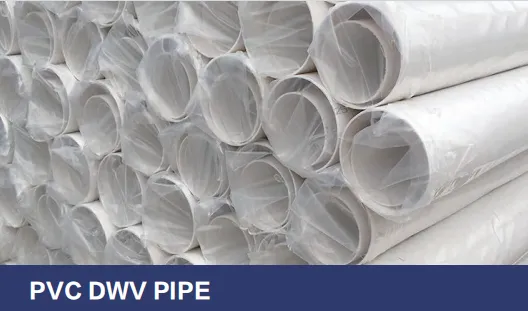
With so many suppliers on the market, how do you separate the best from the rest? Here are the critical factors to keep in mind:
1. Quality Certifications and Compliance
First and foremost, check that the supplier's PVC DWV pipes meet industry standards. Look for certifications like ASTM D2665, ISO 9001 (for quality management), and local regulations specific to your region. For example, if you're working on a project in Saudi Arabia, ensure the supplier complies with Saudi Standards, Metrology and Quality Organization (SASO) requirements. A supplier that prioritizes certification demonstrates a commitment to quality and safety.
2. Product Range and Compatibility
Your project may require pipes of different diameters, lengths, or wall thicknesses. A good supplier should offer a comprehensive range of PVC DWV pipes to meet these needs. Additionally, since pipes rarely work alone, look for a supplier that also provides pipes fittings solutions. Coordinating pipes and fittings from the same provider ensures compatibility, reducing the risk of leaks and simplifying your procurement process. A one-stop pipes fittings supplier can save you time, money, and logistical headaches by streamlining your order.
3. Manufacturing Capabilities and Quality Control
Take the time to learn about the supplier's manufacturing process. Do they use high-quality raw materials? Do they have rigorous quality control checks in place, such as pressure testing or dimensional inspections? A supplier with in-house manufacturing capabilities is often more reliable, as they have direct control over production and can quickly address any issues that arise.
4. Technical Support and Expertise
Even experienced contractors can run into questions during a project. Does the supplier have a team of experts available to provide technical support? This might include advice on pipe sizing, installation best practices, or troubleshooting common issues. A supplier that invests in customer support shows they care about your success, not just your order.
5. Delivery and Logistics
Construction projects run on tight schedules, and delays in material delivery can derail your timeline. Ask about the supplier's delivery capabilities: How quickly can they fulfill orders? Do they have a reliable distribution network, especially if your project is in a remote area? A supplier with a track record of on-time deliveries is worth their weight in gold.
6. Reputation and Customer Reviews
Finally, do your homework. Read customer reviews, ask for references, or talk to other contractors in your network. A supplier with a strong reputation for reliability, quality, and customer service is more likely to meet your expectations than one with a history of complaints.