Navigating quality, reliability, and trust in home plumbing systems
The Hidden Backbone of Your Home: Why Plumbing Matters More Than You Think
Picture this: It's a busy Monday morning. You're rushing to get the kids ready for school, the coffee's brewing, and suddenly—*drip, drip, drip*. You glance under the kitchen sink to find a small puddle forming, spreading toward the cabinet floor. Annoying, right? Now imagine that puddle turning into a full-blown leak by noon, soaking your floors, damaging your cabinets, and leaving you with a plumber's bill that could've been avoided. Sound familiar? If you've ever dealt with a plumbing mishap, you know how quickly a small issue can spiral into a major headache.
But here's the thing: Most homeowners don't think about their plumbing until something goes wrong. The pipes behind your walls, under your floors, and in your ceilings are the silent workhorses of your home, carrying away wastewater, preventing odors, and keeping your daily life running smoothly. And when it comes to residential plumbing, few components are as critical as the pipes that handle drainage, waste, and ventilation—otherwise known as DWV systems. Among the materials used for these systems, PVC (Polyvinyl Chloride) DWV pipe has emerged as a top choice for modern homes. But not all PVC DWV pipes are created equal, and neither are the suppliers who provide them.
In this article, we're diving deep into the world of PVC DWV pipe for residential plumbing. We'll explore why these pipes are a staple in homes today, what makes a quality product, and—most importantly—how to choose a supplier you can trust. Whether you're building a new home, renovating an old one, or simply want to understand the plumbing that keeps your household running, this guide is for you. After all, when it comes to your home, cutting corners on plumbing is never a good idea. Let's get started.
What Even Is PVC DWV Pipe? Let's Break It Down
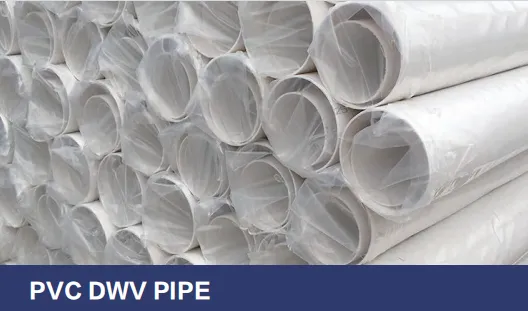
First things first: Let's clarify what we're talking about when we say "PVC DWV pipe." DWV stands for Drainage, Waste, and Vent—three essential functions of your home's plumbing system. Drainage pipes carry wastewater away from fixtures like sinks, showers, and toilets. Waste pipes handle solid and liquid waste, ensuring it flows out of your home safely. Vent pipes, often overlooked, allow air to enter the system, preventing suction that can slow down drainage or cause traps to dry out (which leads to those unpleasant sewer odors in your bathroom). Together, these pipes form a network that keeps your home clean, hygienic, and free from water damage.
PVC, or Polyvinyl Chloride, is a type of plastic polymer that's been used in construction since the 1950s. It's prized for its durability, affordability, and versatility, and when formulated specifically for DWV systems, it becomes a material designed to handle the unique demands of residential plumbing. Unlike pressure pipes (which carry water under pressure, like the pipes that bring fresh water to your faucets), DWV pipes are not designed to withstand high pressure. Instead, they're engineered for gravity-fed systems, where wastewater flows freely thanks to the slope of the pipes.
So why has PVC become the go-to material for DWV systems in homes? Let's take a quick walk through history. Back in the day, plumbers relied on heavy materials like cast iron or copper for drainage. Cast iron was durable but extremely heavy, making installation a two-person job, and it was prone to rust over time. Copper, while corrosion-resistant, was (and still is) expensive, and its rigid nature made it tricky to install in tight spaces. Then PVC came along. Lightweight, easy to cut and connect, and resistant to corrosion, it quickly gained popularity. Today, it's estimated that over 70% of new residential construction in many countries uses PVC DWV pipe—and for good reason.
PVC DWV vs. the Competition: Why It's the Top Pick for Homes
To really understand why PVC DWV pipe dominates residential plumbing, let's compare it to other common materials. Below is a breakdown of how PVC stacks up against cast iron, copper, and ABS (another plastic pipe material sometimes used for DWV):
|
Feature
|
PVC DWV
|
Cast Iron
|
Copper
|
ABS
|
|
Cost
|
Affordable (lowest among major options)
|
Expensive (3-4x PVC cost)
|
Very expensive (5-6x PVC cost)
|
Slightly more than PVC
|
|
Weight
|
Lightweight (easy for one person to handle)
|
Extremely heavy (requires tools/helpers)
|
Moderate weight
|
Lightweight, similar to PVC
|
|
Installation Ease
|
Simple: Cut with a hacksaw, connect with solvent cement
|
Complex: Requires special tools for cutting/joining
|
Skilled labor needed (soldering required)
|
Similar to PVC, but cement sets faster
|
|
Corrosion Resistance
|
Excellent (resists acids, alkalis, and chemicals in wastewater)
|
Poor (prone to rust; lifespan 50-70 years)
|
Good, but can corrode with certain water chemistry
|
Good, but less resistant to UV light than PVC
|
|
Noise Level
|
Moderate (can be insulated for quieter flow)
|
Low (natural sound dampening)
|
High (water flow is noisy in metal pipes)
|
Similar to PVC
|
|
Lifespan
|
50-80 years (with proper installation)
|
50-70 years (but heavy and hard to replace)
|
70-100 years (but expensive to install/replace)
|
40-60 years (less than PVC in some climates)
|
As you can see, PVC DWV pipe offers a sweet spot of affordability, ease of installation, and durability that's hard to beat. For most homeowners and builders, the tradeoffs (like slightly more noise than cast iron) are minimal compared to the benefits. But here's the catch: Not all PVC DWV pipes are the same. The quality of the material, the manufacturing process, and the supplier behind the product can make a world of difference in how well your pipes perform over time.
What Makes a Quality PVC DWV Pipe? Key Features to Demand
So, you've decided PVC DWV is the way to go for your home. Now, how do you ensure you're getting a pipe that will last 50+ years instead of failing in a decade? Let's break down the key features to look for when evaluating a product from a potential supplier:
Pure, Virgin PVC Resin
Not all PVC is created equal. Some manufacturers cut corners by using recycled PVC or mixing in fillers (like calcium carbonate) to reduce costs. While recycled PVC has its place in certain applications, DWV pipes need the strength and consistency of virgin (new) PVC resin. Virgin PVC is more resistant to cracking, warping, and chemical damage, ensuring your pipes can handle the daily wear and tear of wastewater flow. A reputable supplier will be transparent about their materials—ask if they use 100% virgin PVC, and don't settle for vague answers.
Compliance with Industry Standards
Quality PVC DWV pipes should meet strict industry standards to ensure safety and performance. In North America, the primary standard is ASTM D2665, which specifies requirements for PVC pipe used in drainage, waste, and vent systems. Look for suppliers who can provide certification that their pipes meet ASTM D2665, as well as other relevant standards like ISO 9001 (quality management) or NSF/ANSI 61 (certification for products in contact with drinking water, though DWV pipes don't carry potable water, this adds an extra layer of safety). If a supplier can't produce these certifications, it's a red flag—move on.
Smooth Inner Bore
Ever noticed how water flows faster through a smooth hose than a kinked or rough one? The same principle applies to DWV pipes. A smooth inner bore reduces friction, allowing wastewater to flow freely and minimizing the risk of clogs. Low-quality pipes may have uneven surfaces or imperfections from the manufacturing process, which can trap debris over time. When inspecting a sample pipe, run your finger along the inside—if it feels rough or bumpy, that's a sign of poor quality.
Consistent Wall Thickness
Pipe walls that are too thin can crack under pressure (even the low pressure of gravity-fed systems), while walls that are too thick add unnecessary weight and cost. A reliable supplier will ensure their pipes have consistent wall thickness throughout, meeting the dimensional requirements of ASTM D2665. You can check this by measuring the wall at several points with a caliper—any significant variation means the pipe wasn't manufactured with precision.
Impact Resistance
Let's face it: Construction sites (and even home renovations) can be rough environments. Pipes get dropped, stepped on, or banged against walls. A quality PVC DWV pipe should be able to withstand minor impacts without cracking. Ask your supplier about the pipe's impact strength rating—look for values tested at both room temperature and cold temperatures (since PVC can become brittle in the cold). A pipe that passes these tests is less likely to fail during installation or over time.
Beyond the Pipe: Why Choosing the Right Supplier Matters Most
Okay, so you know what to look for in a PVC DWV pipe. But here's the secret: Even the best pipe design is useless if it comes from a supplier who cuts corners, lacks expertise, or doesn't stand behind their products. When building or renovating your home, you're not just buying a pipe—you're partnering with a
residential building materials supplier
who should understand your needs, answer your questions, and support you long after the sale. So what should you look for in a supplier?
Experience in Residential Plumbing
There's a big difference between a supplier who sells industrial-grade pipes for factories and one who specializes in residential plumbing. Residential systems have unique challenges: smaller spaces, specific building codes, and the need for pipes that work with standard fixtures (like toilets, sinks, and showers). A supplier with years of experience in residential projects will know the ins and outs of local building codes, common installation pitfalls, and which products work best for different home layouts. When vetting a supplier, ask: "How many residential projects have you supplied pipes for in the last year?" or "Can you share examples of homes similar to mine that you've worked on?" A good supplier will have plenty of stories and references.
A Full Range of Pipes and Fittings
PVC DWV pipe doesn't work alone—it needs fittings (elbows, tees, couplings, traps) to connect to fixtures and form a complete system. Using mismatched or low-quality fittings is a recipe for leaks. That's why it's best to choose a supplier who offers not just pipes but also a full line of compatible
pipes fittings solutions
. Look for a
pipes fittings supplier
that carries everything from 90-degree elbows to P-traps to vent caps, all designed to work seamlessly with their PVC DWV pipes. This ensures a tight, leak-free fit and saves you the hassle of shopping around for different parts.
Customization and Flexibility
No two homes are exactly alike. Maybe your bathroom has an unusual layout that requires a custom pipe length, or your renovation calls for a specific color of pipe to match existing fixtures (though PVC DWV is usually white or gray, some suppliers offer custom colors). A great supplier will be willing to accommodate these needs, whether it's cutting pipes to size, providing custom fittings, or sourcing hard-to-find parts. Avoid suppliers who say, "We only sell standard sizes"—your home deserves a plumbing system tailored to its unique requirements.
Technical Support and Expertise
Let's be honest: Plumbing can be confusing. Even if you're working with a plumber, you might have questions like, "What size pipe do I need for my master bathroom?" or "How do I ensure proper ventilation for my kitchen sink?" A good supplier won't just sell you a product—they'll act as a resource. Look for suppliers who offer technical support via phone, email, or in-person consultations. Some even provide installation guides, videos, or on-site training for contractors. When you call with a question, do they take the time to explain things clearly, or do they rush you off the phone? The latter is a warning sign.
Reliable Delivery and Inventory
There's nothing worse than having your renovation grind to a halt because your pipes are on backorder. A reputable supplier will have a well-stocked inventory and a reliable delivery system to ensure you get your materials when you need them. Ask about their lead times: "If I order 50 feet of 3-inch pipe today, when can I expect it?" A supplier with a local warehouse should be able to deliver within a day or two. For larger orders, they should provide a clear timeline and stick to it. You don't want to be left waiting while your contractor's schedule fills up.
Real-World Challenges: How a Good Supplier Solves Plumbing Headaches
Even with the best intentions, residential plumbing projects can hit snags. Let's look at some common challenges homeowners and contractors face, and how a trusted supplier can help solve them:
Challenge 1: "My Pipes Keep Clogging—What's Wrong?"
Clogs are one of the most frustrating plumbing issues. They're often caused by a combination of hair, food scraps, and grease, but sometimes the problem starts with the pipes themselves. If your pipes have a rough inner bore (as we discussed earlier), debris can get stuck, leading to frequent clogs. A good supplier will have tested their pipes for flow efficiency and can recommend products with a smooth bore to minimize clogs. They might also suggest adding a cleanout fitting (a removable cap that allows access to the pipe for snaking) in strategic locations, making clogs easier to fix when they do happen.
Challenge 2: "I Installed the Pipes, But Now There's a Leak at the Joints."
Leaks at joints are usually due to improper installation or mismatched parts. If you used fittings from a different supplier than your pipes, the threads or diameters might not align perfectly. A supplier who offers a full line of compatible fittings will ensure a tight seal. They can also provide guidance on proper installation techniques, like how long to let solvent cement dry before testing the system. Some suppliers even offer leak-testing kits to help you check for issues before closing up walls—now that's peace of mind.
Challenge 3: "The Pipes Are Making a Lot of Noise When Water Flows Through Them."
PVC DWV pipes can be noisier than cast iron, but excessive noise (like gurgling or rattling) is often a sign of poor installation or improper venting. A knowledgeable supplier will explain how to reduce noise by adding insulation around pipes, using sound-dampening fittings, or ensuring proper slope (pipes should slope downward at 1/4 inch per foot to allow smooth flow). They might also recommend venting strategies to prevent air bubbles, which cause gurgling sounds. If your supplier dismisses your noise concerns, they're not paying attention to your comfort.
Challenge 4: "I'm On a Tight Budget—Can I Save Money Without Sacrificing Quality?"
We get it: Home renovations are expensive. But cutting corners on PVC DWV pipe is a false economy—cheap pipes will fail faster, costing you more in repairs down the line. A good supplier will work with you to find cost-saving solutions without compromising quality. Maybe they have a bulk discount if you order all your pipes and fittings together, or they can recommend a slightly smaller pipe size for low-traffic areas (like a guest bathroom) where a larger pipe isn't necessary. They'll never pressure you to buy a product you don't need, but they'll also be honest about why investing in quality matters.
Looking Ahead: The Future of PVC DWV and Residential Plumbing
As homes become smarter, more sustainable, and more connected, the plumbing industry is evolving too. So what does the future hold for PVC DWV pipe and the suppliers who provide it? Here are a few trends to watch:
Eco-Friendly Manufacturing
Sustainability is top of mind for many homeowners, and suppliers are taking notice. Look for PVC DWV pipes made with recycled content (without sacrificing quality) or manufactured using energy-efficient processes. Some suppliers are even developing "green" PVC formulations that are easier to recycle at the end of their lifespan. While PVC has historically had a mixed reputation for environmental impact, innovations in manufacturing are making it a more eco-friendly choice than ever before.
Smart Plumbing Integration
Smart home technology isn't just for thermostats and security systems—it's coming to plumbing too. Imagine a PVC DWV pipe with a built-in sensor that alerts you to a leak before it causes damage, or a vent pipe that connects to your home's smart system to monitor air flow. While this technology is still in its early stages, forward-thinking suppliers are already partnering with tech companies to develop these solutions. In the next decade, we could see "smart pipes" become a standard feature in new homes.
Improved Installation Tools
Installing PVC DWV pipe is already easier than installing cast iron or copper, but suppliers are working to make it even simpler. New tools like battery-powered pipe cutters and quick-connect fittings (no solvent cement required) are making DIY installations more accessible for homeowners, while professional plumbers are benefiting from faster, more efficient methods. A supplier that stays on top of these innovations will save you time and money on installation.
Focus on Health and Hygiene
The COVID-19 pandemic highlighted the importance of hygiene in homes, and plumbing is no exception. Suppliers are developing PVC DWV pipes with antimicrobial additives to prevent the growth of bacteria and mold inside pipes, which can improve indoor air quality. They're also creating smoother, easier-to-clean pipes that reduce the buildup of germs and odors. For homeowners, this means a healthier living environment and less time spent on maintenance.
Wrapping Up: Your Home Deserves the Best—Start with a Trusted Supplier
At the end of the day, your home is more than just walls and a roof—it's where you raise your family, celebrate holidays, and make memories. The plumbing system that keeps it running smoothly might not be visible, but its impact is undeniable. Choosing the right PVC DWV pipe and supplier is an investment in your home's future, ensuring you avoid leaks, clogs, and costly repairs for decades to come.
So, to recap: Look for a supplier with experience in residential plumbing, a full range of pipes and
pipes fittings solutions
, a commitment to quality (via certifications and virgin PVC), and a willingness to support you every step of the way. Don't settle for the cheapest option or the first supplier you find—do your research, ask questions, and trust your gut. A good supplier will feel like a partner, not just a salesperson.
And remember: When you choose a reliable
pvc dwv pipe supplier
, you're not just buying pipes—you're buying peace of mind. So take your time, do your homework, and build a home that's as strong on the inside as it is beautiful on the outside. Your future self (and your wallet) will thank you.