
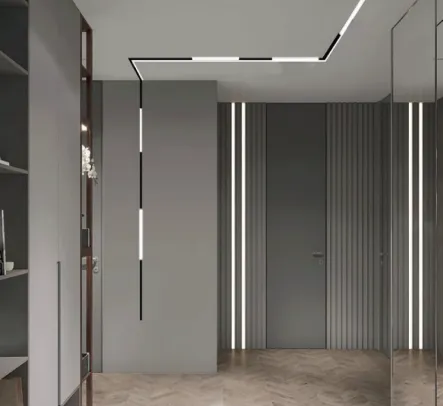
When diving into the world of magnetic track lighting, it’s easy to feel overwhelmed. You've got suppliers promising the moon, specs that look like alphabet soup, and budgets breathing down your neck. But here’s the truth: overlooking the core components turns your lighting system from a flexible design solution into a maintenance nightmare. Let’s cut through the noise and break down what actually matters.
Picture this: you install a sleek new system, and six months later, fixtures start wobbling or losing connection. That headache almost always traces back to poor track quality.
Cheap steel warps; bargain aluminum oxidizes. High-grade aluminum like 6063-T5 resists corrosion – especially crucial if you’re lighting a seafood restaurant or humid environments.
Peek inside tracks. True copper channels (minimum 1.5mm thick) carry current efficiently without hotspots. Copper-plated steel? That’s a hard pass unless you enjoy flickering lights.
| Track Type | Best For | Quality Trap | Professional’s Pick |
|---|---|---|---|
| Recessed | High-end retail galleries | Thin profiles denting during install | 2.5mm thickness, plaster-in edges |
| Surface-Mount | Warehouse retrofits | Weak load brackets sagging over time | Reinforced steel brackets, pre-drilled anchor points |
| Pendant | Restaurant mood lighting | Flaking finish on suspension rods | Powder-coated rods with internal wiring channels |
That $50 driver versus the $150 model? It’s not a scam – quality drivers save you cash long-term. Here’s why:
Cheap drivers let voltage ripple. For LEDs? That’s a death sentence. Premium drivers (Mean Well, Tridonic) keep output within ±1%. Your modules last twice as long.
"Compatible with DALI" sounds great until your lights freeze mid-show. Protocol-certified drivers communicate cleanly with KNX or Casambi ecosystems. Verify actual certifications, not marketing claims.
Power Sizing Tip: Take your total wattage, add 20% for headroom. A 240W system needs a 300W driver. Maxing out causes thermal shutdowns – especially embarrassing during a hotel dinner service.
Here’s where many projects fail spectacularly. Spotlights that shift color or wall washers with uneven beams? All avoidable.
No-name LEDs shift to green within months. Nichia or Lumileds chips maintain 90 CRI consistently. Ask suppliers: "Show me the datasheet's MacAdam ellipses." Less than 3 SDCM = elite color consistency.
Acrylic lenses yellow under UV; borosilicate glass stays crystal clear. And that 36° beam angle? Premium optics deliver razor-sharp cutoffs without spill – critical for art galleries.
Pro Trick: Magnet strength matters. Test modules by pulling vertically. They should need 5-7kg of force before releasing. Anything less rattles loose in high-vibration areas.
Ever had a track system fail at a connector? It’s never a small repair. Here’s what separates pro-grade parts:
Brass connectors on steel tracks? Electrolysis waits. Match metals: aluminum tracks need aluminum-alloy connectors with dielectric grease seals.
CE mark? UL stamp? They’re meaningless without seeing the actual reports .
Red Flag: Suppliers who can't provide test documents before shipping? Run.
Loose modules? Probably heat, not magnetism. Poor heat sinking cooks LEDs, slashing lifespan.
Field Test: Run your brightest module for 30 minutes. Touch it. Warm? Fine. Hot? Thermal failure coming.
Supplier claims versus reality: learning to spot gaps saves projects.
| Component | Cost-Cut Warning Sign | Quality Indicator |
|---|---|---|
| Track | Visible extrusion seams inside track | Mirror-finish internal channels |
| Driver | No efficiency rating label | Certified >90% efficiency (Tier 1) |
| Module | 'Standard' CRI rating (≤80) | CRI ≥90 R9 ≥80 for art/retail |
For projects requiring precision, integrated **architectural lighting solutions** demand component synergy – mismatched brands create failure points.
Cheap systems: $8k upfront. Quality systems: $14k. Surprise? The expensive choice saves money.
Consider this: One reconfiguring labor call costs $500+. Quality magnets snap modules in place in seconds.
At its heart, magnetic track lighting is about freedom – freedom to pivot designs instantly. But that freedom hinges entirely on component quality. Skip the fancy apps and color-changing tricks. Demand material docs, inspect samples violently, test drivers under load. Because the best lighting system isn't the cheapest… it’s the one nobody complains about after installation.
Recommend Products












