

If you've ever walked into a modern café with a rustic stone accent wall or passed by a sleek commercial building with a textured exterior, chances are you've admired the work of interior decoration materials and exterior decoration materials at play. Among these, PU stone wall panels have emerged as a game-changer, blending the natural beauty of stone with the practicality of modern engineering. But here's a question that often flies under the radar for contractors, designers, and homeowners alike: Does the density of these panels really matter? Spoiler: It absolutely does. In fact, density is the quiet architect behind two critical aspects of any building project—how easy the panels are to install, and how long they'll stand the test of time.
In this article, we're diving deep into the world of PU stone wall panels, unpacking what density means, and exploring how it shapes everything from the day-to-day chaos of installation to the long-term resilience of your walls. Whether you're a contractor gearing up for a high-rise facade or a homeowner revamping your living room, understanding density will help you make smarter choices—starting with picking the right PU stone wall panel supplier and ending with a space that looks great and lasts longer.
Let's start with the basics. PU stone wall panels are made from polyurethane (PU), a versatile material that's mixed with mineral fillers to mimic the look and feel of natural stone. Density, in simple terms, refers to how much mass is packed into a given volume of the panel. Think of it like comparing a fluffy marshmallow to a dense chocolate bar—same size, but one feels heavier and more solid. For PU stone panels, density is typically measured in kilograms per cubic meter (kg/m³), and it can range anywhere from 300 kg/m³ on the lower end to 800 kg/m³ or more for high-density options.
Why does this range exist? Because different projects demand different priorities. A lightweight panel might be perfect for a home's interior accent wall, where weight and ease of installation are key. But a high-rise building's exterior? That might call for a denser panel that can withstand wind, rain, and the occasional stray basketball (yes, really). The trick is finding the sweet spot between "easy to work with" and "tough as nails"—and that's where density comes in.
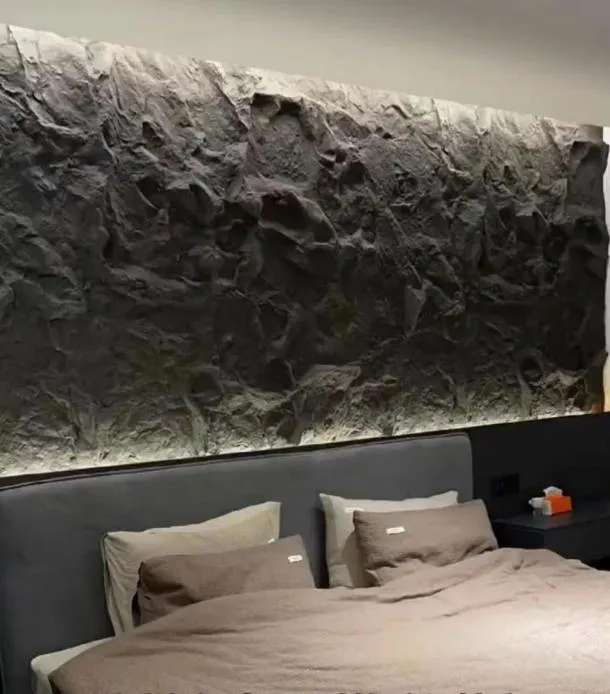
Imagine this: You're on a tight deadline to finish a restaurant's interior before its grand opening. The crew is ready, the tools are laid out, and the PU stone panels arrive. But when you lift one, it's heavier than expected. Suddenly, what you thought would be a two-person job becomes a three-person struggle. Sound familiar? Density directly impacts installation in ways that can turn a smooth project into a logistical headache—or vice versa. Let's break it down.
The most obvious effect of density is weight. A low-density panel (say, 300–400 kg/m³) might weigh as little as 8–10 kg per square meter, while a high-density panel (600–800 kg/m³) could tip the scales at 15–20 kg per square meter. That might not sound like a huge difference, but multiply it by 50 panels for a large wall, and suddenly you're looking at an extra 250–500 kg of material to haul, lift, and position.
For interior projects, lightweight panels are a godsend. They're easy to carry up stairs, maneuver around tight corners, and hold in place while the adhesive sets. You won't need heavy-duty lifting equipment, and your crew won't be exhausted by lunchtime. But for exterior projects, especially on tall buildings, weight becomes a structural consideration too. A lightweight panel might reduce the load on the building's framework, but if it's too light, it could be prone to damage from strong winds. Denser panels, on the other hand, offer better wind resistance but require careful planning to ensure the wall or facade can support the added weight.
Let's talk about the human factor. A low-density panel can often be carried and installed by one person, while a denser panel might need two. On a large job, that translates to more labor hours, more coordination, and higher costs. I once worked with a contractor who switched from a high-density to a medium-density panel (around 500 kg/m³) for a hotel lobby project. His team went from installing 10 panels a day to 15—simply because the lighter panels were easier to pass, align, and secure. "It's not just about strength," he told me. "It's about reducing fatigue. When your crew isn't struggling with heavy panels, they stay focused, and mistakes go down."
Density also dictates the tools and techniques you'll need. Low-density panels are softer and easier to cut—you might get away with a standard utility knife or jigsaw. Denser panels, though? They're more rigid and may require a circular saw with a masonry blade to avoid chipping or cracking. Adhesives matter too. Lightweight panels can often bond with standard construction adhesives, but denser panels need stronger, more durable formulas to keep them anchored, especially on vertical surfaces or exteriors where gravity and weather are working against you.
Even the type of fasteners changes. Low-density panels might only need a few screws or clips to stay in place, while denser ones could require more anchors to distribute weight evenly. Skip this step, and you risk panels sagging or even falling loose over time—a costly mistake no one wants to make.
At the end of the day, time is money. A project delayed by a day or two due to tricky installation can eat into profits or frustrate clients. Lightweight, low-density panels generally speed things up: faster cutting, easier handling, and quicker adhesion. Denser panels, while sturdier, take longer to maneuver and secure. For example, a crew installing 100 m² of low-density panels might finish in 2–3 days, while the same area with high-density panels could take 4–5 days. That's a significant difference when you're up against a deadline.
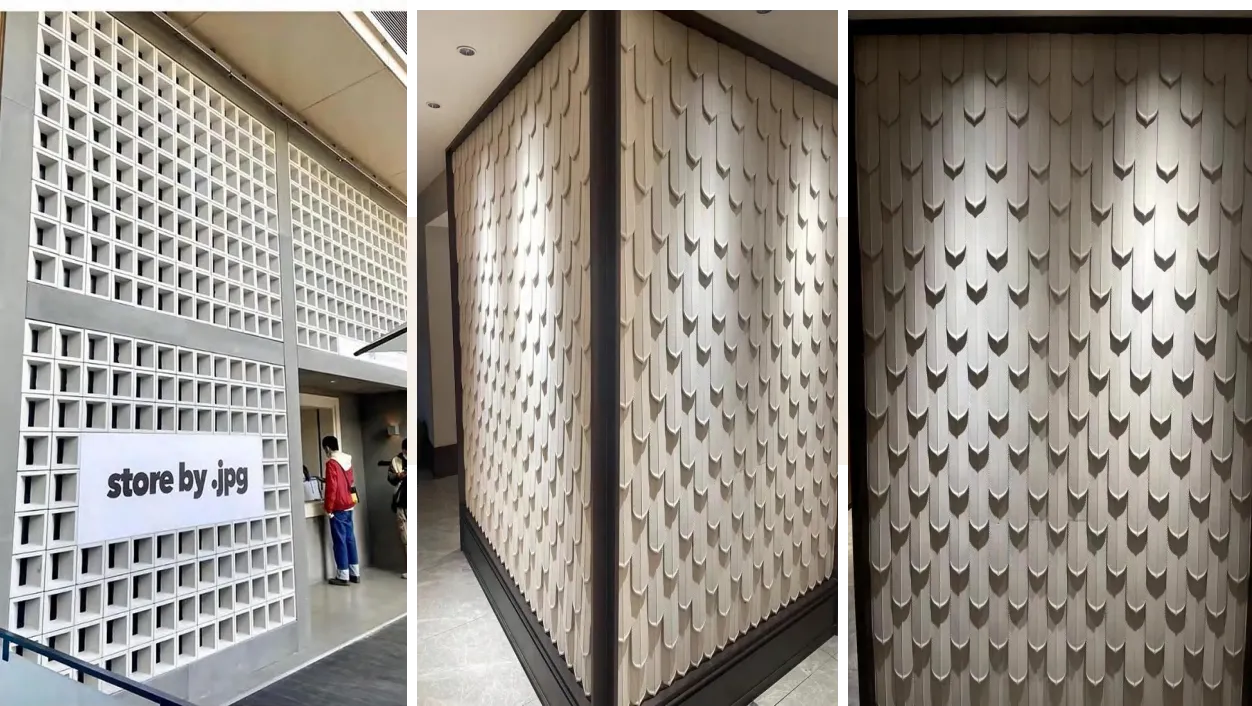
Okay, so density affects installation—but what about the long haul? Let's say you've installed your panels, and they look stunning. Now, fast-forward five years. Will they still look that way, or will they be chipped, faded, or warped? Again, density plays a starring role here. Think of it as the panel's "inner strength"—how well it resists damage, weathers the elements, and stands up to daily wear and tear.
Life is messy. Kids run into walls, furniture gets bumped, delivery guys with heavy boxes have off days. A low-density panel might dent or scratch more easily under impact, especially if it's on an interior wall in a high-traffic area like a hallway or playroom. Denser panels, with their tighter molecular structure, act like a built-in shield. I've seen high-density PU panels in a busy restaurant kitchen take hits from falling pots and pans without so much as a scuff, while a neighboring low-density accent wall in the dining area needed a touch-up after a guest's chair scraped against it.
Exteriors face even bigger threats: hailstones, flying debris from storms, or accidental collisions (looking at you, delivery trucks). A high-density panel is more likely to absorb these impacts without cracking, while a low-density one might chip or develop hairline fractures that worsen over time.
For exterior applications, density is non-negotiable. Let's talk about moisture first. Low-density panels are more porous, which means they can absorb water if not properly sealed. In humid climates or areas with heavy rain, this can lead to mold growth, warping, or even delamination (where the panel starts to peel apart). Denser panels, with their tighter structure, are less porous and more resistant to water absorption—making them a better bet for exteriors in rainy or coastal regions.
UV resistance is another factor. The sun's harsh rays can fade colors and weaken materials over time. Denser panels often hold up better here, as their compact composition slows down the breakdown of pigments and polymers. I worked on a project in Arizona a few years back where we compared low and high-density PU panels on the same building. After two summers, the low-density panels had noticeably faded, while the high-density ones still looked brand-new.
Temperature swings—hot days, cold nights—cause all building materials to expand and contract. For PU stone panels, density affects how much they move. Low-density panels are more flexible and can stretch more, which might sound good, but too much movement can lead to gaps or buckling if not accounted for. Denser panels are more rigid, with less expansion, making them more stable in areas with extreme temperature fluctuations (think deserts or northern winters).
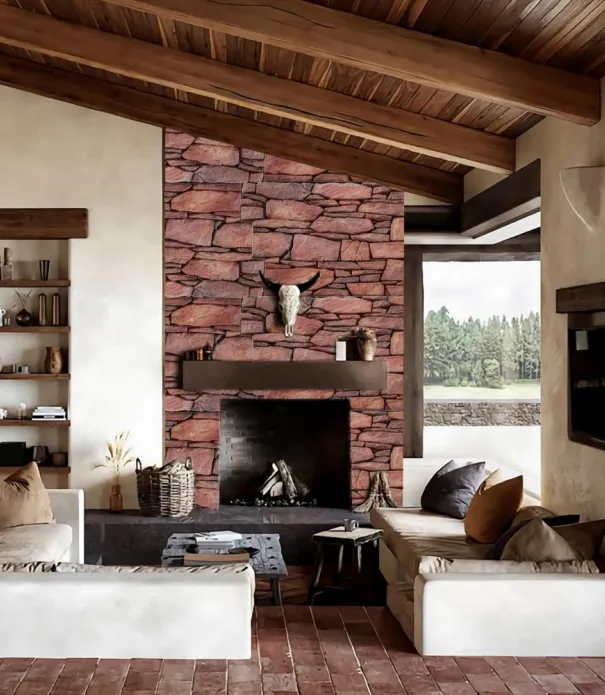
So, how do you pick the right density? It's not about "high is better" or "low is easier"—it's about matching the panel to the project. To help, here's a breakdown of common density ranges and their best uses:
| Density Range (kg/m³) | Installation Ease | Durability Rating | Best For | Key Considerations |
|---|---|---|---|---|
| 300–400 (Low) | ★★★★★ (Easiest) | ★★★☆☆ (Moderate) | Interior accent walls, residential bedrooms, low-traffic areas | Lightweight; ideal for DIY projects or areas with minimal impact. |
| 400–600 (Medium) | ★★★★☆ (Easy) | ★★★★☆ (Very Good) | Interior living rooms, restaurants, office lobbies, covered exteriors | Balanced weight and durability; works for most indoor and sheltered outdoor spaces. |
| 600–800+ (High) | ★★★☆☆ (Moderate) | ★★★★★ (Excellent) | Exterior facades, high-rise buildings, commercial kitchens, high-traffic areas | Heavy-duty; requires stronger adhesives/fasteners but withstands harsh conditions. |
Remember, there are exceptions. For example, a coastal home might need high-density panels for exterior walls to resist saltwater and wind, even if it's a residential project. Similarly, a museum with strict weight limits on upper floors might opt for low-density panels despite the high foot traffic (paired with extra protective sealant).
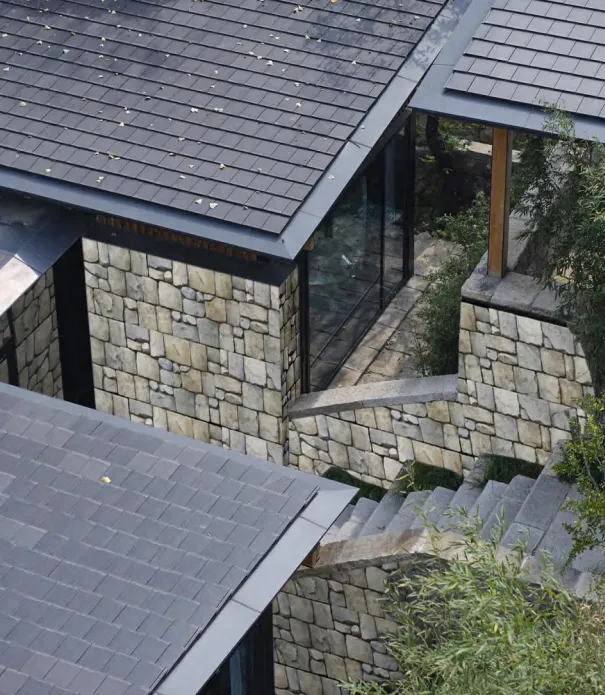
Here's the thing: Even if you memorize every detail about density, choosing the right panels is tough if you're working with a supplier who cuts corners or doesn't understand your project's needs. That's where a trusted PU stone wall panel supplier comes in. The best suppliers don't just sell panels—they offer PU stone wall panel solutions tailored to your project.
A good supplier will ask questions: Is this for interior or exterior use? What's the climate like in your area? How much foot traffic will the space get? They'll then guide you to the right density, not just push the most expensive option. Some even go a step further as a one-stop architectural solution provider , offering complementary products like adhesives, sealants, and installation tools to ensure everything works together seamlessly.
I once worked with a supplier who noticed we were ordering high-density panels for a small home's interior accent wall. They pointed out that we could save time and money with medium-density panels, since the wall wasn't load-bearing and the area had low traffic. That kind of expertise is priceless—it's not just about selling a product, but about helping you build smarter.

Let's wrap with two quick examples to bring this all to life:
Case 1: A Boutique Hotel Lobby (Interior, Medium-Density Panels)
A 50-room boutique hotel in downtown Chicago wanted a warm, inviting lobby with a stone feature wall. The design called for intricate cuts and curves, so installation ease was key. The contractor chose medium-density (500 kg/m³) panels. The crew installed 80 m² in 3 days, with minimal waste from cutting. Five years later, the wall still looks flawless—no chips, no fading, and it's held up to guests leaning against it or dragging luggage past.
Case 2: A Coastal Office Building (Exterior, High-Density Panels)
A 12-story office building in Miami needed an exterior facade that could withstand hurricane-force winds and salt spray. The architect specified high-density (700 kg/m³) PU stone panels. Yes, installation took a week longer than low-density options, and the crew needed lift equipment, but after three hurricane seasons, the panels show zero signs of damage—no water intrusion, no peeling, and the color is as vibrant as day one.
At the end of the day, PU stone wall panel density is more than a technical specification—it's a bridge between your vision and the reality of building. It affects how smoothly your project runs, how long your walls stay beautiful, and even how much you spend in the long run. Whether you're a seasoned contractor or a first-time homeowner, taking the time to understand density will help you make choices that pay off for years to come.
And remember, you don't have to go it alone. Partner with a PU stone wall panel supplier who gets your project's unique needs—one who offers not just panels, but PU stone wall panel solutions that balance installation ease and durability. After all, the best buildings aren't just built with materials—they're built with smarts. And when it comes to PU stone panels, that smarts starts with density.
Recommend Products











