
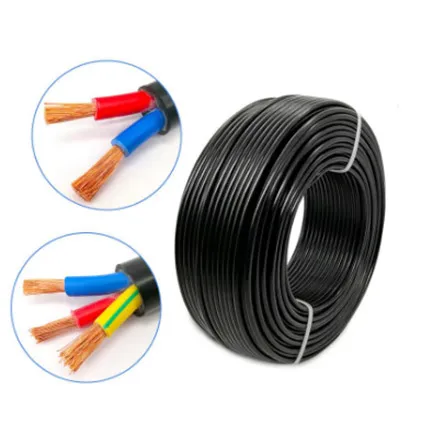
Let's talk about something we all depend on but rarely think about - power cables. They're literally the veins of our modern world, humming silently behind walls, buried underground, and stretched across landscapes. But why do these essential lifelines cost what they cost? Well, as it turns out, it's a fascinating dance between raw materials, manufacturing wizardry, and global market forces.
The bottom line: What you pay for power cables isn't random. It breaks down into three major buckets: the raw materials (especially copper), those protective insulation jackets, and the complex manufacturing processes that transform metal and plastic into sophisticated energy highways.
Copper isn't just a component in power cables - it's the star of the show. Think of it like the lead singer in a band. When copper prices jump, cable prices follow like backup singers harmonizing. This red metal typically makes up 60-70% of a cable's material cost, so its market swings hit cable pricing hard.
So why's copper so volatile? Several factors play out in this high-stakes drama:
Here's something interesting - while aluminum serves as a copper alternative, especially in overhead transmission lines, it hasn't dethroned the king. Copper's superior conductivity (about 60% better than aluminum) means engineers still prefer it where efficiency and space matter. That persistent preference keeps cable manufacturers tied to copper's rollercoaster pricing.
Copper reality check: During 2024's price surge, copper hit $9,800/ton – a 24% year-over-year jump. For a typical 500-meter industrial cable run, that price spike added nearly $1,400 just to the copper bill. No wonder cable buyers get jittery watching commodity reports!
Now let's talk about what wraps all that copper – the insulation and protective jacketing. If copper is the lead singer, these are the roadies working backstage. Without them, the show couldn't go on. Insulation materials typically account for 15-25% of a cable's cost structure, and their prices can be just as moody as copper.
There's no one-size-fits-all solution here. Different environments demand different protective envelopes:
Insulation pricing got wild after 2024's energy crisis. Petrochemical plants cut production just as pandemic construction projects hit their stride, creating the perfect price storm. In some regions, premium LSZH compound saw 40% price hikes practically overnight. That might sound abstract until you realize it could mean thousands of extra dollars on a hospital generator cabling project.
Safety has its price: Those fire-retardant compounds in insulation? They're expensive cocktails of mineral fillers and specialized polymers. When fire codes mandate these materials in high-rises, cable suppliers don't give them away – that cost gets baked right into your quote.
Raw materials tell only half the story. The real magic happens on factory floors where metal rods transform into precisely engineered cables. This transformation isn't cheap or simple. Manufacturing contributes roughly 20-30% to the final cable price and involves a ballet of machines and operators.
Modern cable plants look like futuristic playgrounds for engineers:
Each step consumes cash. Labor costs at specialized facilities in Germany? Over $45/hour including benefits. The electricity to run those massive extruders and furnaces? That tab doubled in Europe after Ukraine conflict disruptions. Even nitrogen gas for inert cable baking – yes, that's a real thing – saw shortages that jacked up prices.
Quality control isn't optional theater either. Testing labs measure everything:
When these sophisticated manufacturing operations hum along efficiently, they create economies of scale that benefit everyone. But when labor shortages strike or energy prices explode – as they did across Europe in late 2024 – cable prices inevitably climb. It's simple math: manufacturing efficiency saves money; disruptions cost money.
Automation's role: Those $1.2 million robotic coiling machines? They replace four workers doing heavy manual work. The payback comes in consistency and injury reduction, but the upfront investment adds zeros to factory balance sheets. Someone ultimately pays for those efficiency gains.
Just when you've wrapped your head around copper, insulation, and manufacturing costs, along come sneaky extras that push prices around. These supporting actors deserve their moment in the spotlight:
UL listing? CE mark? CSA approval? Each certification requires expensive testing cycles and ongoing factory audits. For cables crossing borders, these marks aren't optional decorations – they're legal requirements. A mining cable certified for Australian underground use carries nearly 18% premium over uncertified equivalents.
Cables are heavy, awkward beasts to ship. Container shortages like 2021's chaos can triple ocean freight costs. Ever seen specialized cable reels for undersea cables? They're engineering marvels that need equally specialized trucks for road transport. Those logistics headaches add dollars per meter.
Standard building wire comes off production lines like clockwork. But request custom colors for easy circuit identification? Need specific reel lengths for a skyscraper installation? That means interrupting scheduled runs for special setups – efficiency drops and costs jump. Sometimes customization justifies itself in reduced installation labor, but cable suppliers rightly charge for making exceptions.
Today's smart monitoring systems – sensors embedded in cables, fire detection features, self-diagnosing insulation – add tangible value but also tangible cost. That new grid monitoring technology detecting weaknesses before failures might add 7-10% to the cable price but could prevent million-dollar outages.
Cable manufacturing isn't frozen in time. Three seismic shifts are altering the pricing landscape:
Solar farms need different cables than coal plants – specifically UV-resistant, high-temperature jackets. Wind turbines demand crazy-flexible conductors that twist constantly without fatigue. These specialty designs command premium pricing until volumes rise. As renewables accelerated toward 35% of global capacity in 2024, cable makers raced to retool production lines.
Mega-cities reaching 30+ million residents need incredibly dense power distribution. Underground fire-resistant cables rated for tight conduit bends solve these challenges but cost 2-3× more than basic building wire. As Lagos and Jakarta add millions annually, demand for premium cables grows accordingly.
5G towers. Hyperscale data centers. Automated factories. Each requires not just power cables but sophisticated control cables monitoring performance. These increasingly involve fiber-optic strands bundled with power conductors – advanced hybrid cables where manufacturing precision costs dearly.
So where does this leave professionals buying power cables? Wisdom comes from understanding the moving parts:
The reality check: Cheapest isn't best with cables. That bargain basement find might skip fire tests or skimp on copper purity. Installation labor and downtime from failures quickly erase material savings. Smart buyers find the quality/value balance.
Where are cable prices heading? Several converging trends suggest complexity ahead:
Power cables will remain essential arteries of civilization, but their pricing reflects increasingly intricate global dynamics. Understanding copper markets, material science, and manufacturing realities transforms cable buying from frustrating mystery into strategic purchasing. The next time you plug in a device or flip a switch, remember the remarkable journey behind those hidden conductors – a journey measured in dollars, innovations, and careful calculations.
Recommend Products












