
Ever wonder why some PVC pipes handle pressure like champs while others crack under stress? It all boils down to understanding pressure ratings - that magic number stamped on your pipe. Think of it as the PVC's "pressure personality." This guide will help you decipher that secret code so you never face surprise leaks or system failures again.
You're probably familiar with PVC from household plumbing, but it's so much more than white pipes under your sink. PVC (Polyvinyl Chloride) is a superstar in industrial applications too - especially when you need to see what's flowing through your system. That's where transparent PVC pipes come into play, giving you a visual advantage while maintaining durability.
This versatile material softens when warm and firms up when cool, which is why pressure handling changes with temperature. Picture PVC as that reliable friend who's strong when things are cool but needs more careful handling when things heat up. This temperature dance is why pressure ratings aren't fixed - they're temperature-dependent performers.
Pressure ratings aren't just technical specs for engineers to debate over coffee - they're about safety, longevity, and avoiding messy disasters. Here's why they matter:
PVC pipes wear their pressure stories on their sleeves - literally. Those stamped codes along the pipe length tell you everything. Let's decode them together:
Quick Tip: Find the pressure rating stamped directly on the pipe for that specific batch. Manufacturer tables are helpful guides, but the actual pipe rating is your most reliable information.
| Size (inch) | Pipe Pressure (psi) | Socket Fitting (psi) | Threaded Fitting (psi) |
|---|---|---|---|
| 0.50 | 600 | 360 | 300 |
| 0.75 | 480 | 288 | 240 |
| 1.00 | 450 | 270 | 225 |
| 1.25 | 370 | 222 | 185 |
| 1.50 | 330 | 198 | 165 |
| 2.00 | 280 | 168 | 140 |
| 2.50 | 300 | 180 | 150 |
Here's where things get interesting - your pipe pressure rating plays hide-and-seek with temperature. That shiny rating you see stamped? It assumes your system is lounging at a cool 73°F (23°C). But real life isn't that predictable.
Imagine your pipes in a factory near machinery, or outdoors under the sun. That heat sneaks up and literally softens the PVC's grip on its pressure rating. It's like leaving chocolate in the sun - everything gets softer and less stable.
| Operating Temp (°F) | PVC Strength | CPVC Strength |
|---|---|---|
| 73 | 100% | 100% |
| 80 | 88% | 100% |
| 90 | 75% | 91% |
| 100 | 62% | 82% |
| 110 | 50% | 77% |
| 120 | 40% | 65% |
| 130 | 30% | 62% |
Temperature Insight: At PVC's max temperature of 140°F, your pipe holds on to just 22% of its original pressure rating at 73°F. That's why derating isn't optional - it's essential for keeping your system safe when temperatures rise.
Ever thought about how PVC pipes typically fail? It's almost never while sitting around idly. The trouble usually comes from:
Let's imagine your PVC system has a 4" Schedule 40 pipe with socket fittings. You're installing near equipment that pushes temperatures to 130°F. How do you figure out your safe operating pressure?
Step 1:
Find the pipe's rating at 73°F (220 psi for this example).
Step 2:
Find the socket fitting rating at 73°F (132 psi).
Step 3:
Apply the temperature correction factor for 130°F (0.30 for PVC).
Step 4:
Pipe strength: 220 × 0.30 = 66 psi
Step 5:
Fitting strength: 132 × 0.30 = 39.6 psi
Critical Takeaway: Your system's max operating pressure is not the pipe rating (66 psi) but the fitting rating (39.6 psi). Always design to your weakest component!
Sometimes PVC isn't the right tool for the job. Smart engineers know that the plastics toolbox holds specialized options:
When your temperatures climb above 140°F, CPVC (Chlorinated PVC) steps in. It maintains strength better at higher temperatures, as shown in our derating table. Plus, it handles pressure surges more flexibly. The trade-off? It costs more upfront but prevents headaches later.
PEX pipe (Cross-linked Polyethylene) brings flexibility to pressurized systems. Its coils mean fewer joints - and fewer failure points. Perfect for snaking through walls or under floors. For transparent systems needing routing flexibility, PEX is often the unsung hero.
For irrigation systems or long pipe runs, Polyethylene (PE) offers flexibility and lower installation friction. Think of it as the marathon runner of pipes - not the strongest for short bursts, but unbeatable for endurance in open spaces.
Choosing the perfect pipe isn't rocket science - it's just following these steps:
Step 1: Pressure Reality Check
Don't guess - calculate your system's
peak operating pressure
. Include all pumps, elevation changes, and potential surge pressures. This is your starting line.
Step 2: Temperature Tracking
Measure the actual operating temperature where the pipes will run - not the ambient temperature. That machinery heat or direct sunlight matters. Remember our 140°F max for PVC!
Step 3: Size + Schedule Pairing
Larger pipes need thicker walls. Match your flow requirements to pipe size, then choose the Schedule that delivers your pressure needs after derating.
Step 4: Joint Judgment
select your connection method wisely. Solvent-welded joints are stronger but permanent; threaded joints offer serviceability but lower pressure ratings. For transparent systems needing serviceability, consider flanged connections with clear gaskets.
Step 5: The Weakest Link Rule
Review every component - not just pipes. That union, elbow or valve likely has a lower rating. Design to the
lowest-rated component
in each section.
Step 6: The Safety Cushion
Add a contingency factor - we recommend 20-25% buffer. Unexpected surges happen; make sure your pipes can handle them.
Pro Tip: For transparent systems in chemical processes, always verify chemical compatibility beyond pressure ratings. Temperature plus chemical exposure creates unique stress combinations you won't find in standard tables. When in doubt, contact manufacturers with your specific cocktail of conditions.
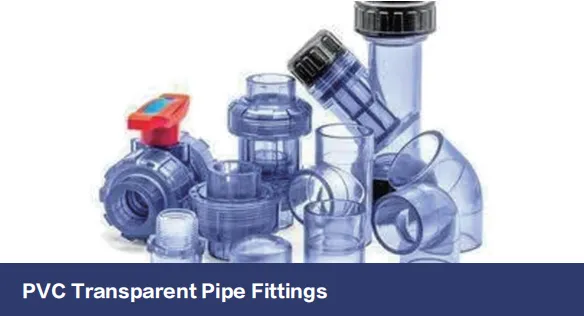
Transparent PVC fittings aren't just functional - they're diagnostic superheroes. Imagine spotting flow turbulence or buildup before it causes problems. That visual feedback loop changes maintenance from reactive guesswork to proactive management.
But here's the catch: clarity doesn't change pressure fundamentals. Those beautiful clear elbows and couplings must still meet all the pressure requirements we've discussed. Thankfully, most transparent PVC maintains similar structural properties to opaque PVC - just verify with your supplier's technical sheets.
Choosing pressure-rated PVC isn't about memorizing charts - it's understanding the invisible forces your pipes battle daily. Now that you speak "pressure rating" fluently, you're equipped to make informed decisions that prevent leaks, downtime, and expensive do-overs.
For water supply systems especially, remember that consistency beats peak power. Steady pressure is better handled than wild surges. And when in doubt - go thicker. Your future self will thank you when that system runs flawlessly for decades.
The numbers are your allies, not enemies. Learn their language, respect their limits, and build systems that stand the test of pressure - and time.
Recommend Products












