
Understanding Compliance in Industrial Fluid Systems
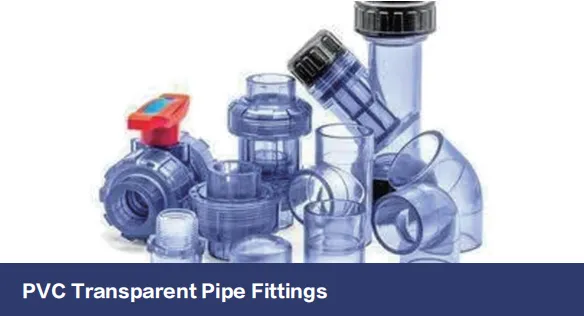
Imagine walking through a modern European industrial facility, where pressurized systems hum with activity. Amidst complex machinery, a section of transparent PVC piping catches your eye - revealing the vivid blue liquid flowing within. This seemingly simple component represents years of engineering innovation governed by strict safety regulations. Welcome to the world governed by the Pressure Equipment Directive.
Europe's Pressure Equipment Directive (PED 2014/68/EU) forms the cornerstone of mechanical safety for pressurized systems. Think of it as the DNA of industrial equipment safety - baked into every component from initial design through final installation. Unlike temporary regulations, PED establishes permanent safety genetics in equipment meant to handle substances under pressure.
Understanding PED's scope is crucial for manufacturers and engineers alike. The Directive specifically targets stationary equipment with pressures exceeding 0.5 bar - equivalent to the pressure your average bicycle tire exerts. This includes:
But where do pipeline connectors and pipe fittings fit in?
Interestingly, these crucial components operate in PED's shadow but not directly under its spotlight. Grooved couplings and pipe fittings function as connective tissue rather than pressure containers themselves. They lack defined pressure boundaries - the critical factor bringing equipment under PED jurisdiction.
This technical distinction creates real-world challenges. Manufacturing leaders like Victaulic find themselves in a regulatory paradox. While their products don't qualify for CE marking under PED, customers still expect documented safety verification. The solution? Comprehensive testing against global standards like ASTM F-1476 and F-1548, plus ISO material certifications that surpass baseline regulatory demands.
PED categorizes equipment into five hazard tiers - essentially a pressure danger scale. At the foundational level, "Sound Engineering Practice" requires no notified body intervention. But as we climb the hazard ladder, oversight intensifies:
| Category | Risk Level | External Certification |
|---|---|---|
| I | Minimal | None |
| II | Low | None |
| III | Medium | Required |
| IV | High | Required |
| V | Critical | Required |
Enter PVC transparent pipe fittings - the quiet revolution in industrial fluid systems. These crystal-clear components bring unprecedented visibility to processes. Picture chemical engineers instantly verifying flow status, maintenance teams spotting contamination without invasive checks, and safety officers monitoring system integrity at a glance.
Transparent fittings shine where visual monitoring matters: pharmaceutical manufacturing, food-grade applications, laboratory setups, and chemical processing systems. Their clarity provides constant flow verification that opaque metals simply can't match. During safety audits, inspectors don't need gauges to confirm fluid presence or contamination levels - it's literally right before their eyes.
But how do transparent fittings interact with PED compliance?
Like their opaque counterparts, transparent connectors don't fall under PED's direct scope. But manufacturers still shoulder responsibility for material safety documentation. Production certificates validate materials won't degrade under operating pressures. Permeation testing shows fluid won't compromise the polymer over time. Temperature cycling studies verify resilience across industrial environments.
Consider European pharmaceutical giant Novartis' implementation of clear fittings. They converted 40% of their low-pressure coolant lines to transparent PVC. Maintenance calls decreased by 65% annually simply because operators could spot flow problems without disassembly. "The fittings pay for themselves in diagnostic time savings alone," explains facility manager Elena Rostova. "But the unexpected benefit has been operator engagement - they feel more connected to systems they can visually understand."
Since pipe fittings operate outside PED's domain, quality-conscious manufacturers don't leave safety to chance. They implement overlapping compliance frameworks that function as safety nets:
This multi-layered approach delivers PED-grade assurance for non-PED components. During facility inspections, documentation showing compliance with these standards provides the equivalent of regulatory peace of mind.
The visual advantages of clear fittings come with engineering tradeoffs. Extended UV exposure risks polymer degradation - solved with UV-stabilized formulations. Abrasive media requires thicker walls that maintain visibility while resisting wear. Chemical compatibility becomes visually apparent when incompatible fluids cause clouding, alerting technicians before damage occurs.
At higher hazard categories, PED requires third-party validation through Notified Bodies. These organizations serve as Europe's safety conscience - independent auditors verifying technical documentation matches physical equipment. Their role includes:
For transparent fittings, notified bodies typically enter the picture through material certifications. A Notified Body might validate a PVC compound manufacturer's production standards, essentially blessing the raw material before fabrication even begins.
What documentation can manufacturers provide for non-PED components?
Industry leaders offer complete paper trails that serve as quality passports:
As materials science accelerates, PED faces new challenges. How will regulations adapt to nanocomposite polymers pushing pressure boundaries? What certification frameworks will validate biodegradable piping for temporary installations? Industry and regulators walk this tightrope together.
The evolution already shows in modern transparent fittings. Today's offerings incorporate self-monitoring capabilities - color-changing additives signal approaching temperature limits, micro-textured surfaces reveal flow turbulence patterns, and integrated QR codes provide instant access to digital compliance documentation.
Forward-thinking manufacturers already anticipate coming regulatory shifts. Thomas Bergmann, VP of Engineering at a leading polymer fittings producer, notes: "Our next-generation systems include pressure-sensitive films that leave permanent discoloration when overpressure occurs. It creates a safety breadcrumb trail for investigators. We don't wait for regulations to demand such innovations - we build them because engineers need these tools to keep systems safe."
Across European chemical plants, practical wisdom emerges from PED implementation. Chemical process engineer Miguel Torres observes: "PED gives us common safety language across 28 nations. But clarity about its boundaries matters more - knowing exactly where PED applies versus where our own corporate standards take over prevents compliance headaches."
Construction manager Sabine Weber adds: "Seeing PVC transparent fittings in operation changes perspectives. When engineers observe fluid behavior directly, they design smarter systems. We recently modified an entire cooling loop layout simply because the clear sections showed flow imbalances no calculations predicted."
The Pressure Equipment Directive continues safeguarding European industry, while transparent PVC fittings bring literal visibility to fluid systems. Though these components technically stand beyond PED's scope, leaders in pipe fitting manufacturing embrace equivalent standards - delivering safety transparency that matches their products' physical transparency.
As materials and regulations evolve together, this combination offers the industrial world something priceless: both engineered safety and operational insight. Equipment with visible function invites deeper understanding. Systems where safety margins become tangible inspire greater confidence. Ultimately, the journey toward industrial safety travels clearest when both regulations and materials let us see what we're doing.
So next time you see those crystalline PVC connections in a facility, recognize them as more than convenience. They represent safety culture made visible - compliance understood and engineered insight made accessible. In high-pressure environments, such clarity isn't just helpful; it becomes lifesaving.
Recommend Products












