
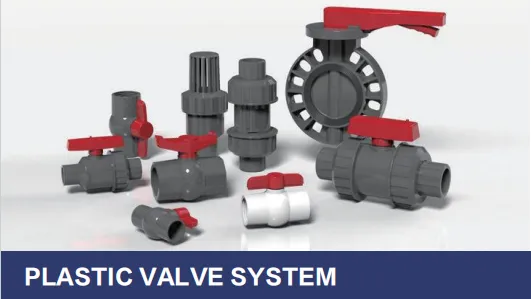
Picture this: A mid-sized commercial building project in Riyadh, where the plumbing team spent weeks installing a new water distribution system. Everything seemed on track—pipes aligned, connections tight, valves secured. But three months after completion, tenants started complaining about leaks. A closer inspection revealed the culprit: plastic valves that couldn't handle the building's hot water temperature. The valves, rated for 60°C, were regularly exposed to 75°C water from the boiler, causing the plastic to warp and seals to fail. The result? Costly repairs, delayed occupancy, and a lesson learned the hard way: when it comes to plastic valve systems, ignoring pressure and temperature ratings isn't just a mistake—it's a project risk.
In the world of construction and infrastructure, plastic valve systems are the unsung heroes. They regulate flow, prevent backflow, and ensure water, gas, and other fluids move safely through pipes. But their performance hinges on one critical factor: matching their pressure and temperature ratings to the project's unique demands. Whether you're working on a residential bathroom remodel, a hospital's plumbing network, or a large-scale industrial facility, getting this match right is the difference between a system that lasts decades and one that fails within years.
In this article, we'll dive into the nuts and bolts of pressure and temperature ratings, explore how different plastic materials stack up, and share practical tips for selecting the right plastic valve system solutions for your project. We'll also touch on what to look for in a reliable partner—because even the best products need a trusted supplier to back them up.
Let's start with pressure—the invisible force that can make or break a valve system. Pressure rating, measured in pounds per square inch (PSI) or bar, tells you the maximum pressure a valve can safely handle under normal operating conditions. But here's the catch: it's not just about "how much pressure it can take." There are two key terms to understand: working pressure and burst pressure .
Working pressure is the pressure the valve is designed to withstand continuously, day in and day out. Burst pressure, on the other hand, is the point at which the valve will physically fail—think cracks, splits, or sudden leaks. As a rule of thumb, you should never operate a valve near its burst pressure. Most industry standards recommend a safety margin of at least 25%, meaning if your system's maximum operating pressure is 80 PSI, you'll want a valve with a working pressure of 100 PSI or higher.
So why does this matter? Imagine a high-rise apartment building. The water supply for the 20th floor has to overcome gravity, so the pressure at the ground-floor valves is significantly higher than in a single-story home. If you install a valve rated for 60 PSI in that ground-floor line, where pressure regularly hits 90 PSI, you're setting yourself up for disaster. Over time, the valve's internal components—seals, O-rings, stems—will wear down, leading to leaks or even complete failure.
Pressure ratings also vary by temperature. Most ratings are tested at 73°F (23°C), but when temperatures rise, plastic becomes more flexible, and its pressure-bearing capacity drops. For example, a PVC valve rated for 100 PSI at 73°F might only handle 60 PSI at 140°F. That's why you'll often see pressure-temperature (P-T) charts from manufacturers—they show how a valve's pressure rating decreases as temperature increases.
Temperature is the other half of the equation. Plastics are sensitive to heat—too much, and they soften, warp, or lose structural integrity. Too little, and some materials become brittle, prone to cracking under stress. Temperature ratings tell you the range of temperatures a valve can handle without degrading.
Let's break it down: continuous temperature rating is the maximum temperature the valve can withstand for extended periods (think 24/7 operation). Intermittent temperature rating applies to short bursts of higher or lower temperatures—like a commercial kitchen's dishwashing system that hits 180°F but mostly runs at 140°F. Ignore these distinctions, and you could end up with a valve that performs fine for months, then suddenly fails during a heat wave or cold snap.
Plastics also expand and contract with temperature changes—a phenomenon called thermal expansion. If a valve is installed too tightly between rigid pipes, extreme temperature swings can cause it to crack as the plastic expands and pushes against the pipes. This is especially common in outdoor systems, where sunlight can heat valves to 120°F during the day, and cold nights can drop temperatures to 40°F. A good plastic valve system solution will account for this movement, either through flexible connections or materials with low thermal expansion rates.
Not all plastics are created equal. The material a valve is made from dictates its pressure and temperature limits, chemical resistance, and durability. Let's take a closer look at the most common players in the plastic valve game:
| Material | Typical Pressure Rating (PSI at 73°F) | Max Continuous Temperature (°F) | Best For | Limitations |
|---|---|---|---|---|
| PVC (Polyvinyl Chloride) | 40–150 PSI (varies by size/wall thickness) | 140°F (60°C) | Cold water systems, drain-waste-vent (DWV) lines, irrigation | Brittle in cold temps; not suitable for hot water above 140°F |
| CPVC (Chlorinated Polyvinyl Chloride) | 60–200 PSI (varies by size/wall thickness) | 180°F (82°C) | Hot and cold water systems, commercial plumbing, light industrial | More expensive than PVC; can degrade in strong acids |
| PPR (Polypropylene Random Copolymer) | 80–160 PSI (varies by size/wall thickness) | 212°F (100°C) | Hot water systems, hydronic heating, food-grade applications | Less flexible than PEX; requires specialized fusion tools |
| PEX (Cross-Linked Polyethylene) | 80–100 PSI (varies by type) | 200°F (93°C) (PEX-A); 180°F (82°C) (PEX-B) | Radiant floor heating, residential plumbing, freeze-resistant systems | Lower pressure ratings than CPVC/PPR; can kink if bent too sharply |
| CPVC Sch80 (High-Pressure) | 125–300 PSI (varies by size) | 180°F (82°C) | Industrial process lines, high-pressure water systems | Heavy and rigid; requires precise installation |
Let's put this into context. If you're a pvc dwv pipe supplier working on a residential DWV system, PVC valves are your best bet. They're affordable, corrosion-resistant, and handle the low pressure of gravity-fed drains (usually under 10 PSI). But if you're installing a hot water line in a hotel, where temperatures stay around 160°F, CPVC or PPR valves would be better choices—PVC would warp and fail in months.
For projects like hospitals or schools, where safety and durability are non-negotiable, you might lean toward PPR. A ppr pipe and fitting supplier can tell you that PPR valves are not only heat-resistant but also resistant to bacteria growth—critical for healthcare settings. And for radiant heating systems in cold climates, PEX valves shine: their flexibility and freeze resistance mean they won't crack if water inside freezes (though you should still insulate them to be safe).
Now that you know the basics of materials and ratings, let's talk about applying this knowledge to real-world projects. Every project has unique needs—residential, commercial, industrial—and the plastic valve system solutions you choose should reflect that.
Residential systems are often low-pressure (20–60 PSI) and moderate-temperature (cold water at 40–70°F, hot water at 120–140°F). For most homes, PVC or PEX valves work well. PVC is ideal for cold water lines and DWV systems—think bathroom sinks, toilets, and laundry drains. PEX, with its flexibility, is great for tight spaces (like behind walls) and hot water lines. Just make sure to check the valve's temperature rating: if the homeowner likes their showers scalding hot (150°F+), PEX might not cut it—opt for CPVC instead.
Pro tip: When working with a pvc dwv pipe supplier for residential DWV systems, ask about "schedule 40" vs. "schedule 80" PVC valves. Schedule 80 is thicker and handles higher pressure, but it's overkill for most residential drains. Save money by sticking to schedule 40 unless the plumber specifies otherwise.
Commercial projects—offices, hotels, hospitals—crank up the pressure (literally). High-rise buildings, for example, have higher static pressure on lower floors (thanks to gravity), which can reach 100+ PSI. Hospitals need valves that resist chemicals (like cleaning agents) and bacteria, while schools require fire-resistant materials (remember that Class A fireproof CPL inorganic board keyword? The same logic applies to valves—safety first).
For these projects, CPVC and PPR are workhorses. CPVC handles the higher temperatures of commercial hot water systems (140–160°F) and resists corrosion from cleaning chemicals. PPR, with its higher pressure ratings, is perfect for large-scale water distribution—like a hotel's main water line feeding 50 rooms. And don't forget about pressure regulators: even if a valve is rated for 150 PSI, installing a regulator to keep pressure at 100 PSI will extend its lifespan significantly.
Industrial settings—factories, chemical plants, power facilities—push plastic valves to their limits. Pressure can exceed 200 PSI, temperatures can swing from below freezing to 200°F+, and fluids might be corrosive (acids, solvents) or abrasive (slurries). In these cases, standard PVC or PEX won't cut it. You'll need heavy-duty options like CPVC Sch80 (for high pressure) or specialty plastics like PVDF (polyvinylidene fluoride), which handles temperatures up to 300°F and resists harsh chemicals.
Industrial projects also require strict adherence to standards. Look for valves certified by organizations like ASTM (American Society for Testing and Materials) or ISO (International Organization for Standardization). A reputable plastic valve system supplier will have no problem providing these certifications—if they hesitate, walk away.
You could have the best valve on the market, but if your supplier drops the ball, your project will too. A good plastic valve system supplier isn't just someone who sells you products—they're a partner who helps you navigate the complexities of pressure and temperature ratings, offers technical support, and stands behind their products if something goes wrong.
So what should you look for in a supplier? Start with product range. Do they carry a variety of materials (PVC, CPVC, PPR, PEX) and sizes? Can they source specialty valves if your project needs them? A supplier with a limited inventory might pressure you into buying a valve that's "close enough" to your requirements—avoid that temptation.
Next, check their technical expertise. Can their team explain the difference between schedule 40 and schedule 80 PVC? Do they offer pressure-temperature charts for their products? Will they visit your job site to assess conditions (like sunlight exposure or chemical risks) and recommend the right valve? A supplier who just hands you a catalog isn't adding value—you need someone who understands your project's unique challenges.
Certifications matter too. Look for suppliers whose products meet local and international standards—like Saudi Arabia's SASO (Saudi Standards, Metrology, and Quality Organization) or the U.S.'s NSF (National Sanitation Foundation) for potable water systems. This ensures the valves are safe, reliable, and compliant with building codes.
Finally, consider their customer service. What's their lead time? Do they offer after-sales support if a valve fails? A supplier who's hard to reach or blames you for "misusing" the product (even if you followed their guidelines) isn't worth the hassle. You want a partner who says, "Let's fix this together."
Even with the best intentions, it's easy to make mistakes when selecting plastic valve system solutions. Here are a few common pitfalls and how to steer clear of them:
Pressure and temperature ratings aren't just numbers on a valve—they're the key to a system that works, lasts, and keeps people safe. Whether you're a contractor, project manager, or homeowner, taking the time to understand these ratings, choose the right material, and partner with a reliable supplier will save you time, money, and headaches down the line.
Remember: Every project is unique. A pvc dwv pipe supplier might be perfect for your residential DWV system, but a large hospital project might require the expertise of a plastic valve system supplier who specializes in high-temperature, high-pressure solutions. By focusing on the details—material properties, pressure spikes, ambient conditions—you'll ensure your plastic valve system doesn't just meet your project's needs, but exceeds them.
At the end of the day, the goal is simple: to install a system that fades into the background, quietly doing its job for years to come. With the right knowledge and the right partner, that goal is well within reach.
Recommend Products












