
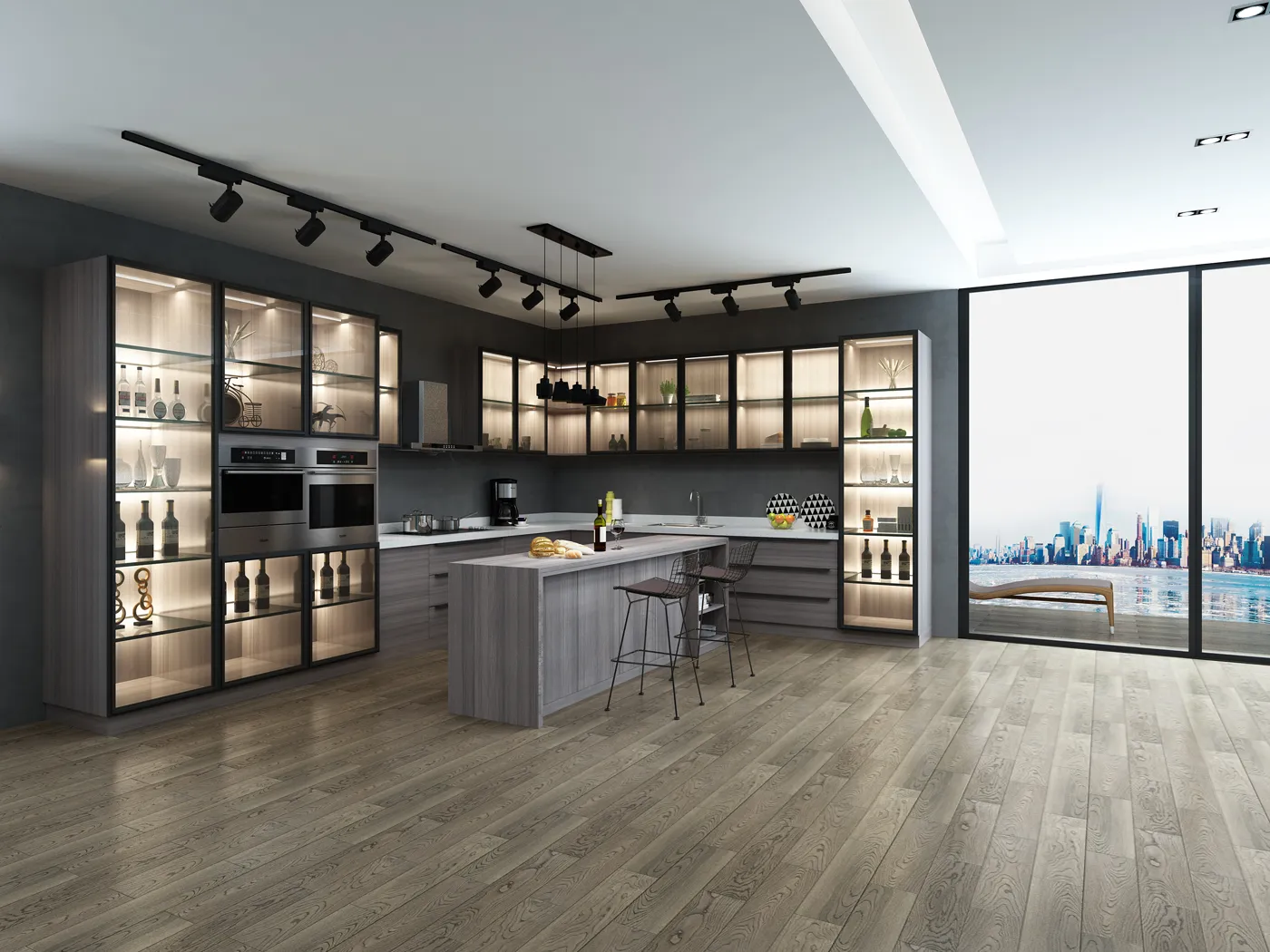
Picture walking into a Middle Eastern kitchen – the aroma of saffron and cardamom, the gleam of hand-hammered copperware, and cabinets that aren't just storage units but heritage statements. Unlike Western kitchens designed for efficiency alone, Middle Eastern clients treat their kitchens as multifunctional cultural hubs . You'll find grandmothers rolling dough next to teenagers doing homework – it’s where life unfolds.
"We don’t just want cabinets; we want heirlooms that survive generations of Friday feasts and Ramadan gatherings." – Dubai-based interior designer Layla Al-Farsi
This cultural intimacy means clients prioritize three non-negotiable aspects:
Middle Eastern clients reject cookie-cutter designs. There's a fascinating tension between preserving tradition and embracing contemporary luxury – a balance that makes cabinetry here uniquely expressive.
The Arab majlis (gathering space) dictates an open-plan philosophy. Cabinets often feature:
In Riyadh, it’s common to see cabinets with mashrabiya patterns laser-cut into modern acrylic panels, creating privacy screens that filter light beautifully as a nod to traditional wood latticework.
While Western kitchens favor neutrals, Middle Eastern palettes draw from regional landscapes and artistry:
As Khalid Hassan of Design Arabia notes: "White cabinets gather dust visibly in desert climates – clients prefer satin-finish greens and burgundies that hide sand particles but still pop."
Heat and humidity make material selection a survival game – waterproof vinyl flooring often complements cabinets to create unified moisture-resistant zones. But cabinetry materials face tougher tests...
Teak Wood Reinvented : Traditional favorite, now treated with nano-ceramic coatings that reduce thermal expansion by 68% compared to untreated wood (Qatar University studies).
Acacia Hybrids : Fused with resin composites to withstand Dubai's humidity swings without warping.
Surprise Contender : Porcelain slab doors gaining popularity – scratch-resistant, zero moisture absorption, and withstands oven-adjacent heat exposure.
Materials that rarely survive regional approval:
"We learned the hard way: stainless steel frames conduct oven heat like a conductor – now we use aerated composites with thermal breaks." – Kuwaiti cabinetmaker Yusef Nader
True heat resistance goes beyond materials – it’s a system requiring strategic design interventions.
Air Channel Systems : Hidden 15mm gaps between cabinets and walls create convection currents drawing heat away.
Phase-Change Materials (PCMs) : Beeswax microcapsules embedded in cabinet panels absorb excess heat during daytime, slowly releasing it at night.
Heat Mapping Installations : Using infrared scans to place spice cabinets furthest from ovens – preserving delicate flavors.
Developed in collaboration with UAE’s Masdar Institute, these coatings create:
Testing shows coated cabinets last 3× longer in Gulf conditions compared to European-spec equivalents. The integrated custom kitchen cabinets approach considers environmental factors at molecular levels.
A Damascus homeowner won't sacrifice heritage for heat resistance. The magic lies in blending both seamlessly.
Saudi Arabia
Morocco
"In Bahrain, we inset mother-of-pearl into cabinet doors – it’s cultural storytelling disguised as storage." – Artisan Mariam Al-Khalifa
Cabinets must pass two community-driven benchmarks:
The "Um Ali Test" : Can the cabinets withstand steam from massive pots of this traditional dessert during family gatherings?
The "Henna Night" : Do surfaces resist stains from henna paste during pre-wedding celebrations?
These unspoken requirements drive innovation toward hybrid materials like quartz-fortified woods.
The evolution continues with four emerging trends:
As materials engineer Dr. Amina Farouk explains: "We're developing date-palm biocomposites – waste fibers turned into cabinet boards that outperform steel in heat tests while celebrating local ecology."
Recommend Products












