
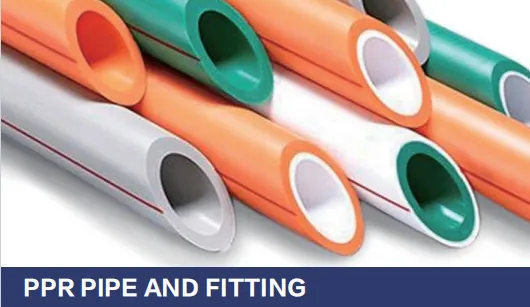
For plumbers, contractors, and installers, the success of a project often hinges on two things: the quality of the materials they use and the support they receive along the way. When it comes to plumbing systems—whether in a cozy family home or a bustling commercial complex—one material has emerged as a workhorse in recent decades: PPR (Polypropylene Random Copolymer) pipes and fittings. Lightweight, durable, and resistant to corrosion and high temperatures, PPR has become a go-to choice for modern plumbing. But here's the thing: even the best PPR products can fall short if installers don't have the right guidance to use them effectively. That's where a trusted ppr pipe and fitting supplier with robust technical support steps in—not just as a vendor, but as a partner who understands the challenges installers face daily.
In this article, we'll dive into why PPR pipes and fittings have become indispensable in both residential and commercial construction, the critical role technical support plays in ensuring installation success, and how a supplier that offers more than just products can transform the way installers work. Whether you're fitting a new bathroom in a suburban home or laying out a plumbing network for a high-rise hotel, this guide will show you why choosing a supplier with expert technical support isn't just a convenience—it's a game-changer for the quality, efficiency, and reliability of your projects.
Before we talk about technical support, let's start with the basics: what makes PPR pipes and fittings stand out in a market flooded with options like copper, PVC, or galvanized steel? PPR is a type of plastic pipe made from polypropylene random copolymer, a material known for its exceptional strength, flexibility, and resistance to heat and chemicals. Unlike traditional metal pipes, PPR doesn't rust, corrode, or scale over time, which means fewer blockages and longer system lifespans. It's also lightweight, making it easier to transport and install—no more heavy lifting or specialized tools for cutting and joining, compared to metal.
But what really sets PPR apart is its versatility. As a residential building materials supplier , we've seen PPR become the backbone of home plumbing systems, handling everything from cold water supply to hot water lines and even underfloor heating. In commercial settings, as a commercial building materials supplier , we've supplied PPR solutions for hospitals, schools, hotels, and office buildings, where reliability and low maintenance are non-negotiable. Its ability to withstand temperatures up to 95°C (and short bursts of up to 110°C) makes it ideal for hot water applications, while its smooth inner surface ensures optimal water flow with minimal pressure loss.
Of course, not all PPR products are created equal. The quality of the raw materials, the precision of manufacturing, and the design of fittings all impact performance. For example, low-quality PPR pipes might warp under high temperatures, leading to leaks, while poorly designed fittings can create weak points in the system. That's why installers need to partner with a supplier that prioritizes quality—but quality alone isn't enough. Even the best PPR pipes and fittings can fail if they're not installed correctly, which is where technical support becomes critical.
Imagine this scenario: An installer is working on a tight deadline to finish plumbing for a new apartment complex. They've ordered PPR pipes and fittings from a supplier, but when they start fusing the pipes (the process of joining PPR using heat), they notice the joints are weak and prone to cracking. They check the fusion machine, adjust the temperature, and try again—but the problem persists. Now, they're stuck: Do they keep trying and risk leaks down the line, or pause work to track down a solution, delaying the project? This is a common situation, and it's where many installers realize the value of technical support.
Installers face a unique set of challenges that go beyond just having the right materials. They need to understand how to match pipe sizes to system demands, how to calibrate fusion machines for different PPR grades, and how to troubleshoot issues when they arise. Even experienced installers can encounter unexpected problems: a batch of pipes that behaves differently than usual, a fitting that doesn't align properly, or a project with unusual pressure or temperature requirements. Without someone to turn to for guidance, these issues can lead to costly mistakes—rework, callbacks, or even system failures that damage reputations.
This is why technical support isn't an added bonus; it's a necessity. A supplier that offers on-the-ground guidance, training, and troubleshooting can mean the difference between a smooth installation and a stressful, error-prone one. For example, our technical team recently worked with an installer who was struggling to fuse PPR pipes in a cold weather environment. The low temperatures were causing the fusion joints to cool too quickly, weakening the bond. Our team advised adjusting the fusion time and temperature, and even sent a technician to demonstrate proper technique on-site. The result? The installer finished the job on time, and the system has been leak-free for over a year.
Ahmed, a plumbing contractor in Riyadh, was tasked with installing PPR pipes for a residential complex during the winter months. Despite following standard fusion procedures, he noticed that joints were failing pressure tests. He reached out to our technical support team, who identified the issue: cold ambient temperatures were reducing the effectiveness of the fusion process. Our technician visited the site, adjusted the fusion machine's heat settings, and demonstrated a slower cooling process using insulation wraps. With these tweaks, Ahmed's team completed the installation, and the system passed all tests with flying colors. "I thought I knew everything about PPR installation," Ahmed said, "but having that on-site support saved me from a major headache—and possibly a lawsuit if the leaks had gone undetected."
At the core of our offering is a range of PPR pipe and fitting solutions engineered to meet the diverse needs of both residential and commercial projects. We don't just sell products—we provide systems that are designed with installers in mind, from easy-to-identify sizing marks to fittings that align perfectly every time. Let's take a closer look at what sets our PPR solutions apart, and how they cater to the unique demands of different projects.
While the basic material is the same, residential and commercial PPR systems often require different specifications to handle varying loads, pressures, and usage patterns. For example, a single-family home might need 20mm or 25mm pipes for general water supply, while a commercial kitchen with multiple appliances and high water demand could require 50mm or larger pipes. To help installers choose the right products, we've created a comparison of our most popular residential and commercial PPR solutions:
| Application Type | Size Range (mm) | Max Working Temperature (°C) | Max Pressure Rating (bar) | Key Features | Typical Use Cases |
|---|---|---|---|---|---|
| Residential PPR | 16mm – 63mm | 95°C (continuous); 110°C (short-term) | 10 bar – 25 bar | Lightweight, easy fusion, color-coded for hot/cold water | Home water supply, hot water lines, underfloor heating, bathroom/kitchen plumbing |
| Commercial PPR | 20mm – 160mm | 95°C (continuous); 110°C (short-term) | 16 bar – 32 bar | Thicker walls, reinforced options, high-pressure variants, UV-resistant | Hospitals, hotels, schools, office buildings, industrial facilities, large-scale water distribution |
Beyond size and pressure ratings, our PPR fittings are designed for precision. Each fitting—elbows, tees, couplings, reducers—features standardized dimensions and smooth internal surfaces to minimize flow resistance. We also offer specialized fittings for specific applications, such as manifolds for underfloor heating systems, flanges for connecting to metal pipes, and check valves to prevent backflow. All our products are certified to international standards, including ISO 15874 and DIN 8077/8078, ensuring they meet the highest benchmarks for safety and performance.
One of the most common questions we get from installers is, "How do I know which PPR grade to use?" That's where our technical support team shines. We'll work with you to assess your project's needs: What's the maximum water temperature? What's the expected pressure? Is the system for potable water or another application? Based on that, we'll recommend the right grade—whether it's our standard PPR for general use, PPR-CT for enhanced temperature resistance, or PPR-Al-PPR (aluminum-reinforced) for high-pressure commercial systems.
We often say that our job doesn't end when you place an order. In fact, that's when it really begins. Our technical support services are designed to guide you through every stage of the installation process, from planning to post-completion. Here's how we support installers:
Before a single pipe is cut or fused, our team works with you to ensure you have the right materials and plan. This includes:
Even the best-laid plans can hit snags during installation. That's why our technical support team is available 24/7 via phone, email, or video call to troubleshoot issues. Common scenarios where we assist include:
Our commitment to installers doesn't end when the system is up and running. We offer:
Technical support is only effective if the products themselves are reliable. That's why we invest heavily in quality control at every stage of manufacturing. Here's what goes into making our PPR pipes and fittings some of the most trusted in the industry:
We source only virgin polypropylene random copolymer resin from reputable suppliers in Europe and Asia. Virgin resin ensures consistent quality—recycled materials can introduce impurities that weaken the pipe or cause discoloration. Each batch of resin is tested for melt flow rate, density, and thermal stability before it's used in production.
Our production facilities use state-of-the-art extrusion lines with computerized controls to ensure uniform wall thickness, diameter, and surface finish. For fittings, we use injection molding machines with precision tooling to create tight tolerances—no more loose or ill-fitting joints. Every pipe and fitting undergoes in-line testing, including:
Our PPR products are certified by international bodies, including:
These certifications aren't just pieces of paper—they're a promise that our products will perform as expected, giving you and your clients peace of mind.
To understand the impact of quality PPR products and technical support, let's look at how our solutions have been used in different sectors:
In residential projects, PPR is all about durability and ease of installation. For example, we supplied PPR pipes and fittings for a housing development in Jeddah with over 500 units. The installer, a small contracting firm, was new to PPR and worried about meeting the tight deadline. Our team provided on-site fusion training for their crew, helped them size the pipes correctly, and even arranged for weekend deliveries to keep the project on track. Today, the development's plumbing systems are leak-free, and the contractor has since switched to PPR for all their residential projects.
Another common residential application is underfloor heating. PPR's flexibility and heat resistance make it ideal for embedding in concrete slabs, where it can distribute heat evenly without degrading. We worked with an installer in Riyadh who was installing underfloor heating for a luxury villa; our technical team advised on pipe spacing and flow rates, ensuring the system heated the home efficiently while using minimal energy.
Commercial projects demand PPR solutions that can handle higher pressures, more frequent use, and stricter safety standards. Here are two examples:
In both cases, the key wasn't just the quality of the PPR products—it was the partnership between installer and supplier. By providing guidance at every step, we helped turn complex projects into success stories.
Over the years, we've learned a lot from the installers we work with. Here are their top tips for successful PPR installation, gathered from decades of experience:
"You can't skimp on the fusion machine," says Ali, a master plumber with 15 years of experience. "A cheap machine won't maintain consistent temperature, and that's how joints fail. I invested in a mid-range machine five years ago, and it's paid for itself in fewer callbacks." Our team can recommend reliable brands and even help you calibrate them for optimal performance with our pipes.
Dirt, oil, or debris on the pipe surface can weaken fusion joints. "I always wipe the pipes with isopropyl alcohol before fusing," says Fatima, who specializes in residential plumbing. "It takes an extra 30 seconds, but it prevents contaminants from getting trapped in the joint."
Patience is key. "I've seen installers rush to pressure-test a system right after fusion, and the joints fail because they haven't cooled properly," warns Omar, a commercial installer. "Follow the cooling time recommended by the supplier—usually 30 minutes for small pipes, up to 2 hours for large ones. It's worth the wait to avoid leaks."
In commercial projects with complex plumbing networks, labeling hot and cold water lines, as well as drain pipes, can save hours of confusion later. "We use color-coded tape—red for hot, blue for cold," says Ahmed, who installs PPR in hotels. "When maintenance crews need to make repairs, they can instantly identify which line is which."
"Pride can cost you," says Mohamed, the contractor we mentioned earlier. "Early in my career, I tried to fix a fusion issue on my own and ended up wasting 20 meters of pipe. Now, if I'm unsure, I call the supplier's technical team immediately. They've seen it all, and their advice is always spot-on."
As the construction industry evolves, so too does PPR technology. Here are some emerging trends we're watching—and adapting to—at our company:
No matter how technology advances, though, one thing will remain constant: the need for human expertise. At the end of the day, installers need a supplier who understands their challenges, speaks their language, and is willing to roll up their sleeves to help get the job done right.
In a market full of suppliers, what makes us stand out? It's simple: we put installers first. We don't just sell PPR pipes and fittings—we provide a complete solution that includes high-quality products, expert technical support, and a commitment to your success. Here's what you can expect when you partner with us:
At the end of the day, we believe that our success is tied to yours. When you choose us as your ppr pipe and fitting supplier , you're not just getting materials—you're getting a partner who is invested in the quality and reliability of your projects. So whether you're a seasoned installer or just starting with PPR, we're here to help you succeed, one fusion joint at a time.
Recommend Products












