
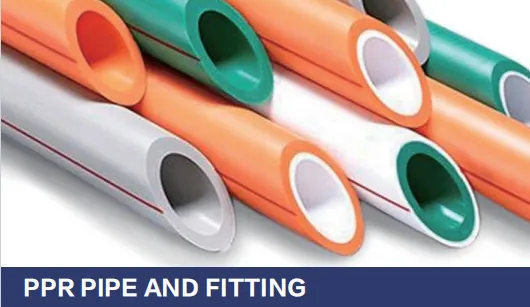
In the intricate tapestry of construction projects—whether residential complexes, commercial skyscrapers, or critical infrastructure like hospitals—every component plays a role in ensuring durability, safety, and long-term performance. Among these, PPR (Polypropylene Random Copolymer) pipes and fittings stand out as unsung heroes, quietly facilitating the flow of water, chemicals, and gases in countless buildings worldwide. But the reliability of these systems hinges not just on the material itself, but on the supplier behind them. Choosing a PPR pipe and fitting supplier is more than a transaction; it's selecting a partner who will influence your project's success, timelines, and reputation. In this article, we'll explore the key qualities that separate exceptional suppliers from the rest, ensuring your next construction venture is built on a foundation of trust, quality, and expertise.
At the heart of any reputable PPR pipe and fitting supplier lies an unwavering commitment to product quality. PPR pipes are designed to withstand high temperatures, pressure, and chemical corrosion, making them ideal for hot and cold water systems, heating networks, and industrial applications. But not all PPR products are created equal. Inferior materials or shoddy manufacturing can lead to leaks, burst pipes, or premature failure—consequences that translate to costly repairs, project delays, and even safety hazards.
Exceptional suppliers prioritize quality at every stage: from sourcing raw materials (virgin polypropylene resin, not recycled plastics) to rigorous testing in accredited labs. Look for suppliers who adhere to international standards such as ISO 15874 (for PPR pipes) and ASTM D2846 (for plastic piping systems), as these certifications are proof of compliance with strict performance criteria. For instance, a reliable PPR pipe and fitting solution should exhibit a minimum service life of 50 years under standard operating conditions, resistance to temperatures up to 95°C, and pressure ratings that align with project requirements (e.g., 10 bar at 20°C for residential use, 16 bar for commercial applications).
Compliance is especially critical in specialized sectors. Take hospitals, for example: a PPR pipe system here must not only be durable but also non-toxic and resistant to bacteria growth. Similarly, in Saudi Arabia's harsh climate, where temperature fluctuations are extreme, PPR pipes must maintain structural integrity under thermal stress. A supplier who understands these nuances will ensure their products are tested for region-specific challenges, making them a trusted Saudi Arabia building materials supplier for local and international projects alike.
| Material | Max Temperature Resistance | Pressure Rating (20°C) | Chemical Resistance | Service Life Expectancy |
|---|---|---|---|---|
| PPR (Random Copolymer) | 95°C (short-term); 70°C (continuous) | 10-25 bar (depending on SDR) | Excellent (resists acids, alkalis, salts) | 50+ years |
| UPVC | 45°C (continuous) | 6-16 bar | Good (avoid strong acids/alkalis) | 30-40 years |
| CPVC | 93°C (continuous) | 10-20 bar | Very Good (resists most chemicals) | 40-50 years |
As the table illustrates, PPR strikes a balance between temperature resistance, pressure handling, and longevity that makes it a preferred choice for modern construction. A supplier who can articulate these benefits and provide test reports (e.g., from SGS or TÜV) demonstrates transparency and confidence in their PPR pipe and fitting solutions.
While PPR pipes and fittings may be your immediate need, the best suppliers go beyond a single product line. They position themselves as one-stop architectural solution providers , offering a diverse portfolio that caters to the full spectrum of construction requirements. This breadth of offerings is invaluable for project managers and contractors, who can streamline their supply chain, reduce coordination efforts, and leverage bulk purchasing benefits by partnering with a single, reliable supplier.
For example, a top-tier PPR pipe and fitting supplier might also offer complementary products such as:
Why does this matter? Imagine managing a high-rise residential project: you need PPR pipes for plumbing, UPVC for drainage, flooring for 50+ units, and wall panels for common areas. Coordinating with five different suppliers means juggling multiple delivery schedules, quality standards, and payment terms. A one-stop supplier simplifies this, acting as a single point of contact and ensuring consistency across products. It also reduces the risk of delays caused by miscommunication between separate vendors—a critical advantage in tight construction timelines.
Look for suppliers who actively expand their product range based on market trends. For instance, the growing demand for eco-friendly construction materials has led leading suppliers to introduce PPR pipes reinforced with fiberglass for enhanced strength, or UPVC pipes made from recycled materials without compromising performance. This adaptability signals a supplier invested in long-term industry relevance.
Construction projects are rarely one-size-fits-all. A residential building has different needs than a hospital, and a commercial complex differs from an industrial plant. The best PPR pipe and fitting suppliers understand this, bringing deep industry expertise to the table and offering tailored solutions that address sector-specific challenges.
Consider the healthcare sector: hospitals require piping systems that are not only leak-proof but also easy to clean and resistant to pathogens. A supplier with experience as a class A fireproof CPL inorganic board for hospital and school supplier will recognize that PPR pipes here need smooth inner surfaces (to prevent bacterial buildup) and compatibility with disinfectants. Similarly, in schools, where safety is paramount, PPR pipes must meet low-smoke emission standards in case of fire—a detail a generalist supplier might overlook.
Residential projects, on the other hand, often prioritize cost-effectiveness and ease of installation. A residential building materials supplier specializing in PPR solutions will offer pre-insulated pipes for underfloor heating systems, reducing labor time, or color-coded pipes (red for hot water, blue for cold) to simplify on-site identification. For commercial high-rises, they might provide large-diameter PPR pipes (up to 160mm) for vertical water distribution, paired with sound-dampening fittings to minimize noise in office spaces.
Customization is another hallmark of a superior supplier. While standard PPR pipes work for most projects, unique designs or challenging site conditions may require bespoke solutions. For example, a luxury hotel with curved walls might need custom-bent PPR pipes, or a chemical plant might require pipes with specialized coatings for corrosive media. A supplier with in-house engineering teams can collaborate with your project designers to develop these custom PPR pipe and fitting solutions, ensuring they meet both technical specifications and aesthetic goals.
Case in point: A recent project in Riyadh involved constructing a mixed-use development with a rooftop swimming pool. The client needed PPR pipes that could withstand both the weight of the pool water and the high ambient temperatures. The supplier not only provided high-pressure PPR pipes (16 bar rating) but also customized the fittings with thermal expansion joints to accommodate temperature-induced movement. The result? A leak-free system that passed rigorous inspections and was delivered two weeks ahead of schedule.
In construction, time is money. A delayed shipment of PPR pipes can bring an entire plumbing phase to a halt, cascading into missed deadlines, increased labor costs, and strained client relationships. That's why a supplier's supply chain resilience is as critical as their product quality.
Exceptional PPR pipe and fitting suppliers invest in building robust supply chains, with strategically located warehouses, redundant manufacturing facilities, and partnerships with global logistics providers. For example, a Saudi Arabia building materials supplier operating in the GCC region would maintain stockpiles in Jeddah, Riyadh, and Dammam to ensure quick delivery to projects across the country, even during peak construction seasons. They would also have contingency plans for disruptions—whether a port strike, material shortage, or geopolitical event—such as alternative sourcing routes or backup production lines.
Transparency is key here. A reliable supplier will provide real-time updates on order status, share delivery timelines upfront, and proactively communicate any potential delays. They'll also offer flexible ordering options, such as just-in-time (JIT) delivery for large projects to minimize on-site storage costs, or bulk ordering discounts for long-term contracts. For instance, a commercial building project spanning 18 months might benefit from a supplier who can schedule monthly PPR pipe deliveries based on construction milestones, ensuring materials arrive exactly when needed.
Global reach is another advantage. If your project is in Saudi Arabia but requires specialized PPR fittings from Europe, a supplier with international partnerships can source these components efficiently, handling customs clearance and logistics on your behalf. This eliminates the hassle of managing cross-border shipments and reduces the risk of delays due to paperwork errors.
The relationship with a PPR pipe and fitting supplier shouldn't end once the products are delivered. Construction projects often face unexpected challenges—whether a design change, installation error, or post-completion maintenance issue. A supplier who offers exceptional customer support and after-sales service becomes a true partner, helping you navigate these hurdles.
Start with pre-sales support: A knowledgeable team should be available to answer technical questions, assist with product selection, and provide detailed documentation (e.g., installation guides, material safety data sheets). For example, if you're unsure whether PPR or CPVC pipes are better for a hotel's hot water system, they should analyze factors like operating temperature, pressure, and budget to recommend the optimal solution. Some suppliers even offer on-site consultations, sending engineers to assess project requirements firsthand.
During installation, technical support is invaluable. PPR pipes require precise welding (using heat fusion tools) to ensure leak-proof joints—a skill not all contractors may possess. A proactive supplier will offer training sessions for your team, demonstrating proper welding techniques and sharing tips to avoid common mistakes (e.g., overheating the pipe, which weakens the joint). They might also provide loaner equipment or on-site supervision for complex installations, giving you peace of mind that the job is done right.
After-sales service is equally important. Look for suppliers who stand behind their products with comprehensive warranties—ideally 10-15 years for PPR pipes and fittings. Beyond warranties, they should offer responsive repair or replacement services in case of defects. For instance, if a batch of PPR fittings is found to have manufacturing flaws, a reliable supplier will expedite replacements at no cost and even send a team to inspect installed components to prevent future issues.
A major hospital project in Riyadh was nearing completion when a routine inspection revealed a small leak in the PPR hot water system serving the intensive care unit (ICU). The contractor, worried about delays, contacted the supplier's after-sales team. Within 24 hours, the supplier dispatched a technical team to the site, identified the issue (a faulty weld due to incorrect tool calibration), and repaired the joint. They also provided additional training for the contractor's welders and replaced the entire batch of fittings as a precaution. The ICU was operational on schedule, and the hospital saved an estimated $50,000 in potential delays and rework costs. "Their responsiveness turned a crisis into a testament of their commitment to our success," said the project manager.
Today's construction industry is increasingly focused on sustainability, with clients, regulators, and investors demanding eco-friendly materials and practices. A forward-thinking PPR pipe and fitting supplier recognizes this shift and integrates sustainability into their operations—from manufacturing to end-of-life product management.
Start with the materials: PPR is inherently eco-friendly, as it is 100% recyclable and requires less energy to produce than metal pipes (e.g., copper or steel). Leading suppliers take this further by using renewable energy in their factories (solar, wind) and minimizing waste during production. For example, some suppliers recycle plastic scraps from manufacturing into secondary products like pipe insulation, reducing landfill impact.
Innovation is also a driver of sustainability. Suppliers invested in R&D are developing PPR pipes with enhanced energy efficiency, such as those with built-in insulation to reduce heat loss in hot water systems. Others are exploring bio-based polypropylene, derived from renewable resources like sugarcane, which lowers the product's carbon footprint without sacrificing performance. These innovations not only align with green building certifications (e.g., LEED, BREEAM) but also reduce long-term operational costs for clients (e.g., lower energy bills for heating water).
Sustainability also extends to packaging and logistics. A responsible supplier will use minimal, recyclable packaging for PPR pipes and fittings, avoiding excessive plastic or cardboard. They might also optimize delivery routes to reduce fuel consumption, or partner with carbon-neutral shipping companies to offset emissions from transportation.
For clients in Saudi Arabia, where the government is pushing for sustainable construction through initiatives like Vision 2030, partnering with an eco-conscious supplier can enhance project eligibility for green building incentives. It also appeals to environmentally aware tenants and buyers, adding value to the finished development.
Choosing a PPR pipe and fitting supplier is a decision that reverberates throughout your construction project's lifecycle. It's about more than finding the lowest price or the nearest vendor; it's about selecting a partner who brings quality, expertise, and reliability to the table. From uncompromising product standards and comprehensive solutions to industry-specific knowledge and proactive support, the qualities outlined above are the hallmarks of a supplier invested in your success.
As you evaluate potential partners, remember to ask tough questions: How do they ensure product quality? Can they adapt to your project's unique needs? What happens if a shipment is delayed? Their answers will reveal whether they're a transactional supplier or a long-term ally. In the end, the right PPR pipe and fitting supplier won't just deliver products—they'll help you build better, faster, and more sustainably, turning your construction vision into a lasting reality.
Recommend Products












