
In the heart of Saudi Arabia, a transformative journey is underway. Vision 2030, the kingdom's ambitious blueprint for the future, isn't just about skyscrapers and mega-cities—it's about building communities, enhancing quality of life, and creating spaces where people thrive. From the bustling streets of Riyadh to the coastal developments of Jeddah, and the futuristic plans of NEOM, every project tells a story of progress. But behind these stories lies a critical truth: great visions need strong foundations. And when it comes to infrastructure, the unsung heroes are often the materials that hold it all together—especially the pipes that carry water, the fittings that connect systems, and the trusted suppliers who ensure these components stand the test of time.
As a one-stop architectural solution provider deeply rooted in Saudi Arabia, we've seen firsthand how the right building materials can turn blueprints into reality. Today, we're diving into the world of PPR pipes and fittings—a cornerstone of modern plumbing—and exploring how localized support from a dedicated PPR pipe and fitting supplier is fueling the success of Vision 2030's residential and commercial projects. Because in construction, it's not just about selling products; it's about partnering with builders, contractors, and dreamers to solve problems, meet deadlines, and build with confidence.
Vision 2030 isn't just a plan—it's a promise. A promise to diversify the economy, create jobs, and make Saudi Arabia a global hub for innovation and living. At its core are projects that touch every aspect of daily life: new residential complexes to house growing families, state-of-the-art hospitals to care for communities, cutting-edge schools to educate the next generation, and sprawling commercial hubs to drive business. Take NEOM, for example—a city designed to redefine urban living, where sustainability and technology converge. Or The Line, a linear city stretching 170 km, promising zero carbon emissions and a seamless blend of nature and urbanity. Even smaller-scale projects, like neighborhood renovations in Riyadh or coastal resorts in Dammam, play a role in this larger vision.
But here's the thing about big dreams: they demand reliability. When you're building a hospital that will treat thousands, or a school that will educate children for decades, you can't cut corners on materials. Plumbing systems, in particular, are the circulatory system of any building. A leaky pipe in a residential apartment isn't just an inconvenience—it disrupts lives. A faulty fitting in a commercial kitchen can shut down operations. And in a country like Saudi Arabia, where temperatures soar above 45°C in summer and water conservation is critical, the stakes are even higher. That's where a trusted residential building materials supplier and commercial building materials supplier steps in—not just to deliver products, but to deliver peace of mind.
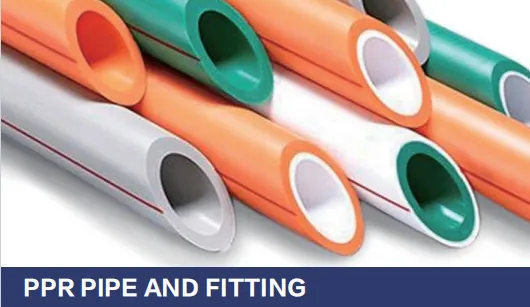
Let's talk about PPR—short for Polypropylene Random Copolymer. If you're not in construction, you might not know its name, but you've definitely benefited from its work. PPR pipes are the backbone of plumbing systems in homes, hospitals, hotels, and offices across Saudi Arabia, and for good reason. Imagine a material that's flexible enough to bend without cracking, tough enough to withstand extreme temperatures (both hot and cold), and resistant to the corrosion that plagues metal pipes. That's PPR in a nutshell.
Unlike older metal pipes that rust over time or rigid plastic pipes that crack under pressure, PPR is a modern marvel. It's lightweight, making installation faster and easier for contractors (which means projects finish on time). It's smooth on the inside, so water flows freely without buildup—critical for maintaining water pressure in high-rise buildings. And here's a detail that matters in Saudi Arabia: PPR handles heat like a champ. Whether it's carrying hot water from a boiler to a shower in a Riyadh apartment or circulating chilled water in a Jeddah mall's AC system, PPR keeps up. No warping, no leaks, no unexpected failures. For families moving into a new home, that means never worrying about a burst pipe ruining their furniture. For business owners, it means avoiding costly downtime due to plumbing emergencies.
But PPR's real strength? It's a long-term investment. A well-installed PPR system can last 50 years or more—outliving the first generation of residents in a housing complex or the first decade of a business's operations. In a country where Vision 2030 is building for the next century, that kind of durability isn't just a nice-to-have; it's a necessity.
Saudi Arabia isn't just a market—it's a unique environment with its own set of challenges. Extreme heat, high humidity in coastal areas, and varying soil conditions across regions mean that one-size-fits-all building materials simply don't work. A pipe that performs well in Europe might crack in the Saudi summer. A fitting designed for mild climates might fail under the stress of our water pressure regulations. That's why being a PPR pipe and fitting supplier here isn't about importing generic products; it's about engineering solutions that understand the local context.
Take, for example, a recent project we supported in Riyadh: a residential complex with 500 units. The contractor initially planned to use a cheaper, imported plastic pipe, but after a trial installation, they noticed issues. The pipes softened in the summer heat, leading to reduced water flow, and the fittings leaked at the joints. The project was at risk of delays, and the developer was frustrated. That's when they reached out to us. We didn't just sell them PPR pipes—we sent a technical team to the site. We tested the soil, reviewed the building's water pressure requirements, and recommended a custom PPR solution with reinforced fittings designed to handle Saudi temperatures. Three months later, the complex was fully plumbed, and today, residents rave about consistent hot water and zero leaks. That's the difference between a supplier and a partner: we don't just deliver products—we solve problems.
Localized support also means speaking the language of the market. We work closely with Saudi construction firms, understanding their timelines, budget constraints, and the specific standards set by bodies like the Saudi Standards, Metrology and Quality Organization (SASO). We know that in residential projects, cost-effectiveness matters—families deserve affordable homes without compromising on quality. In commercial projects, like hotels or hospitals, compliance with international hygiene standards is non-negotiable. As both a residential building materials supplier and commercial building materials supplier , we tailor our approach: offering bulk pricing for large residential developments, and specialized, certified products for high-stakes commercial builds.
While PPR pipes and fittings are our specialty, we know that construction projects don't run on a single product. That's why being a one-stop architectural solution provider means offering a range that supports every phase of building—from the foundation to the finishing touches. Alongside our PPR lines, we provide UPVC pipes for drainage systems (ideal for their chemical resistance), CPVC for high-temperature industrial applications, and even specialized solutions like PEX pipes for underfloor heating in luxury villas. But make no mistake: PPR remains the star of the show for most residential and commercial plumbing needs, and here's why it stands out when compared to other options:
| Pipe Type | Material | Temperature Resistance | Best For | Key Advantage for Saudi Projects |
|---|---|---|---|---|
| PPR | Polypropylene Random Copolymer | Up to 95°C (continuous use) | Hot/cold water systems, residential buildings, hospitals, schools | Withstands Saudi summer heat; leak-proof joints reduce maintenance |
| UPVC | Unplasticized Polyvinyl Chloride | Up to 60°C | Drainage, cold water lines, irrigation | Cost-effective for non-heated applications; corrosion-resistant |
| CPVC | Chlorinated Polyvinyl Chloride | Up to 93°C | Industrial piping, high-temperature commercial systems | Chemical-resistant but less flexible than PPR for tight installations |
What sets our PPR range apart? We source raw materials from Europe, ensuring consistency in quality, and our manufacturing process includes rigorous testing for pressure, impact, and heat resistance. Our fittings—elbows, tees, reducers, and valves—are designed to fit seamlessly with our pipes, eliminating the risk of mismatched components (a common cause of leaks). We also offer custom solutions: for example, in a recent hotel project in Makkah, we created special insulated PPR pipes to prevent heat loss in hot water lines, reducing energy costs for the hotel long-term. It's these little details that turn a good supplier into a great one.
Numbers and specs tell part of the story, but real impact lies in the projects themselves. Let's take a closer look at two recent partnerships that showcase how localized PPR solutions are making a difference in Saudi Arabia's residential and commercial landscapes.
Al Hamra Village is a sprawling residential development designed to house 10,000 families, complete with parks, schools, and community centers. When the developer approached us, their main concern was scalability: they needed a plumbing solution that could be installed quickly across 2,000 units, without sacrificing quality. As a residential building materials supplier , we knew speed and consistency were key. We proposed our standard PPR pipe range, paired with our "Quick-Fit" fittings that reduce installation time by 30% (thanks to pre-insulated joints and color-coded sizing for easy identification). We also provided on-site training for the contractor's team, ensuring every installer knew how to achieve a leak-proof seal.
Today, Al Hamra Village is fully occupied, and feedback from residents is glowing. "We moved in six months ago, and not once have we had a plumbing issue," says Fatima, a mother of three living in one of the townhouses. "The hot water flows instantly, even in summer, and the pressure is consistent—something we never had in our old apartment." For the developer, the project finished two months ahead of schedule, saving them millions in labor costs. It's a win-win: happy residents, on-time delivery, and a development that truly feels like home.
Hospitals have zero room for error. King Abdullah Medical City, one of the largest healthcare facilities in the Middle East, required plumbing systems that met strict hygiene standards, could handle 24/7 water flow, and were resistant to the chemicals used in medical cleaning. As a commercial building materials supplier , we worked closely with the hospital's engineering team to design a custom PPR solution. We used lead-free PPR pipes (critical for medical settings) and added antimicrobial coatings to fittings to prevent bacterial growth. We also conducted third-party testing to ensure compliance with international healthcare standards (ISO 15874 for PPR systems in medical facilities).
Dr. Ahmed, the hospital's facilities director, puts it best: "In healthcare, every component matters. A single leak could disrupt patient care or compromise sterility. Working with a supplier who understood our unique needs—from material safety to system reliability—gave us the confidence to focus on what we do best: healing people." Today, the hospital's plumbing system serves 5,000 patients daily, with zero reported issues in three years of operation.
In a market where subpar materials can lead to catastrophic failures, quality isn't just a selling point—it's a responsibility. As a PPR pipe and fitting supplier, we hold ourselves to the highest standards, from the moment raw materials arrive at our factory to the day our products are installed on-site.
Our PPR pipes undergo a battery of tests: we check for pressure resistance (up to 10 bar at 70°C, well above Saudi Arabia's standard water pressure), impact strength (dropping pipes from 2 meters onto concrete to ensure they don't crack), and long-term heat stability (exposing samples to 95°C water for 10,000 hours to simulate decades of use). We're also certified by SASO, the Saudi Arabian Standards Organization, and our products meet EU standards (EN 15874) and US standards (ASTM F2389). For commercial clients like hospitals or schools, we provide full traceability: every batch of pipes comes with a certificate of analysis, so you know exactly what went into making them.
But quality isn't just about the product—it's about the process. We maintain a dedicated quality control team that inspects every pipe and fitting before it leaves our warehouse. We also invest in research and development, constantly improving our products to meet evolving needs. For example, we're currently testing a new PPR blend with added UV resistance, designed for outdoor plumbing systems (like irrigation in parks or cooling lines in solar farms)—a direct response to feedback from contractors working on NEOM's outdoor projects.
Vision 2030 isn't just about growth—it's about sustainable growth. Saudi Arabia is committed to reducing its carbon footprint, and building materials play a big role in that. PPR pipes, by nature, are an eco-friendly choice: they're 100% recyclable, require less energy to produce than metal pipes, and their long lifespan means fewer replacements (and less waste) over time. As a supplier, we take sustainability a step further.
Our manufacturing facility in Dammam runs on solar power, reducing our reliance on fossil fuels. We also minimize packaging waste by using reusable pallets and recyclable materials. For large projects, we offer a "Take-Back" program: collecting scrap PPR from construction sites and recycling it into new fittings (a process that uses 70% less energy than producing new plastic). It's our way of ensuring that the buildings we help create don't just serve today's communities—they protect tomorrow's planet.
"Sustainability isn't a buzzword for us," says our sustainability director, Omar. "It's about aligning with the kingdom's goals. When we supply PPR pipes to a school, we're not just thinking about the kids who will learn there today—we're thinking about the world they'll inherit. If our pipes last 50 years and reduce energy use, that's a small but meaningful contribution to a greener Saudi Arabia."
Vision 2030 is a journey, not a destination. As Saudi Arabia continues to grow—building new cities, expanding existing ones, and reimagining what's possible—so too will the need for reliable, localized building materials. For us, the role of a PPR pipe and fitting supplier is about more than keeping up with demand; it's about anticipating it.
We're already working on new solutions: PPR pipes with integrated smart sensors to detect leaks early (critical for high-rise buildings), and ultra-thin PPR pipes for retrofitting older homes (a key need as the kingdom renovates existing neighborhoods). We're also expanding our reach, partnering with contractors in emerging regions like Abha and Tabuk, ensuring even remote communities have access to quality materials.
At the end of the day, construction is about people. It's about the family moving into their first home, the doctor treating patients in a state-of-the-art hospital, the student learning in a bright new classroom. When we supply PPR pipes and fittings, we're not just supplying materials—we're supplying the confidence that these spaces will stand strong, support life, and inspire progress. That's the heart of localized support: understanding that behind every project is a community, and behind every community is a future worth building.
So here's to the dreamers, the builders, and the partners who make it all possible. Together, we're not just building infrastructure—we're building Saudi Arabia's tomorrow. And with reliable PPR pipes, trusted fittings, and a commitment to localized support, the future looks brighter than ever.
Recommend Products












