
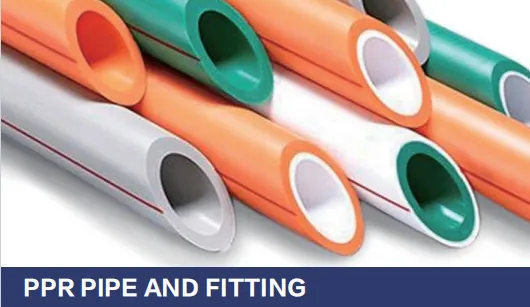
In the heart of the Gulf Cooperation Council (GCC), where skyscrapers pierce the skyline and ambitious infrastructure projects redefine urban landscapes, the demand for reliable, high-quality building materials has never been greater. From bustling metropolises like Dubai and Riyadh to emerging cities in Qatar and Oman, construction sites hum with activity, each project a testament to the region's growth and vision. At the core of these projects lies a critical question: how do we ensure the materials we use are not just durable, but also compliant with the strictest regional standards? For contractors, architects, and project managers, the answer often leads them to one trusted partner: a dedicated PPR pipe and fitting supplier that understands the unique challenges of GCC construction.
The GCC's construction sector is in the midst of a golden era. Governments across the region are investing billions in residential complexes, commercial hubs, healthcare facilities, and transportation networks to meet the needs of a growing population and diversify economies. Saudi Arabia's Vision 2030, for instance, includes mega-projects like NEOM and the Red Sea Project, while the UAE continues to expand its portfolio of iconic structures. But with great ambition comes great responsibility—these projects demand materials that can withstand the GCC's harsh climate: scorching summer temperatures that often exceed 50°C, high humidity along coastal areas, and the occasional sandstorm. In this context, cutting corners on material quality isn't just risky; it's costly, both in terms of repairs and reputation.
This is where specialized suppliers step in. A reliable PPR pipe and fitting supplier doesn't just deliver products—they deliver peace of mind. They know that in a region where a single leak in a plumbing system can disrupt a hospital's operations or delay a residential project by months, consistency and compliance are non-negotiable. But what sets a standout supplier apart? It's their ability to merge global expertise with local insight, ensuring every product meets not just international benchmarks, but the specific regulations that govern GCC construction.
When it comes to plumbing systems, PPR (Polypropylene Random Copolymer) pipes have emerged as a game-changer in the GCC. Unlike traditional materials like copper or galvanized steel, PPR pipes offer a unique blend of flexibility, durability, and resistance that makes them ideal for the region's conditions. Let's break it down: first, PPR pipes are highly resistant to corrosion—a critical advantage in areas where water quality can vary, and metal pipes might degrade over time. Second, they handle extreme temperatures with ease, making them suitable for both hot and cold water systems, from residential apartments to commercial kitchens. Third, their smooth inner surface reduces pressure loss and prevents the buildup of scale, ensuring efficient water flow for decades.
But what truly makes PPR pipes a favorite among GCC contractors is their ease of installation. Unlike copper, which requires soldering, or PVC, which can be brittle, PPR pipes use heat fusion welding—a process that creates a seamless, leak-proof joint. This not only speeds up construction timelines but also minimizes the risk of future leaks, a key concern in high-rise buildings where accessing plumbing issues can be logistically challenging. For a PPR pipe and fitting supplier, this means ensuring their products are designed for both performance and practicality, with fittings that align perfectly and tools that simplify the welding process.
In the GCC, construction standards are rigorous—and for good reason. Organizations like the Saudi Standards, Metrology and Quality Organization (SASO), the Emirates Authority for Standardization and Metrology (ESMA), and the Qatar General Organization for Standards (QGOS) set strict guidelines for everything from material composition to performance testing. For a PPR pipe and fitting supplier, compliance isn't an afterthought; it's built into every step of the production process.
Take SASO, for example. Any PPR pipe sold in Saudi Arabia must meet SASO's SASO 1645 standard, which specifies requirements for dimensions, pressure resistance, thermal stability, and chemical composition. Similarly, in the UAE, ESMA's ES 2146 standard ensures that PPR pipes can withstand the country's high temperatures without deforming or losing structural integrity. A reputable supplier doesn't just claim compliance—they prove it. This means investing in in-house testing labs where every batch of pipes is subjected to pressure tests, thermal cycling tests, and impact resistance tests. It means partnering with third-party certification bodies like SGS or Intertek to validate results. And it means keeping meticulous records, so clients can trace the journey of their materials from production to delivery.
But regional standards go beyond product specs; they also encompass sustainability. The GCC is increasingly focused on green building practices, with initiatives like LEED certification and the UAE's Estidama program gaining traction. A forward-thinking PPR pipe and fitting supplier recognizes this, offering pipes made from recyclable materials and designed for energy efficiency. For instance, PPR's excellent thermal insulation properties reduce heat loss in hot water systems, lowering energy consumption—a small detail that aligns with the region's goal of building more sustainable cities.
While PPR pipes are a cornerstone of their offerings, the best suppliers in the GCC understand that construction projects require more than just plumbing solutions. That's why many position themselves as a one-stop architectural solution provider, offering a diverse range of products that cater to every stage of building—from foundation to finishing touches. This holistic approach not only simplifies the procurement process for clients but also ensures consistency in quality across all materials.
For example, alongside PPR pipes, a comprehensive supplier might offer upvc pipe solutions for drainage systems, known for their lightweight design and resistance to chemicals. Then there's PVC DWV (Drain, Waste, Vent) pipes, essential for removing wastewater efficiently in both residential and commercial buildings. These products, like PPR, are tested to meet GCC standards, ensuring that whether a client is working on a hospital, a school, or a shopping mall, they can source all their piping needs from a single, trusted partner.
But the product range doesn't stop at pipes. Many suppliers also specialize in interior and exterior building materials, such as class a fireproof cpl inorganic board for hospital and school supplier needs. These boards, designed to resist fire and moisture, are critical in healthcare and educational facilities where safety is paramount. By offering such specialized products, the supplier becomes more than a vendor—they become a strategic ally, helping clients navigate the complex web of material requirements for different project types.
To truly understand why PPR pipes are a top choice in the GCC, it helps to compare them with other common piping materials. The table below highlights key differences, focusing on factors that matter most to GCC contractors:
| Feature | PPR Pipes | UPVC Pipes | Copper Pipes |
|---|---|---|---|
| Temperature Resistance | Up to 95°C (suitable for hot water) | Up to 60°C (limited to cold water) | High (but prone to expansion/contraction) |
| Corrosion Resistance | Excellent (no rust or chemical degradation) | Good (but can become brittle in sunlight) | Poor (susceptible to corrosion in hard water) |
| Installation Ease | Heat fusion welding (seamless, quick) | Solvent cement (requires drying time) | Soldering (skilled labor needed) |
| Cost-Effectiveness | Mid-range (lower long-term maintenance costs) | Low upfront cost (higher replacement frequency) | High upfront cost (prone to theft in some regions) |
| Lifespan | 50+ years (with proper installation) | 20-30 years (depending on conditions) | 20-50 years (varies with water quality) |
As the table shows, PPR pipes strike a balance between performance, cost, and longevity that's hard to beat—especially in the GCC's demanding environment. For contractors working on projects with long lifespans (like hospitals or government buildings), the 50+ year lifespan of PPR pipes translates to lower lifecycle costs, making them a smart investment.
Talk is cheap; results matter. Consider a recent residential complex in Abu Dhabi, a 40-story tower with 300 apartments, a swimming pool, and a commercial ground floor. The project's plumbing contractor needed a piping system that could handle high water pressure, resist the city's humid summers, and meet ESMA standards. After evaluating options, they chose a local PPR pipe and fitting supplier, drawn to their reputation for on-time delivery and certified products.
The supplier provided PPR pipes for both hot and cold water lines, along with UPVC pipes for drainage. What set the partnership apart, however, was the supplier's technical support team. During installation, the contractor encountered a challenge with welding pipes in tight spaces between walls. The supplier's engineers visited the site, provided hands-on training for the welding crew, and even adjusted the fitting designs to improve maneuverability. The result? The plumbing phase was completed two weeks ahead of schedule, and the building's first residents moved in without a single leak or plumbing issue. For the contractor, this wasn't just a supply transaction—it was a collaboration that saved time, reduced stress, and ensured the project's success.
In the competitive world of GCC construction, product quality is table stakes. What truly differentiates a great PPR pipe and fitting supplier is their commitment to customer service. This means more than just delivering products on time (though that's crucial). It means offering technical expertise when clients have questions, providing after-sales support if issues arise, and even customizing products to meet unique project needs.
For example, a hotel project in Riyadh might require PPR pipes with a specific color code to differentiate hot and cold water lines. A customer-centric supplier will work with their manufacturing team to accommodate this request, no matter how small. Or, a hospital in Doha might need pipes with extra-thick walls to withstand higher water pressure in critical care units. The supplier doesn't just say "we can do that"—they provide test reports, samples, and assurance that the customized product still meets all GCC standards.
This level of care builds trust, and trust is everything in the GCC's close-knit construction community. When a contractor has a positive experience with a supplier, they don't just return for future projects—they recommend them to colleagues. In a region where word-of-mouth referrals carry significant weight, this loyalty is invaluable.
The GCC's construction boom shows no signs of slowing down. As projects become more ambitious—think sustainable cities, smart buildings, and eco-friendly infrastructure—the demand for innovative, high-performance materials will only grow. For PPR pipe and fitting suppliers, this means staying ahead of the curve: investing in research to develop even more durable pipes, exploring recycled materials to align with green building goals, and integrating digital tools to streamline ordering and tracking.
It also means keeping a close eye on evolving regional standards. As GCC countries update their regulations to reflect global best practices (like stricter energy efficiency requirements), suppliers must adapt quickly. This might involve investing in new testing equipment, obtaining additional certifications, or reformulating products to meet higher benchmarks. For a forward-thinking supplier, this isn't a burden—it's an opportunity to lead the industry and set new standards of excellence.
In the end, a PPR pipe and fitting supplier in the GCC is more than a business—it's a partner in progress. They play a quiet but critical role in shaping the region's skyline, ensuring that the buildings we live, work, and heal in are safe, efficient, and built to last. By prioritizing quality, compliance, and customer service, these suppliers don't just meet regional standards—they exceed them, setting a benchmark for what it means to be a trusted ally in the construction industry.
So, whether you're an architect designing the next iconic tower, a contractor racing to meet a deadline, or a project manager tasked with ensuring every detail is perfect, remember this: the right supplier isn't just in the business of selling pipes. They're in the business of building trust. And in the GCC's fast-paced construction world, trust is the foundation upon which every great project is built.
Recommend Products












