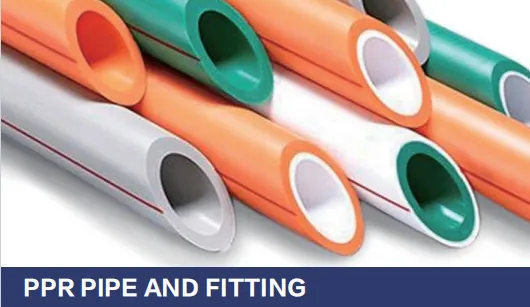
Hey there, plumbing pros—let's cut to the chase. You're in the trenches every day, juggling tight deadlines, finicky clients, and budgets that feel like they're shrinking by the minute. Whether you're tackling a residential renovation or a commercial build, the last thing you need is to watch your hard-earned profits leak away through overpriced materials, shoddy products, or inefficient supply chains. Here's the truth no one talks about enough: Your choice of supplier isn't just about buying pipes and fittings. It's about partnering with someone who gets your world—someone who turns "just materials" into cost-saving solutions that keep your projects on track and your bottom line healthy. Today, let's dive into how the right
PPR pipe and fitting supplier can be your secret weapon for slashing costs without cutting corners. Because at the end of the day, you didn't start this business to nickel-and-dime over materials—you started it to build, fix, and thrive.
First, Let's Talk About the "Hidden Costs" No One Warns You About
We've all been there: You're under the gun to hit a project deadline, and the quote from your usual supplier feels a little steep. So you shop around, find a "bargain" on PPR pipes from a no-name vendor, and breathe a sigh of relief—score, right? Wrong. Six months later, that "affordable" pipe starts leaking behind a wall. Now you're back on-site, eating labor costs to tear out drywall, replace the pipe, and fix the water damage. The client's frustrated, your reputation takes a hit, and that "savings" you thought you made? It just turned into a $2,000 mistake. Sound familiar?
Here's the thing: Cheap materials don't just cost you money when they fail. They cost you time (rework, callbacks), trust (clients who question your judgment), and opportunities (referrals that dry up because word gets around). That's where a reliable
PPR pipe and fitting supplier comes in. Quality PPR pipes—made from durable, heat-resistant polypropylene—aren't just a "product." They're a shield against those hidden costs. When you source from a supplier who stands behind their
PPR pipe and fitting solutions, you're not just buying a pipe. You're buying peace of mind: knowing the material can handle high water pressure, temperature fluctuations, and the wear and tear of daily use without cracking, leaking, or degrading. And peace of mind? That's priceless.
Bulk Pricing: Because "More for Less" Actually Works (When You Do It Right)
Let's get practical. You know the drill: Every project needs a mountain of materials—pipes, fittings, valves, adhesives. If you're ordering in small batches, you're leaving money on the table. Think about it: A single 10-foot PPR pipe from a corner store might cost $15. Order 500 of those same pipes from a
PPR pipe and fitting supplier who offers bulk pricing? Suddenly that per-unit cost drops to $10. Do the math: 500 pipes at $15 vs. $10? That's a $2,500 savings on one material alone. Multiply that across all the products you need—fittings, elbows, tees—and you're looking at serious cash back in your pocket.
But here's the kicker: Not all suppliers are created equal when it comes to bulk deals. Some nickel-and-dime you with "handling fees" or minimum order requirements that make bulk buying impossible for smaller projects. The best PPR pipe and fitting suppliers? They get that you don't always need a truckload. They offer tiered pricing: the more you order, the more you save, with flexible minimums that work for both big commercial jobs and small residential gigs. And if you're smart, you'll pair that with planning ahead. Stock up on staples like PPR pipes and fittings during slow seasons, when suppliers often run promotions, and you'll lock in low prices for the busier months. It's like buying in bulk at the grocery store—except instead of saving on cereal, you're saving on materials that keep your business running.
|
Material
|
Small Order (100 units)
|
Bulk Order (500 units)
|
Total Savings with Bulk
|
|
PPR Pipe (10ft, 1-inch diameter)
|
$15/unit = $1,500
|
$10/unit = $5,000
|
$2,500
|
|
PPR Elbow Fittings (1-inch)
|
$3/unit = $300
|
$1.80/unit = $900
|
$600
|
|
PVC DWV Pipe (10ft, 3-inch diameter)*
|
$8/unit = $800
|
$5.50/unit = $2,750
|
$1,250
|
|
Total for 3 Materials
|
$2,600
|
$8,650
|
$4,350
|
*Example includes PVC DWV pipe, a common companion to PPR in plumbing systems, sourced from the same supplier for added convenience.
One-Stop Shopping: Because Time = Money (And You Don't Have Extra Time)
Let's say you're working on a commercial project that needs more than just PPR pipes. You need PVC DWV pipes for drainage, CPVC pipes for hot water lines, and maybe even some UPVC pipes for irrigation. If you're sourcing from three different suppliers—a
PVC DWV pipe supplier here, a CPVC pipe and fitting (ASTM D2846) supplier there, and a separate
UPVC pipe supplier—you're setting yourself up for a logistical nightmare. Multiple delivery trucks, conflicting lead times, invoices from different vendors, and the inevitable "oops, we forgot to order that one fitting" panic. Each of these headaches eats up your time, and time, as you know, is money.
Now imagine this: You call one supplier who offers it all. PPR pipes and fittings, PVC DWV, CPVC (ASTM D2846), UPVC—everything you need under one roof. One order, one delivery, one invoice. No more chasing down three different reps to track shipments. No more (coordinating) delivery times so your job site isn't overrun with trucks. No more wasted hours comparing prices across websites or haggling with multiple sales teams. That's the beauty of a one-stop
PPR pipe and fitting supplier. They don't just sell you PPR solutions—they sell you efficiency. And efficiency? It's the unsung hero of cost savings.
Take it from Mark, a contractor I worked with last year. He used to source his PPR from one supplier, PVC DWV from another, and CPVC from a third. Between coordinating deliveries, he was spending 5-6 hours a week just on supply chain management. After switching to a one-stop supplier, that time dropped to 1 hour a week. Let's do the math: 5 hours saved per week x $100/hour (your billable rate) = $2,000 saved per month. That's $24,000 a year—just from reclaiming your time.
Technical Support: Avoid Costly Mistakes Before They Happen
Here's a scenario we've all lived through: You're staring at a blueprint, second-guessing whether you've picked the right pipe size for a high-pressure line. You go with your gut, install it, and six months later, the pipe bursts because it couldn't handle the pressure. Now you're on the hook for repairs, and the client is asking why you "didn't know better." Sound like a skill issue? Maybe—but it's also a supplier issue. The right
PPR pipe and fitting supplier doesn't just drop off materials and vanish. They act like an extension of your team, with technical experts who answer your questions, walk you through product specs, and even help you troubleshoot tricky installations.
For example, let's say you're working on a hospital project that requires Class A fireproof materials. You're not sure if PPR is the right fit, or if you need something like CPVC pipe and fitting (ASTM D2846) instead. A good supplier won't just say, "Here's our catalog—figure it out." They'll ask about the project: What's the water pressure? Temperature range? Fire code requirements? Then they'll recommend the best solution, whether that's PPR for standard lines or CPVC (ASTM D2846) for high-heat, high-pressure areas. That kind of support doesn't just prevent costly mistakes—it builds trust with your clients. When you can say, "My supplier's technical team helped us choose the perfect pipe for this job," it reassures clients you're not cutting corners. And happy clients? They refer you to their friends, which means more projects and more profits.
Even better, top PPR pipe and fitting suppliers offer on-site support. If you're stuck on an installation, they'll send a rep to walk you through it. If a batch of fittings arrives damaged, they'll replace them ASAP—no arguments, no hassle. That's the difference between a vendor and a partner. Vendors sell you products; partners save you from costly errors.
Durability: The Longest-Lasting Cost Saver of All
Let's circle back to where we started: the hidden cost of cheap materials. You know by now that buying low-quality pipes might save you a few bucks upfront, but it'll cost you big time later. PPR pipes, when sourced from a reputable
PPR pipe and fitting supplier, are built to last. We're talking 50+ years of service life, resistant to corrosion, chemical damage, and temperature fluctuations. Compare that to lower-grade PVC pipes, which might start degrading after 15-20 years, or even some CPVC pipes that can crack under extreme heat if not properly installed.
Here's why that matters for your bottom line: The longer a pipe lasts, the fewer callbacks you get. And callbacks? They're the silent profit killers. A 2022 survey by the Plumbing Contractors Association found that the average callback costs a contractor $1,200 in labor and materials. If you install a PPR pipe system that lasts 50 years instead of a cheap PVC that fails in 15, you're avoiding 2-3 callbacks over the pipe's lifetime. That's $2,400-$3,600 saved per project. Multiply that across all your jobs, and you're looking at a fortune in avoided costs.
Plus, durable materials make you look good. When a client calls you 10 years later to say, "That PPR system you installed? Still running like a charm," they're not just complimenting the pipe—they're complimenting you. And that kind of reputation? It's worth its weight in gold. Clients will pay more for contractors they trust, and trust? It starts with the materials you choose. So when you partner with a
PPR pipe and fitting supplier who prioritizes durability, you're not just saving money—you're investing in your reputation.
Wrapping It Up: Your Supplier Should Work as Hard as You Do
At the end of the day, plumbing isn't just about pipes and wrenches. It's about solving problems—for your clients, for your team, and for your business. And when it comes to problems, few hit harder than unexpected costs. The right
PPR pipe and fitting supplier gets that. They don't just sell you
PPR pipe and fitting solutions—they sell you a partnership that fights those costs alongside you. Whether it's through bulk pricing, one-stop shopping, technical support, or durable materials, they turn "expenses" into "investments."
So the next time you're comparing suppliers, don't just look at the price tag. Ask: Do they offer bulk discounts that fit my project size? Can they supply all the materials I need, from PPR to PVC DWV to CPVC? Will they pick up the phone when I have a technical question at 7 a.m. on a Tuesday? Because the answers to those questions will tell you everything you need to know about whether they're here to help you save money—or just take it.
You work hard enough. Let your supplier work hard for you. After all, your bottom line deserves it.