A practical guide for contractors, developers, and procurement managers
Modern plumbing demands materials that balance durability, cost-efficiency, and ease of installation. Whether you are outfitting a residential tower, a commercial complex, or an industrial facility, the piping system you choose determines long-term maintenance costs and operational reliability. Among the many options available today,
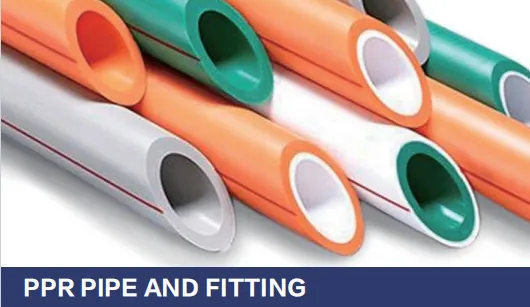
ppr pipe and fitting solutions have emerged as the go-to choice for hot and cold water supply systems worldwide.
This guide walks through the essentials of PPR piping — from material properties and fitting types to supplier selection — so you can make informed decisions for your next project.
What Are PPR Pipes and Fittings?
PPR stands for Polypropylene Random Copolymer. It is a thermoplastic material engineered specifically for pressurized fluid transport. Unlike metal pipes that corrode or PVC pipes that become brittle over time, PPR offers a unique combination of thermal resistance, chemical inertness, and mechanical strength.
PPR pipes are joined using heat fusion welding — a process that melts the pipe and fitting surfaces together at the molecular level. Once cooled, the joint becomes a single, homogeneous piece. This eliminates the weak points common in threaded, glued, or compression fittings.
A complete PPR piping system includes pipes in various diameters and pressure ratings, plus a wide range of fittings: elbows, tees, couplings, reducers, end caps, flanges, and valves. When sourced from a reliable
pipes fittings supplier, these components work together to form a leak-free network that can serve reliably for decades.
Key Advantages of PPR Pipe Systems
Exceptional Longevity
A properly installed PPR system can last 50 years or more under normal operating conditions. The material resists scale buildup, does not corrode, and maintains its structural integrity across a wide temperature range — typically from -10°C to 95°C for continuous service.
Leak-Proof Heat Fusion Joints
Heat fusion creates joints that are actually stronger than the pipe itself. Unlike mechanical connections that can loosen over time due to thermal expansion and vibration, fused PPR joints remain permanently sealed. This makes PPR especially suitable for concealed installations inside walls and under floors.
Chemical and Corrosion Resistance
PPR is inert to most chemicals found in potable water systems. It does not rust, pit, or scale — problems that plague galvanized steel and copper pipes. This inertness also means no metallic taste or discoloration in drinking water, making PPR an excellent choice for residential and hospitality applications.
Thermal Insulation Properties
PPR has low thermal conductivity, which means hot water stays hot longer and cold water resists condensation. This reduces energy loss in hot water lines and minimizes the risk of condensation damage on cold water pipes in humid environments.
Lightweight and Easy to Handle
Compared to metal pipes, PPR is significantly lighter. This translates to lower shipping costs, easier on-site handling, and faster installation. A single worker can carry and position lengths that would require two people with steel or copper.
Cost-Effective Over the Lifecycle
While the upfront material cost of PPR is competitive, the real savings come from reduced labor during installation, near-zero maintenance over decades, and the absence of replacement costs. For large-scale projects, these lifecycle savings can be substantial.
Common Types of PPR Fittings
A well-designed PPR system relies on the right fittings to handle changes in direction, diameter, and branch connections. The most common types include:
Elbows (45° and 90°) — for directional changes in the pipe run
Tees (equal and reducing) — for branching off a main line
Couplings and sockets — for joining two straight pipe sections
Reducers — for transitioning between different pipe diameters
End caps and plugs — for terminating pipe ends
Flanges and unions — for connecting to equipment or valves
Ball valves and gate valves — for flow control and isolation
Transition fittings — for connecting PPR to metal or other pipe materials
Each fitting type comes in multiple sizes and pressure ratings (commonly PN10, PN16, PN20, and PN25). Selecting the correct rating is critical: PN16 suits most residential and commercial plumbing, while PN20 and PN25 are needed for high-rise buildings and industrial systems with elevated pressure requirements.
PPR vs. Other Pipe Materials: A Quick Comparison
| Feature |
PPR |
Galvanized Steel |
Copper |
PVC / CPVC |
| Corrosion Resistance |
Excellent |
Poor — rusts over time |
Good but can corrode |
Good |
| Joint Method |
Heat fusion — permanent |
Threaded — may leak |
Soldered — skilled labor |
Solvent cement / threaded |
| Lifespan |
50+ years |
20-30 years |
30-50 years |
25-40 years |
| Thermal Conductivity |
Low — energy efficient |
High — heat loss |
High — heat loss |
Low |
| Weight |
Light |
Heavy |
Moderate |
Light |
| Scale Buildup |
None |
Significant |
Moderate |
None |
| Drinking Water Safe |
Yes |
May leach rust |
May leach copper |
Yes (CPVC) |
How to Choose the Right PPR Pipe and Fitting Solutions
Determine the Application
Start by defining the system's purpose. Is it for potable cold water, hot water, HVAC chilled water, compressed air, or industrial fluid transport? Each application has different temperature and pressure requirements that affect material grade and wall thickness selection.
Match the Pressure Rating (PN)
The PN rating indicates the maximum allowable pressure at 20°C. For residential plumbing, PN16 is typically sufficient. For high-rise buildings with booster pumps, PN20 or PN25 is recommended. Always factor in pressure surges and future system upgrades when selecting the rating.
Verify Material Standards
Quality PPR pipes and fittings should comply with international standards such as DIN 8077/8078, ISO 15874, or equivalent national standards. Third-party certifications from bodies like CE, WRAS, or DVGW provide additional assurance of material quality and safety for potable water use.
Size the System Correctly
Proper pipe sizing balances flow rate, pressure drop, and cost. Undersized pipes create excessive friction loss and noise, while oversized pipes waste material and slow hot water delivery. Work with your supplier's technical team to calculate the optimal diameters for mains, risers, and branch lines.
Consider the Full System, Not Just the Pipe
A piping system is only as strong as its weakest component. Ensure that fittings, valves, and accessories match the pipe's pressure rating and material quality. Sourcing everything from a single
building material supplier simplifies procurement, ensures compatibility, and often reduces total project cost.
Why Source PPR Solutions from a Professional Supplier
The quality of PPR pipes and fittings varies significantly between manufacturers. Raw material selection, production equipment, and quality control processes all affect the final product's performance. Here is what to look for in a supplier:
Raw material traceability — premium PPR uses virgin polypropylene random copolymer from certified resin producers, not recycled or mixed materials
Manufacturing precision — automated production lines with continuous monitoring ensure consistent wall thickness, roundness, and dimensional accuracy
Quality testing — each batch should undergo pressure testing, thermal stability testing, and dimensional inspection before shipment
Certifications — look for ISO 9001 quality management, plus product-specific certifications relevant to your target market
Technical support — a knowledgeable supplier provides installation guidance, welding parameter recommendations, and after-sales service
Supply chain reliability — consistent inventory levels and predictable lead times keep your project on schedule
PPR Applications Across Project Types
Residential Buildings
From single-family homes to multi-story apartment complexes, PPR handles domestic hot and cold water distribution with ease. Its silent operation, scale-free performance, and long service life make it the preferred choice for modern residential plumbing.
Hotels and Hospitality
Hotels demand reliable hot water delivery to hundreds of guest rooms simultaneously. PPR's thermal insulation properties reduce energy costs, while its corrosion resistance ensures consistent water quality. The heat-fused joints eliminate the risk of hidden leaks that can damage finishes and disrupt operations.
Hospitals and Healthcare Facilities
Healthcare plumbing requires materials that meet strict hygiene standards. PPR is non-toxic, bacteria-resistant, and suitable for both potable water and medical gas systems. Its smooth inner surface prevents biofilm formation, contributing to a safer patient environment.
Industrial and Commercial Facilities
Factories, warehouses, and commercial buildings use PPR for process water, compressed air, and chemical transport lines. The material's chemical resistance handles a broad range of industrial fluids without degradation.
District Heating and Cooling Networks
Pre-insulated PPR systems are increasingly used in district energy networks. Their low thermal conductivity and robust joint integrity make them suitable for buried hot water distribution over long distances.
COLORIA GROUP: Your One-Stop PPR Pipe and Fitting Solutions Provider
When it comes to sourcing PPR piping systems, COLORIA GROUP stands out as a comprehensive
building material supplier with a global reach. Headquartered in Foshan, Guangdong — China's manufacturing heartland for construction materials — COLORIA GROUP offers a complete range of PPR pipes and fittings that meet international quality standards.
COLORIA GROUP's
pipes fittings catalog covers everything from standard PPR pipes and fittings to specialized products like PVC-U SCH40 pressure piping systems, CPVC SCH80 high-pressure piping, PEX pipe and fittings, and PP-R hot/cold water pressure piping systems. With 15 distinct product lines in the pipes and fittings category alone, the company provides matched systems where every component is designed to work together.
Beyond piping, COLORIA GROUP is a one-stop solution for building materials, supplying walls, flooring, ceilings, sanitary fixtures, customized furniture, home appliances, windows and doors, decorative profiles, elevators, electrical fixtures, lights, and solar panels. This breadth means project developers and contractors can consolidate their procurement through a single trusted partner, simplifying logistics and reducing administrative overhead.
Why Choose COLORIA GROUP for Your PPR Pipe and Fitting Solutions:
— Comprehensive product range covering 13 building material categories and 560+ products
— Strategic location in Foshan, China's largest building materials manufacturing hub
— Overseas agent presence in Saudi Arabia for regional support
— Dedicated team with decades of industry experience
— One-stop procurement model that saves time and shipping costs
— Commitment to quality and customer satisfaction across global markets
Installation Best Practices for PPR Systems
Use the Right Welding Equipment
PPR fusion welding requires a temperature-controlled socket welding machine, typically set to 260°C. The heating time and cooling time depend on the pipe diameter. Rushing either stage results in weak joints. Always follow the manufacturer's recommended welding parameters.
Cut Pipes Cleanly and Squarely
Use a dedicated PPR pipe cutter or a fine-toothed saw with a cutting guide. The cut must be perpendicular to the pipe axis. A slanted cut reduces the fusion contact area and can cause leaks. Deburr the cut edge before welding.
Account for Thermal Expansion
Like all plastics, PPR expands and contracts with temperature changes. For long straight runs — especially hot water lines — incorporate expansion loops, offsets, or flexible sections to absorb movement. Fixed anchors and sliding supports should be placed according to the calculated expansion allowance.
Pressure Test Before Concealing
Always pressure-test the completed system before closing walls, pouring concrete, or backfilling trenches. A standard test involves pressurizing the system to 1.5 times the working pressure and holding for at least 30 minutes with no pressure drop. This catches any installation issues while they are still accessible.
Protect from Direct Sunlight
Standard PPR is not UV-resistant. Pipes stored outdoors or installed in exposed locations should be covered, painted, or insulated. For rooftop and outdoor applications, specify UV-stabilized PPR grades or use protective cladding.
The Future of PPR Piping
The PPR pipe market continues to evolve with new material technologies. PP-RCT (Polypropylene Random Copolymer with Crystallinity modification) represents the latest generation, offering up to 25% higher pressure resistance than standard PPR at the same wall thickness. This allows for thinner-walled pipes that deliver the same performance with less material — a win for both cost and sustainability.
Glass-fiber-reinforced PPR composites are another growing segment. By embedding glass fibers in the middle layer of a multi-layer pipe, manufacturers achieve lower thermal expansion and higher rigidity. These pipes are ideal for high-temperature applications and vertical risers in tall buildings.
As the construction industry increasingly prioritizes green building certifications and lifecycle cost analysis, PPR piping systems are well-positioned to become the default choice for water distribution in projects of all scales.
Get Expert Guidance on Your Next PPR Project
Choosing the right
ppr pipe and fitting solutions for your project does not have to be complicated. Whether you are planning a residential development, a commercial complex, or an industrial facility, COLORIA GROUP's team can help you select the right products, sizes, and specifications to match your requirements.
Contact COLORIA GROUP today to discuss your project needs, request a quotation, or learn more about our comprehensive range of building materials. Visit our
products page to explore the full catalog, or reach out directly at
+86-13630185350 (WhatsApp/WeChat) or
+86-075782666790 (Office).
Together we build the future — one reliable pipe at a time.