
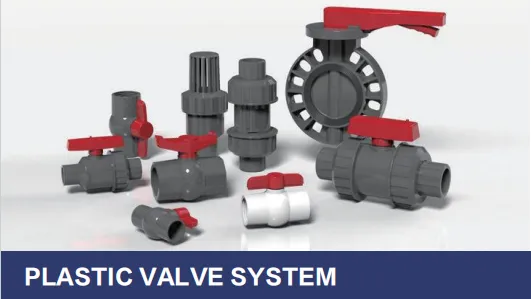
In the heart of the Middle East, Saudi Arabia is undergoing a transformation unlike any other. Driven by Vision 2030—a bold blueprint to diversify the economy and build world-class infrastructure—cities are rising from the desert, hospitals are expanding to serve growing communities, schools are welcoming more students, and commercial hubs are buzzing with activity. Behind every new building, every renovated space, and every critical infrastructure project lies a silent but essential component: the network of pipes and valves that keep water flowing, waste draining, and systems running smoothly. Among these, plastic valve systems have emerged as a cornerstone, valued for their durability, cost-effectiveness, and adaptability to Saudi Arabia's unique climate. But not all suppliers are created equal. The best ones don't just deliver products—they bring together local expertise and global quality, ensuring that every project, big or small, stands the test of time.
Walk through any construction site in Riyadh, Jeddah, or Dammam, and you'll notice a shift: traditional metal pipes and valves are increasingly being replaced by plastic alternatives. Why? For starters, Saudi Arabia's climate is unforgiving. Summer temperatures soar above 50°C, and sandstorms are a regular occurrence. Metal rusts, corrodes, and weakens under such conditions, leading to leaks, costly repairs, and safety risks. Plastic, on the other hand, is resistant to corrosion, UV rays, and chemical damage—making it ideal for everything from residential plumbing to industrial applications.
Then there's the matter of cost. With Vision 2030 fueling a surge in construction—from the $500 billion NEOM project to thousands of new homes, hospitals, and schools—budgets are tight, and efficiency is key. Plastic valve systems are lighter than metal, which reduces transportation and installation costs. They're also easier to handle, cutting down on labor time. For example, a pvc dwv pipe supplier can provide drainage pipes that are not only affordable but also quick to install, helping contractors meet tight deadlines without compromising on quality.
But perhaps most importantly, plastic valve systems are versatile. They work in hospitals, where hygiene and safety are non-negotiable; in schools, where durability and low maintenance are priorities; and in commercial buildings, where reliability ensures business operations run smoothly. A plastic valve system supplier that understands these diverse needs can be the difference between a project that succeeds and one that faces delays or setbacks.
When it comes to choosing a supplier, "local" isn't just a buzzword—it's a necessity. Saudi Arabia has its own set of regulations, cultural nuances, and logistical challenges that foreign suppliers often struggle to navigate. A truly local plastic valve system supplier doesn't just sell products; they understand the lay of the land.
Take regulatory compliance, for instance. The Saudi Standards, Metrology and Quality Organization (SASO) sets strict guidelines for building materials, including plastic pipes and valves. These standards ensure products can withstand the country's climate, meet safety codes, and are environmentally friendly. A local supplier knows these regulations inside out, ensuring that every product—whether it's a ppr pipe and fitting for a hospital's hot water system or a upvc pipe for a residential complex's plumbing—carries the necessary certifications. This not only avoids costly delays during inspections but also gives project managers peace of mind that their materials are up to par.
Logistics is another area where local expertise shines. Saudi Arabia's vast geography—spanning over 2 million square kilometers—means that delivering materials to remote construction sites (like those in NEOM or the Red Sea Project) requires careful planning. Local suppliers have established networks of warehouses, delivery trucks, and on-the-ground teams that can navigate road closures, sandstorms, and last-minute order changes. For example, a pex pipe and fitting supplier based in Riyadh can quickly restock a project in Jeddah if there's a sudden surge in demand, whereas an international supplier might take weeks to ship replacement parts.
Cultural understanding also plays a role. Saudi businesses value relationships, reliability, and face-to-face communication. Local suppliers prioritize building long-term partnerships, offering personalized service that goes beyond the sale. They'll visit job sites to assess needs, provide technical support, and even train installers on how to use new products. This level of engagement is hard to replicate for suppliers based overseas, who may only interact with clients via email or phone.
Local expertise is essential, but it means little if the products themselves don't meet global standards. The best plastic valve system suppliers in Saudi Arabia don't just comply with SASO—they aim higher, adopting international benchmarks like ISO, ASTM, and DIN to ensure their products are on par with the best in Europe, Asia, and the Americas.
Why does global quality matter? For one, Saudi Arabia's construction projects are often world-class, and they demand world-class materials. Take NEOM, the futuristic city being built in the northwest. Its buildings will house cutting-edge technology, and its infrastructure must support millions of residents and visitors. Using subpar valves or pipes here could lead to catastrophic failures, from water leaks in smart homes to drainage issues in commercial towers. By adhering to global standards, suppliers ensure that their products can handle these high-stakes environments.
Global quality also translates to innovation. Leading suppliers invest in research and development, collaborating with international partners to bring new technologies to Saudi Arabia. For example, ppr pipe and fitting systems now feature advanced fusion welding techniques that create leak-proof joints—critical for hot water systems in hospitals where even a small leak could disrupt patient care. Similarly, upvc pipe suppliers have developed UV-resistant formulas that prevent pipes from becoming brittle under Saudi Arabia's harsh sun, extending their lifespan from 20 years to 50 or more.
Sustainability is another area where global quality shines. As the world moves toward greener building practices, Saudi Arabia is no exception. Many plastic valve system suppliers now offer products made from recycled materials or designed for easy recycling at the end of their life. For instance, pex pipe and fitting systems are often lead-free and energy-efficient, reducing both environmental impact and long-term operating costs for buildings.
A top-tier plastic valve system supplier in Saudi Arabia doesn't limit itself to one or two products. Instead, it offers a comprehensive range of pipes, fittings, and valves to meet the diverse needs of the market. Here's a breakdown of some of the most in-demand products and how they're making a difference in Saudi projects:
| Product Category | Common Applications | Material & Key Features | Why It's Popular in Saudi Arabia |
|---|---|---|---|
| Plastic Valve Systems | Residential, commercial, and industrial plumbing; water distribution; wastewater management | PVC, UPVC, PPR; corrosion-resistant, leak-proof, easy to install | Durable in high temperatures; compatible with most pipe materials; cost-effective |
| PVC DWV Pipes | Drainage, waste, and vent systems in homes, offices, and hospitals | PVC; lightweight, smooth interior (reduces clogs), chemical-resistant | Ideal for Saudi's high-rise buildings; requires minimal maintenance |
| PPR Pipes & Fittings | Hot and cold water supply in hospitals, schools, and residential complexes | Polypropylene Random Copolymer; heat-resistant (up to 95°C), hygienic (no bacterial growth) | Meets strict hygiene standards for healthcare facilities; energy-efficient (insulates water temperature) |
| UPVC Pipes | Water supply, irrigation, and industrial fluid transport | Unplasticized Polyvinyl Chloride; strong, rigid, UV-resistant | Withstands Saudi's extreme heat and sandstorms; long lifespan (50+ years) |
| PEX Pipes & Fittings | Underfloor heating, radiant cooling, and residential plumbing | Cross-linked Polyethylene; flexible, freeze-resistant, corrosion-free | Easy to install in tight spaces (common in modern Saudi homes); resistant to scale buildup |
What sets leading suppliers apart is their ability to tailor these products to specific projects. For example, a hospital might require ppr pipe and fitting systems with antibacterial properties to prevent infections, while a school could opt for pvc dwv pipe that's easy to repair in case of clogs. A good supplier works closely with architects, engineers, and contractors to recommend the right products, ensuring that every system is optimized for performance, safety, and cost.
The plastic valve system industry in Saudi Arabia isn't without its challenges. The rapid pace of construction means suppliers must keep up with skyrocketing demand, often while navigating global supply chain disruptions. Raw material shortages, shipping delays, and rising costs have all put pressure on suppliers to find new ways to deliver.
One solution? Local manufacturing. Some forward-thinking suppliers have invested in production facilities within Saudi Arabia, reducing reliance on imports and shortening lead times. For example, a upvc pipe supplier with a factory in Dammam can produce pipes on-site, ensuring that even large orders for projects like the Riyadh Metro are delivered on time. This not only cuts costs but also creates jobs, aligning with Vision 2030's goal of boosting local industry.
Innovation is also key to overcoming challenges. Take the issue of installation time: in a market where every day counts, contractors need products that can be installed quickly. Suppliers have responded by developing "push-fit" pex pipe and fitting systems that require no welding or glue—simply push the fitting onto the pipe, and it's secure. This has reduced installation times by up to 50% on some projects, allowing teams to move on to the next phase faster.
Another challenge is meeting the unique needs of specialized projects. Hospitals, for instance, require pipes and valves that are not only durable but also easy to clean and resistant to bacteria. PPR pipe and fitting suppliers have risen to this by adding silver ions to their materials, which naturally kill microbes, making the pipes ideal for healthcare settings. Similarly, schools and universities often need fire-resistant systems, prompting suppliers to develop plastic valves that meet Class A fire safety standards.
Actions speak louder than words, and the best way to understand the value of a top plastic valve system supplier is to look at their track record. Here are two case studies of how local expertise and global quality have come together to deliver successful projects in Saudi Arabia:
Case Study 1: King Abdullah Medical City, Riyadh
When King Abdullah Medical City—a state-of-the-art hospital complex—needed a plumbing system that could handle high volumes of hot water, strict hygiene standards, and 24/7 reliability, they turned to a local
ppr pipe and fitting supplier
. The supplier recommended a PPR system with antibacterial properties and leak-proof fusion joints. Thanks to the supplier's local technical team, the system was installed in record time, and the hospital has reported zero plumbing issues in its first three years of operation. Today, the supplier continues to provide maintenance support, ensuring the system runs smoothly for years to come.
Case Study 2: Princess Nourah bint Abdulrahman University, Riyadh
With over 60,000 students, Princess Nourah University is one of the largest women's universities in the world. Its campus includes dormitories, classrooms, and sports facilities, all of which require efficient drainage systems. A
pvc dwv pipe supplier
was brought in to design a network that could handle high wastewater volumes without clogs. The supplier used large-diameter PVC DWV pipes with smooth interiors and provided on-site training for the installation team. The result? A drainage system that has kept up with the university's needs, even during peak usage periods like exam weeks.
Saudi Arabia's building boom shows no signs of slowing down. As Vision 2030 continues to unfold, the demand for reliable, high-quality plastic valve systems will only grow. But success in this market isn't about having the cheapest products or the biggest brand name—it's about finding a supplier that combines local expertise with global quality.
A great plastic valve system supplier in Saudi Arabia understands the country's regulations, climate, and culture. They offer a wide range of products—from pvc dwv pipes for drainage to pex pipe and fitting for underfloor heating—that meet both SASO and international standards. They invest in innovation, whether it's developing UV-resistant materials or leak-proof valves, and they're committed to sustainability and local manufacturing.
So, as you embark on your next construction project—whether it's a small residential building or a mega-development like NEOM—remember: the right supplier isn't just a vendor. They're a partner in building Saudi Arabia's future. And when you choose one that brings together local expertise and global quality, you're not just building a structure—you're building something that will stand strong for generations to come.
Recommend Products












