
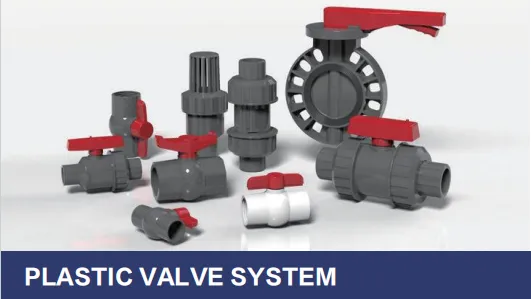
Choosing the right supplier for your project's plastic valve systems and piping components is more than just a procurement task—it's a decision that ripples through every phase of construction, from the first blueprint to the final inspection. Whether you're overseeing a residential complex, a commercial high-rise, or a critical infrastructure project like a hospital or school, the supplier you partner with can mean the difference between smooth progress and costly delays, between durable, safe systems and future headaches. In this guide, we'll walk through how to approach this decision with your project's unique needs at the forefront, avoiding generic checklists and instead focusing on what truly matters for your success.
Before you even begin scrolling through supplier directories, take a step back and ask: What does my project actually need? Plastic valve systems and piping components aren't one-size-fits-all, and assuming they are is where many teams go wrong. Let's break this down into tangible questions that will shape your supplier search.
A plastic valve that works perfectly in a residential bathroom's plumbing system might fail miserably in a commercial kitchen's high-temperature environment. For example, if you're working on a multi-story apartment building, you'll likely need reliable PVC DWV pipe (that's Drain, Waste, Vent—think sinks, showers, and tubs) paired with valves that can handle consistent water flow without corrosion. These systems prioritize cost-effectiveness and ease of installation, which is why a reputable PVC DWV pipe supplier will often highlight their products' lightweight design and compatibility with standard fittings.
On the flip side, imagine you're managing a hospital's renovation. Here, the stakes are higher: patient safety, strict hygiene standards, and the need for systems that can withstand frequent cleaning with harsh chemicals. In this case, you might lean toward PPR pipe and fitting suppliers . PPR (Polypropylene Random Copolymer) pipes are resistant to heat, chemicals, and bacterial growth, making them ideal for medical facilities. The right supplier here won't just sell you pipes—they'll ask about sterilization protocols, water pressure requirements, and even future expansion plans to ensure the valves and fittings they provide align with the hospital's long-term needs.
Every region has its own set of rules, and ignoring them isn't just risky—it's expensive. In Saudi Arabia, for instance, building codes for commercial projects often mandate specific certifications for plastic piping systems, especially in high-pressure applications. If your project involves a high-rise hotel or office building with water supply lines that need to push water to upper floors, you might need a CPVC SCH80 high pressure piping system . These systems are designed to handle higher water pressure (hence "SCH80," a reference to their thickness and strength) and require valves that can maintain that pressure without leaks. A qualified CPVC SCH80 high pressure piping system supplier will not only provide products certified to local standards but will also help you navigate the paperwork to avoid last-minute inspections snags.
Don't assume a supplier "knows the rules." Ask upfront: "Can you provide documentation that your plastic valve systems meet [X country/region]'s plumbing codes for [Y application]?" A supplier who hesitates or provides vague answers is a red flag—your project can't afford to be their learning curve.
A boutique café renovation might need a handful of valves and a few lengths of pipe, while a new residential development could require thousands of units. But scale isn't just about quantity—it's about timing . A small project with tight deadlines might prioritize a supplier who can deliver in days, even if their prices are slightly higher. A large-scale project, however, might need a supplier with the manufacturing capacity to fulfill bulk orders over months without compromising quality. For example, a PPR pipe and fitting supplier with a local warehouse can be a lifesaver for a café renovation, while a mega-project might need a partner with global manufacturing hubs to ensure steady supply.
Once you're clear on your project's needs, it's time to sift through potential suppliers. But this isn't just about comparing prices—think of it as interviewing a candidate for a critical role on your team. You wouldn't hire someone based solely on their resume; you'd want to know if they're reliable, collaborative, and invested in your success. The same goes for suppliers.
We've all heard the phrase "you get what you pay for," but in construction, cutting corners on quality can lead to disasters. A cheap plastic valve might save you $50 today, but if it cracks six months after installation, you're looking at thousands in repairs, not to mention the damage to your reputation. So how do you assess quality without becoming a materials engineer?
Start with certifications. Reputable suppliers will proudly display certifications like ASTM (American Society for Testing and Materials) or DIN (Deutsches Institut für Normung) standards. For example, a plastic valve system supplier specializing in industrial applications should have valves tested to ASTM D2846, which ensures they can handle specific pressure and temperature ranges. Similarly, a PPR pipe and fitting supplier worth their salt will reference ISO 15874, the international standard for PPR piping systems.
But don't stop at paperwork. Ask for samples. A good supplier will send you a valve or pipe segment so you can inspect it yourself—feel the weight, check for uneven seams, and even ask for test reports from third-party labs. If a supplier hesitates to provide samples or test data, that's a warning sign they might be hiding something.
No two projects are identical, and sometimes off-the-shelf products just won't cut it. Maybe your building's unique layout requires valves with non-standard connection sizes, or your client wants a specific color of pipe to match their interior design. This is where a supplier's ability to customize becomes invaluable.
For example, I once worked with a contractor who was renovating an old warehouse into a boutique hotel. The original structure had uneven walls, and standard PPR pipes wouldn't fit the angled spaces. Their PPR pipe and fitting supplier didn't just say, "Sorry, we only stock straight lengths"—they collaborated with the team to create custom elbow joints and flexible connectors that made installation possible. The result? The project stayed on schedule, and the client was thrilled with the unique design. That's the kind of partnership you want.
When vetting suppliers, ask: "What's your process for custom orders?" How long does it take? What's the minimum order quantity? A supplier who sees customization as a hassle rather than an opportunity isn't going to support your project's unique needs.
Imagine this: It's 2 a.m., and your installation team is stuck. They've followed the instructions, but the plastic valve just won't seal properly, and water is starting to leak. Who do you call? A supplier with great technical support can turn this crisis into a minor hiccup. Look for suppliers who offer 24/7 support, on-site assistance for complex installations, and even training sessions for your team.
A CPVC SCH80 high pressure piping system supplier is a perfect example here. These systems are often used in high-stakes applications like industrial plants or large commercial buildings, where a single mistake can lead to costly downtime. The best suppliers in this space don't just sell you the pipes and valves—they send a technician to walk your team through installation, answer questions, and even troubleshoot on the spot. That level of support isn't just nice to have; it's critical for keeping your project on track.
I've never met a project manager who said, "I wish my supplier had delivered late." Delays ripple through every aspect of construction—labor costs go up, deadlines get pushed, and client trust erodes. So how do you gauge a supplier's reliability before you sign a contract?
Start by checking references. Ask the supplier for contact information of clients who've worked on similar projects. When you call those references, don't just ask, "Were they good?" Dig deeper: "Did they ever miss a delivery date? How did they handle it?" A supplier who's honest about past mistakes and how they fixed them is more trustworthy than one who claims they've never had an issue.
You can also look at their track record with industry associations. Many reputable suppliers are members of organizations like the Plastics Pipe Institute (PPI) or local construction trade groups, which hold members to high standards of reliability and ethics. Membership isn't a guarantee, but it's a good indicator they take their reputation seriously.
To help you visualize how different suppliers align with project needs, here's a breakdown of three common types you might encounter:
| Supplier Type | Typical Applications | Material Advantages | Key Project Considerations |
|---|---|---|---|
| Plastic Valve System Supplier | Residential, commercial plumbing; low to medium pressure systems | Cost-effective, corrosion-resistant, lightweight | Check for compatibility with existing piping; prioritize certifications for potable water if used in homes. |
| PVC DWV Pipe Supplier | Drainage, waste, and vent systems (sinks, showers, tubs) | Affordable, easy to install, smooth interior for minimal clogs | Ensure compliance with local building codes for drainage slope and venting requirements. |
| PPR Pipe and Fitting Supplier | Hot/cold water systems, medical facilities, food processing | Heat-resistant, chemical-resistant, hygienic (no bacterial growth) | Ask about temperature ratings; critical for projects with hot water demand (e.g., hospitals, hotels). |
| CPVC SCH80 High Pressure Piping System Supplier | Industrial plants, high-rise buildings, fire sprinkler systems | High pressure tolerance, durable, suitable for hot water | Verify pressure ratings match project needs; require third-party testing for high-stakes applications. |
Even with careful planning, it's easy to fall into traps when selecting a supplier. Here are the mistakes I've seen teams make—and how to steer clear of them.
It's tempting to go with the cheapest quote, especially when budgets are tight. But remember: A $10 valve that fails in a month will cost you far more than a $15 valve that lasts for decades. I once worked with a school district that opted for a budget PVC DWV pipe supplier to save money on a new elementary school. Six months after opening, the pipes started cracking, leading to sewage leaks in the classrooms. The district had to shut down parts of the school for repairs, spend twice the original budget on replacements, and deal with angry parents. Don't let price be your only metric—think of it as an investment in your project's long-term health.
Things like lead times, warranty terms, and return policies might seem minor compared to "big" factors like quality, but they can derail your project. For example, a supplier might offer great prices but have a 12-week lead time—way too long for your 8-week project. Or their warranty might only cover defects for 30 days, leaving you on the hook for replacements if issues arise later.
Read the fine print. Ask: "What's your standard lead time for orders of [X size]?" "What does your warranty cover, and for how long?" "What's your return policy if a product is damaged in shipping?" These details might not seem exciting, but they'll save you countless headaches down the line.
This might sound "soft," but it's surprisingly important. Do you want a supplier who only communicates via email and takes days to respond, or one who picks up the phone when you call and treats your project like their own? A supplier's communication style, responsiveness, and willingness to collaborate can make or break your experience.
For example, I once partnered with a PVC DWV pipe supplier who was technically competent but impossible to reach. When we needed to adjust our order mid-project, it took three emails and a week of follow-ups to get a response. The delay pushed our timeline back by two weeks, and I vowed never to work with them again. On the flip side, our current PPR pipe and fitting supplier has a dedicated account manager who checks in weekly, sends progress updates on orders, and even celebrates with us when milestones are hit. That kind of partnership makes the hard days of construction a little easier.
Let's put this all together with a real-world example. A few years ago, a client came to me desperate: They were building a 50-unit apartment complex in Riyadh, and their original plastic valve system supplier had delivered faulty valves. Within weeks of installation, multiple units had leaks, causing water damage to drywall and flooring. The supplier was unresponsive, and the client was facing angry tenants, missed deadlines, and mounting repair costs.
We stepped in to help them find a new supplier, focusing on their core needs: reliability, quality, and fast turnaround. After vetting several options, they chose a local PPR pipe and fitting supplier with a strong track record in residential projects. Here's why it worked:
The result? The leaks were fixed, the tenants were happy, and the client avoided a potential lawsuit. Today, they exclusively work with that PPR supplier for all their residential projects. The lesson? Choosing the right supplier isn't just about products—it's about partnering with someone who has your back when things go wrong.
At the end of the day, selecting a plastic valve system supplier (or any building materials supplier) isn't a transaction—it's a relationship. The best suppliers don't just sell you products; they invest in your project's success, ask the right questions, and adapt when challenges arise. By starting with your project's unique needs, evaluating suppliers based on quality, customization, support, and reliability, and avoiding common pitfalls like choosing on price alone, you'll find a partner who doesn't just meet your expectations—they exceed them.
So the next time you're tasked with finding a supplier, remember: This isn't just about pipes and valves. It's about building something that lasts—for your clients, your team, and your reputation. Choose wisely, and your project will thank you.
Recommend Products












