
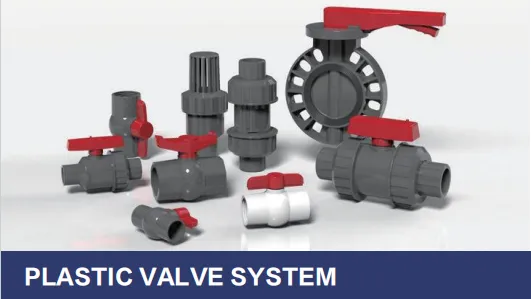
In the bustling world of construction, where every beam, pipe, and panel plays a role in safety and functionality, plastic valve systems often work quietly behind the scenes—yet their impact is anything but minor. These unassuming components control the flow of water, gas, and other fluids in everything from residential high-rises in Riyadh to state-of-the-art hospitals in Jeddah. But what ensures a plastic valve doesn't crack under pressure, leak in a storm, or fail when a building's occupants need it most? The answer lies in rigorous standards—and the suppliers who commit to upholding them. For a saudi arabia building materials supplier or a global plastic valve system supplier , adherence to standards isn't just a box to check; it's the foundation of trust, reliability, and long-term project success. Let's dive into the standards that shape these critical components and explore how suppliers go above and beyond to meet them.
Before we unpack the standards, let's clarify why plastic valve systems matter. Unlike traditional metal valves, plastic variants—made from PVC, CPVC, PPR, or PE—offer lightweight durability, corrosion resistance, and cost-effectiveness. They're the backbone of plumbing systems in residential building materials supplier projects, where they manage water distribution and waste removal. In commercial settings, from shopping malls to office towers, they regulate heating and cooling fluids. Even specialized environments like hospitals and schools, which demand strict safety protocols (think class a fireproof cpl inorganic board for hospital and school supplier standards), rely on plastic valves designed to resist high temperatures and chemical exposure.
But here's the catch: plastic's versatility also means variability. A valve made from subpar materials or cut corners could warp, leak, or even burst, leading to water damage, mold growth, or worse—compromising a building's structural integrity. That's why standards exist: to set a baseline for performance, safety, and consistency. For suppliers, meeting these standards isn't optional; it's the difference between being a trusted partner and a liability.
Standards for plastic valve systems are developed by global bodies, regional authorities, and industry organizations, each tailored to address specific needs like pressure tolerance, temperature resistance, and material composition. Let's break down the most influential ones:
Two organizations dominate the international stage: ASTM International (formerly the American Society for Testing and Materials) and DIN (Deutsches Institut für Normung, or the German Institute for Standardization). These standards are widely adopted by suppliers worldwide, including plastic valve system supplier operations in Saudi Arabia and beyond.
While international standards provide a foundation, regional regulations often add layers of specificity. In Saudi Arabia, for instance, the Saudi Standards, Metrology and Quality Organization (SASO) issues guidelines that align with global benchmarks but also address local conditions—like extreme temperatures (up to 50°C in summer) and high humidity. A saudi arabia building materials supplier must ensure their plastic valves meet SASO's strict testing for UV resistance (to prevent degradation in sunlight) and pressure endurance (to handle fluctuations in municipal water systems).
Other regions have unique focuses: In the Gulf Cooperation Council (GCC), valves used in marine construction must resist saltwater corrosion, while in Europe, the CE mark (Conformité Européenne) certifies compliance with EU health, safety, and environmental requirements. For a supplier operating globally, balancing these regional nuances requires a deep understanding of local codes—and a commitment to customization without compromising core standards.
Meeting standards isn't passive. For a reputable plastic valve system supplier , it's an active, multi-step process that starts long before a valve reaches a construction site. Let's walk through the key practices that set compliant suppliers apart:
The journey begins with raw materials. Top suppliers don't just buy plastic resin—they audit their sources. For example, PVC resin used in valves must meet ASTM D1784 standards for chemical composition and melt flow rate (a measure of how easily the plastic processes). Suppliers often partner with resin manufacturers who providecertificates of analysis (CoA), proving the material's purity and consistency. Once on-site, samples undergo further testing: tensile strength (to check for brittleness), impact resistance (to simulate accidental drops during installation), and thermal aging (exposing valves to high temperatures for weeks to ensure they don't become brittle over time).
Even the best materials can fail with shoddy manufacturing. Suppliers invest in computer-controlled injection molding machines to ensure valve dimensions match standard specifications—down to the millimeters. For example, a PVC ball valve designed to ASTM D2466 (a standard for threaded plastic valves) must have exact thread pitch and depth to fit compatible pipes from a pvc dwv pipe supplier . Post-production, every batch undergoes 100% visual inspection: Are there cracks in the body? Are the seals intact? A single defective valve could derail an entire plumbing system, so suppliers often use automated cameras and pressure testing rigs to catch issues early.
Self-testing is important, but independent validation builds trust. Reputable suppliers seek certifications from bodies like the International Organization for Standardization (ISO), which audits their quality management systems (ISO 9001) and environmental practices (ISO 14001). For specialized applications, they may pursue industry-specific certifications: NSF/ANSI 61, for example, certifies that valves in drinking water systems don't leach harmful chemicals. In Saudi Arabia, SASO's SASO 2870 certification is non-negotiable for any saudi arabia building materials supplier looking to supply to government projects. These certifications aren't one-and-done, either—suppliers must undergo regular audits to maintain them.
To better understand how standards vary, let's compare three critical ones that a plastic valve system supplier might encounter. The table below highlights key criteria, from material focus to testing requirements:
| Standard | Material Focus | Key Requirements | Typical Applications | Regional Relevance |
|---|---|---|---|---|
| ASTM D2846 | CPVC Pipe Fittings & Valves |
• Burst pressure: 1.5x rated pressure at 60°C
• Heat distortion temperature: ≥ 93°C • Chemical resistance to chlorinated water |
Hot/cold water systems in hospitals, schools, residential buildings | North America, Middle East (adopted by many saudi arabia building materials supplier firms) |
| DIN 8077/8078 | PPR Pipe Fittings & Valves |
• Long-term hydrostatic strength: ≥ 1000 hours at 95°C/10 bar
• Creep resistance testing • Weld joint integrity (for fusion-fit valves) |
Heating systems, industrial fluid transfer, commercial plumbing | Europe, GCC countries |
| SASO 2870 | PVC/PVC-U Valves for Water Supply |
• UV resistance: ≥ 500 hours exposure without cracking
• Pressure testing: 10 bar for 1 hour (no leakage) • Compliance with Saudi water quality regulations |
Residential and commercial water distribution in Saudi Arabia | Saudi Arabia (mandatory for government and private projects) |
Adhering to standards isn't without hurdles. For one, regulations are constantly evolving. As sustainability becomes a focus, suppliers must now meet eco-friendly standards: using recycled plastics without sacrificing strength, or designing valves that are easier to recycle at end-of-life. Then there's the pressure to innovate—new materials like PEX (cross-linked polyethylene) offer flexibility for underfloor heating systems, but they require entirely new valve designs (and standards, like ASTM F876 for PEX tubing and valves). A pex pipe and fitting supplier must stay ahead of these changes to offer cutting-edge yet compliant solutions.
Another challenge is matching standards to project diversity. A residential building materials supplier might prioritize cost-effective PVC DWV valves, while a hospital project demands CPVC valves meeting ASTM D2846 and fire safety standards (aligning with class a fireproof cpl inorganic board for hospital and school supplier requirements). Suppliers must maintain a diverse product line without diluting quality—often by investing in modular manufacturing, where core valve designs can be adjusted with different materials or seals to meet specific standards.
For construction professionals, selecting a plastic valve system supplier is about more than comparing prices. It's about finding a partner who understands standards inside out. Here's what to prioritize:
In the end, plastic valve system standards are more than technical fine print—they're a promise. For a plastic valve system supplier , they're a commitment to quality. For builders and engineers, they're assurance that the systems they install will protect occupants, withstand the test of time, and keep projects on track. Whether it's a pvc dwv pipe supplier ensuring waste systems flow smoothly in a Riyadh apartment complex or a class a fireproof cpl inorganic board for hospital and school supplier prioritizing safety in Jeddah's latest medical facility, standards are the invisible thread that ties it all together.
So the next time you walk through a building—whether it's your home, office, or child's school—take a moment to appreciate the plastic valves working silently behind the walls. And remember: The supplier who made them didn't just build a valve. They built it to a standard—and that makes all the difference.
Recommend Products












