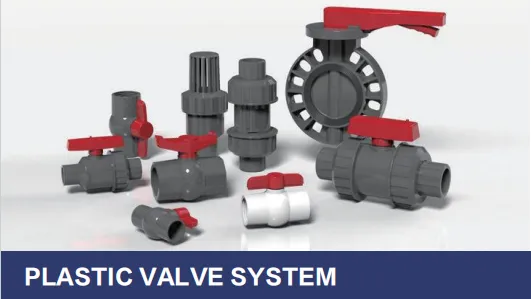
Durability is only half the story—performance matters too. A valve that lasts 50 years but restricts water flow or leaks constantly isn't worth the investment. Let's compare how plastic and composite valves perform in key operational areas:
Flow Efficiency
Plastic valves have a clear advantage here. Their smooth, non-porous inner surfaces minimize friction, allowing water and fluids to flow freely with minimal pressure drop. PEX and PPR valves, in particular, are designed with full-bore openings (meaning the valve's internal diameter matches the pipe's), ensuring unobstructed flow. For example, a 2-inch PPR ball valve from a trusted PPR pipe and fitting supplier will have the same flow rate as the pipe itself, making it ideal for systems where water pressure consistency is critical (like hospital showers or hotel laundry rooms).
Composite valves, while strong, sometimes have thicker walls or internal reinforcements that slightly reduce flow capacity. This isn't a dealbreaker for industrial systems (where flow rates are often regulated by pumps), but it can be a concern for residential or commercial projects where every drop of water pressure counts.
Leak Prevention
Both valve types excel at preventing leaks when installed correctly, but their methods differ. Plastic valves rely on tight compression fittings (for PEX) or solvent welding (for PVC/PPR), creating a seamless bond that's resistant to vibration and thermal expansion. Composite valves, on the other hand, use mechanical seals (like O-rings or gaskets) and bolted flanges, which require precise torqueing to avoid leaks. In high-pressure systems, composite's rigid design can actually reduce leak risk, as there's less flexing to compromise seals over time.
Maintenance Requirements
Plastic valves are the low-maintenance champions. Their resistance to scale and corrosion means they rarely need cleaning, and their simple design (no moving parts in basic ball valves) reduces the risk of mechanical failure. A quick annual check to ensure handles or levers are functioning is usually all that's needed.
Composite valves, while durable, demand more attention. Their gaskets and seals may degrade over time (especially in high-temperature environments), requiring periodic replacement. Additionally, their weight and rigidity make repairs more labor-intensive—imagine replacing a 12-inch composite valve in a ceiling cavity versus a lightweight PVC valve!
Cost Over Time
Here's where plastic valve system solutions really shine. Let's crunch the numbers for a mid-sized commercial building (50,000 sq ft) with 200 valves:
-
Plastic Valves:
Initial cost ~$15,000 (materials + installation). Annual maintenance ~$500. Total cost over 20 years: ~$25,000.
-
Composite Valves:
Initial cost ~$45,000 (materials + specialized labor). Annual maintenance ~$2,000 (seal replacements, inspections). Total cost over 20 years: ~$85,000.
Unless the building requires high-temperature or high-pressure systems (where plastic valves would fail), plastic valve system solutions offer unbeatable long-term value.