
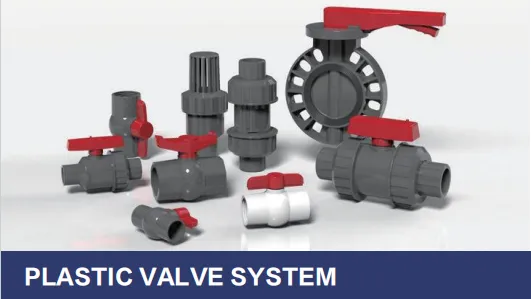
In the bustling world of modern construction—whether it's a cozy residential home, a sprawling commercial complex, or a state-of-the-art hospital—there's an unsung hero working behind the scenes: plastic valve systems. These unassuming components are the quiet guardians of water flow, waste management, and fluid control, ensuring that every tap turns smoothly, every drain functions without a hitch, and every critical system operates safely. As building standards rise and projects grow more complex, the demand for reliable, efficient, and versatile plastic valve solutions has never been higher. Today, we're diving deep into the heart of these systems, exploring the key materials that make them tick—PVC, PPR, and PE—and uncovering how they shape the plastic valve system solutions that keep our buildings running.
Before we jump into materials, let's take a moment to appreciate why plastic valves have become the go-to choice for builders, engineers, and architects worldwide. Traditional materials like metal once dominated the scene, but plastic has steadily stolen the spotlight—and for good reason. Plastic valves are lightweight, making installation a breeze compared to heavy metal counterparts. They're resistant to corrosion, a game-changer in environments where water, chemicals, or moisture would eat away at metal over time. And perhaps most importantly, they're cost-effective, without compromising on performance. From residential bathrooms to industrial factories, plastic valves have proven they can handle the pressure—literally and figuratively.
But not all plastic valves are created equal. The magic lies in the materials they're made from. PVC, PPR, and PE each bring unique strengths to the table, making them better suited for specific tasks. Understanding these materials isn't just for engineers; it's for anyone involved in a building project. Whether you're a homeowner planning a renovation, a contractor selecting supplies for a school, or a facility manager overseeing a hospital, knowing the difference between PVC, PPR, and PE can mean the difference between a system that lasts decades and one that needs frequent repairs.
If there's one material that's become synonymous with plastic plumbing, it's PVC. Short for polyvinyl chloride, PVC is a synthetic plastic polymer celebrated for its durability, affordability, and versatility. You've probably encountered it in everything from water pipes under your sink to the drainpipes outside your home. But what exactly makes PVC such a staple in plastic valve system solutions?
First, let's talk about strength. PVC is rigid and tough, able to withstand high pressure without cracking or warping. This rigidity makes it ideal for applications where stability is key, like underground drainage systems or vertical waste lines. It's also highly resistant to chemicals—a critical feature when you consider the mix of substances that flow through waste pipes, from soap scum to cleaning agents. Unlike metal, PVC won't rust, corrode, or leach harmful substances into the water, making it a safe choice for both potable water and waste management.
PVC isn't a one-size-fits-all material. Its versatility comes from variations in its formulation, each tailored to specific needs. For example, PVC-U (unplasticized PVC) is the stiff, rigid version you'll find in most pressure pipes and valves. It's the backbone of systems like PVC DWV (Drain, Waste, Vent), a term you might hear from pvc dwv pipe suppliers specializing in residential and commercial drainage. PVC DWV pipes and valves are designed to handle the constant flow of wastewater, relying on PVC's smooth interior to prevent clogs and its rigidity to maintain structural integrity in vertical and horizontal runs.
Then there's PVC-U SCH40, a type of pressure piping system often used in water supply lines. Its "SCH40" rating refers to its thickness and pressure-bearing capacity, making it suitable for delivering water to homes and businesses at moderate pressures. And let's not forget PVC transparent pipe fittings—a niche but valuable variant used in applications where visibility of fluid flow is important, like laboratory setups or industrial processes where monitoring for blockages is critical.
PVC's sweet spot? Drainage, waste management, and low-to-moderate pressure water supply. It's the material you'll find in your kitchen sink drain, your shower's waste pipe, and the underground lines that carry rainwater away from your property. Its affordability makes it a favorite for large-scale projects, like apartment complexes or schools, where keeping costs in check without sacrificing quality is a top priority.
But PVC isn't perfect. Its rigidity can be a drawback in environments where flexibility is needed—say, in areas with shifting soil or frequent temperature fluctuations that might cause the material to crack. It also has limits when it comes to high temperatures: while it handles cold and room-temperature fluids well, exposure to hot water (above 60°C/140°F) can cause it to soften over time. That's where other materials, like PPR, step in.
Imagine stepping into a warm shower on a chilly morning—or, in a more critical scenario, a hospital relying on consistent hot water for sterilization. In these moments, you're likely benefiting from PPR (Polypropylene Random Copolymer) valves and pipes. PPR has carved out a reputation as the go-to material for hot and cold water systems, thanks to its unique ability to handle temperature extremes without breaking a sweat.
PPR's secret lies in its molecular structure. Unlike standard polypropylene, which is a homopolymer (made of a single type of molecule), PPR is a copolymer, blending propylene with small amounts of ethylene. This "random" copolymer structure gives PPR two standout properties: flexibility and heat resistance. It can handle temperatures up to 95°C (203°F) continuously, making it ideal for hot water systems in homes, hotels, and hospitals. And when the heat turns up temporarily—say, during a boiler cycle—it can even withstand short bursts of up to 110°C (230°F).
But PPR isn't just about temperature tolerance. It's also incredibly durable, with a lifespan of 50+ years when installed correctly. It resists scaling and bacterial growth, a crucial feature in settings like hospitals and schools where hygiene is non-negotiable. Walk into a modern school building, and chances are the pipes delivering hot water to the cafeteria or hand sinks were supplied by a ppr pipe and fitting supplier who understands the need for safe, long-lasting systems.
PPR's versatility shines in both residential and commercial settings. In homes, it's the material of choice for hot water lines, ensuring that your morning shower stays warm and your dishwasher gets the hot water it needs to clean effectively. In commercial spaces, like hotels, it's used in centralized hot water systems that serve dozens of rooms, relying on PPR's heat resistance to maintain consistent performance even with heavy usage.
But where PPR truly proves its mettle is in specialized environments like hospitals and laboratories. Take, for example, a children's hospital: here, PPR pipes and valves are often paired with Class A fireproof CPL inorganic boards (a type of wall panel designed for fire safety) to create systems that are both hygienic and compliant with strict safety codes. The material's smooth interior prevents bacterial buildup, a must in spaces where infection control is paramount, and its heat resistance ensures that hot water for handwashing and medical equipment stays at the required temperature.
What sets PPR apart from other materials? For starters, its weldability. PPR pipes and fittings are joined using heat fusion, creating a seamless, leak-proof bond that's stronger than the pipe itself. This eliminates the risk of leaks at joints—a common issue with threaded metal pipes—and reduces maintenance needs over time. It's also lightweight, making it easier to transport and install than metal, which is a boon for contractors working on tight schedules.
Cost-wise, PPR sits somewhere between PVC and metal, but its long lifespan and low maintenance costs make it a smart investment. For homeowners, it means fewer repairs and replacements down the line. For businesses, it translates to lower operational costs and fewer disruptions to daily operations. No wonder ppr pipe and fitting suppliers often report high demand from both residential builders and commercial project managers.
If PVC is the king of drainage and PPR the hero of hot water, then PE (Polyethylene) is the unsung warrior of underground piping. PE's claim to fame? Its unmatched flexibility and resistance to the harsh conditions of buried environments. From municipal water mains to rural irrigation systems, PE pipes and valves quietly keep fluids flowing, even when faced with rocky soil, temperature swings, or the weight of traffic above.
PE comes in a few flavors, but the most common are HDPE (High-Density Polyethylene) and LDPE (Low-Density Polyethylene). HDPE is the heavyweight champion, prized for its strength, rigidity, and chemical resistance. It's the material you'll find in large-diameter water mains, sewage pipes, and underground gas lines. LDPE, on the other hand, is more flexible and less dense, often used in smaller-scale applications like irrigation hoses or flexible pipe fittings.
One of PE's most impressive feats is its ability to "bend without breaking." Unlike rigid PVC, PE can flex under pressure, making it ideal for underground installations where soil movement—caused by freeze-thaw cycles, earthquakes, or construction activity—might otherwise crack pipes. This flexibility also simplifies installation: PE pipes can be snaked around obstacles without the need for excessive joints, reducing the risk of leaks.
PE's resistance to corrosion and chemicals makes it a top choice for transporting aggressive fluids, like industrial wastewater or agricultural chemicals. It's also the material of choice for PVC well casing and screen pipes—critical components in water well systems that filter out sediment while protecting the well from contamination. PE's smooth surface prevents mineral buildup, ensuring a consistent flow of water from the ground to the surface.
In coastal areas, PE is often used for seawater intake systems, as its resistance to saltwater corrosion outperforms many metals. And in rural communities, PE pipes deliver drinking water over long distances, relying on the material's durability to withstand the elements year after year. Even in extreme conditions—like the frozen tundra or scorching deserts—PE holds its own, making it a truly versatile material.
With three strong contenders in the ring, how do you choose between PVC, PPR, and PE? To help you decide, let's put them head-to-head in a comparison table that highlights their key properties, best uses, and limitations.
| Material | Key Properties | Temperature Range | Chemical Resistance | Best Applications | Limitations |
|---|---|---|---|---|---|
| PVC (e.g., PVC-U, PVC DWV) | Rigid, lightweight, smooth interior, cost-effective | 0°C–60°C (32°F–140°F) | Excellent resistance to acids, alkalis, and most chemicals | Drainage, waste systems, low-pressure water supply, residential/commercial plumbing | Brittle in cold; softens in high heat; not flexible for shifting soil |
| PPR | Heat-resistant, weldable, hygienic, durable (50+ year lifespan) | 0°C–95°C (32°F–203°F) (short bursts up to 110°C/230°F) | Good resistance to water, mild acids, and household chemicals | Hot/cold water systems, hospitals, schools, residential bathrooms/kitchens | More expensive than PVC; less rigid than PVC for heavy structural loads |
| PE (e.g., HDPE, LDPE) | Flexible, corrosion-resistant, impact-resistant, leak-proof joints | -40°C–60°C (-40°F–140°F) (HDPE can handle higher temps briefly) | Exceptional resistance to saltwater, chemicals, and corrosion | Underground piping, water mains, well casing, wastewater, irrigation | Not ideal for high-pressure systems; can deform under heavy weight when exposed |
Now that we've explored the materials, let's zoom out and talk about plastic valve system solutions —a term you'll often hear from suppliers who go beyond just selling products. These solutions are about more than valves and pipes; they're about understanding a project's unique needs and delivering a tailored, end-to-end package that ensures everything works in harmony.
A reliable plastic valve system supplier doesn't just hand over a box of parts. They start by listening: What's the project? A hospital requiring Class A fireproof systems? A school with strict hygiene standards? A residential complex on a tight budget? Each scenario demands a different approach.
For example, a hospital might need PPR pipes and valves for hot water sterilization, paired with Class A fireproof CPL inorganic boards for walls—materials that meet stringent safety codes. A school, on the other hand, might prioritize cost-effective PVC DWV systems for drainage, complemented by PPR for drinking water lines. A rural water project could lean on PE for underground piping, ensuring durability in harsh soil conditions.
Great solutions also prioritize compliance. Reputable suppliers ensure their products meet global standards, whether it's ASTM D2846 for CPVC pipes, DIN PN10 for PVC fittings, or IRAM standards for PPH threaded piping. This compliance isn't just a box-checking exercise; it's a promise that the products will perform as expected, keeping occupants safe and projects on track.
No two projects are identical, which is why customization is key. Maybe a commercial kitchen needs extra-large PVC DWV valves to handle food waste, or a high-rise building requires specialized PPR fittings for vertical hot water distribution. Suppliers that offer custom solutions—whether it's unique valve sizes, color-coded pipes for easy identification, or fittings designed for tight spaces—add immense value, turning complex challenges into manageable solutions.
Installation support is another piece of the puzzle. Even the best materials can fail if installed incorrectly. Top suppliers offer guidance on proper welding techniques for PPR, tips for bending PE pipes without damaging them, or best practices for laying PVC DWV lines to prevent clogs. Some even provide on-site training for contractors, ensuring the system is set up for success from day one.
With so many options, how do you pick the right material for your project? Here's a step-by-step framework to guide your decision:
Start with the basics: What fluid will the system carry? Water (hot or cold)? Wastewater? Chemicals? For hot water (above 60°C), PPR is your best bet. For cold water or drainage, PVC or PE works. For chemicals or saltwater, PE's corrosion resistance is hard to beat.
Is the system indoors or outdoors? Underground or exposed? Underground projects with shifting soil call for flexible PE. Exposed systems in cold climates might benefit from PVC's rigidity, but avoid it in areas with extreme heat. Indoor hot water lines? PPR all the way.
Low-pressure systems (like residential drainage) can use standard PVC. High-pressure water supply might need PVC-U SCH40 or PPR. For heavy structural loads (e.g., pipes under a parking lot), HDPE's impact resistance is ideal.
PVC is the most budget-friendly, making it great for large projects. PPR costs more upfront but saves in maintenance over time, perfect for hospitals or schools planning for decades of use. PE is a mid-range option, offering durability without breaking the bank for underground work.
As building technology evolves, so too will plastic valve systems. We're already seeing exciting innovations: smart valves with built-in sensors that monitor flow and pressure, alerting maintenance teams to issues before they become crises. Eco-friendly materials, like recycled PE or bio-based plastics, are gaining traction, aligning with global sustainability goals. And advances in manufacturing are making once-niche materials, like PEX (cross-linked polyethylene), more accessible for specialized applications—though that's a topic for another day.
One thing is clear: PVC, PPR, and PE will remain the cornerstones of plastic valve system solutions for years to come. Their unique strengths—PVC's affordability, PPR's heat resistance, and PE's flexibility—ensure they can adapt to whatever the future of construction throws their way. And as plastic valve system suppliers continue to innovate, offering smarter, more customized solutions, the buildings we live, work, and heal in will only become safer, more efficient, and more resilient.
Plastic valve systems may not be the most glamorous part of a building, but they're undeniably essential. They're the quiet partners in our daily lives, ensuring that when we turn on the tap, water flows; when we flush, waste disappears; and when we need hot water, it's there—consistently, reliably, and safely. By understanding the strengths of PVC, PPR, and PE, and by partnering with suppliers who offer tailored plastic valve system solutions , you're not just building structures—you're building peace of mind.
So the next time you walk into a hospital, a school, or your own home, take a moment to appreciate the plastic valves working behind the scenes. They may be out of sight, but their impact is everywhere.
Recommend Products












