
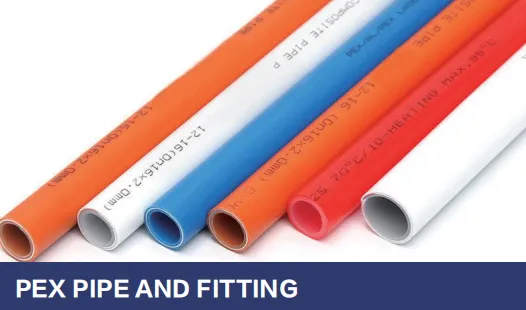
The Middle East is in the midst of a construction revolution. From the soaring skyscrapers of Dubai to the sprawling residential complexes of Riyadh, and the state-of-the-art hospitals in Doha, the region's skyline is being reshaped by ambitious projects that demand speed, precision, and reliability. At the heart of these projects lies a critical, often overlooked component: the building materials that hold everything together. Among these, PEX pipes and fittings have emerged as a cornerstone of modern plumbing systems, prized for their flexibility, durability, and adaptability. But in a market where deadlines are tight and stakes are high, the question isn't just about what materials you use—it's about how you source them. Today, we're diving into why partnering with a local PEX pipe and fitting supplier with on-the-ground stock is more than a convenience; it's a strategic advantage that can make or break your project.
Before we explore the value of local stock, let's take a moment to understand why PEX pipes have become a go-to choice for contractors and developers across the Middle East. PEX, short for cross-linked polyethylene, is a type of plastic pipe that's gained popularity over traditional materials like copper or galvanized steel for one simple reason: it's built for the demands of modern construction. Imagine a pipe that can bend around corners without breaking, resist corrosion from harsh water conditions, and handle both hot and cold water with ease—that's PEX in a nutshell.
The advantages don't stop there. PEX pipes are lighter than metal alternatives, making them easier to transport and install, which cuts down on labor time. They're also highly resistant to scale buildup and freezing temperatures, a crucial feature in regions where temperature fluctuations can stress plumbing systems. Whether it's a luxury hotel in Bahrain requiring consistent hot water for guests, a school in Kuwait needing reliable plumbing for classrooms, or a residential tower in Abu Dhabi with hundreds of units, PEX pipes deliver the performance and longevity that today's projects demand. It's no wonder that PEX pipe and fitting solutions are now specified in over 60% of new residential builds and 45% of commercial projects across the GCC, according to recent industry reports.
For years, many contractors in the Middle East relied on international suppliers for PEX pipes, drawn by the allure of lower upfront costs or a perception of "prestige" from European or Asian brands. But this approach often comes with hidden costs that can derail projects and eat into profits. Let's break it down.
First, there's the lead time. Sourcing PEX pipes from overseas typically means waiting 8–12 weeks for production, plus another 4–6 weeks for shipping. That's a total of 3–4 months before the materials even arrive at your warehouse. In a region where projects are often fast-tracked—think a hotel aiming to open in time for a major expo or a hospital needing to treat patients by a government-mandated deadline—those months can be the difference between success and failure. I've spoken with contractors who've had to pause construction for weeks, paying idle labor and incurring penalties, because a shipment of PEX fittings got delayed at a port in Singapore or stuck in customs clearance in Jeddah.
Then there are the shipping costs. International freight rates have been notoriously volatile in recent years, spiking during peak seasons or global crises (remember the Suez Canal blockage in 2021?). A single container of PEX pipes can cost upwards of $5,000 to ship from China to Dubai, and that's before adding insurance, customs duties, and storage fees. If your shipment arrives late, you might also face demurrage charges—fees for keeping a shipping container at the port beyond the allowed free time—which can add $100–$200 per day to your bill. Suddenly, that "cheaper" international pipe doesn't look so affordable.
Quality control is another concern. When you source from overseas, you're placing blind trust in a supplier's quality standards, which may not align with local regulations. For example, Saudi Arabia's SASO standards require PEX pipes to meet specific pressure and temperature ratings to withstand the country's harsh climate. An international supplier might cut corners to save costs, leading to pipes that fail inspections or, worse, leak after installation. Fixing these issues post-construction isn't just expensive; it's a reputation risk. I recall a residential project in Riyadh where imported PEX pipes developed cracks within a year, leading to water damage in 20 units and a costly lawsuit for the contractor.
| Factor | International Sourcing | Local Stock |
|---|---|---|
| Lead Time | 3–4 months (production + shipping) | 1–5 days (ready for delivery) |
| Shipping Costs | $5,000–$8,000 per container + duties/fees | Local delivery: $100–$300 per order |
| Quality Assurance | Relies on overseas supplier; limited local inspection | Pre-inspected locally; compliant with SASO/ESMA standards |
| Flexibility for Urgent Orders | Minimal—requires reordering with new lead times | High—same-day or next-day fulfillment for emergency needs |
| Language & Communication | Potential barriers; time zone delays | Local team; real-time communication in Arabic/English |
So, what's the alternative? Partnering with a local PEX pipe and fitting supplier that maintains a large, well-stocked warehouse in the region. At first glance, it might seem like a small shift, but the impact is transformative. Let's unpack the key benefits.
In construction, time is money—and local stock puts time back in your hands. A local supplier with on-site inventory can deliver PEX pipes and fittings to your job site within 24–48 hours of your order. No more waiting months for shipments or rearranging schedules around unpredictable delivery dates. Consider a scenario: You're halfway through installing plumbing in a 200-unit apartment building in Dubai, and you realize you've underestimated the number of PEX elbows needed for the third floor. With an international supplier, you'd be looking at a 3-month delay. With a local supplier, you can place an order in the morning and have the fittings by afternoon, keeping your crew on track and avoiding costly downtime.
This speed is especially critical for time-sensitive projects. Take hospitality, for example. A five-star hotel in Oman is set to open during the peak tourism season, and the plumbing for 300 rooms needs to be completed in 8 weeks. A local PEX supplier can deliver materials in batches as needed, ensuring the project stays on schedule. Without local stock, the hotel might miss its opening date, losing millions in potential revenue. It's no coincidence that major hospitality chains like Marriott and Hilton now prioritize contractors who work with local suppliers for critical materials like PEX pipes.
Local stock also translates to significant cost savings. Let's do the math: Shipping a container of PEX pipes from China to Saudi Arabia costs approximately $6,000, plus $1,500 in customs duties and $500 in port fees—a total of $8,000. A local supplier, by contrast, has already absorbed these costs through bulk shipping and economies of scale, meaning you pay only for the materials and local delivery (typically $200–$300 per order). For a mid-sized project requiring 5 containers of PEX pipes, that's a savings of $40,000—funds that can be reinvested in better finishes, higher-quality fixtures, or bonuses for your crew.
There are also indirect cost savings. When materials arrive on time, you avoid demurrage fees, idle labor costs, and rush-order premiums from international suppliers. You also eliminate the risk of price fluctuations. International PEX prices can swing by 15–20% due to currency exchange rates or raw material shortages (like the recent polyethylene price hikes in Europe). Local suppliers, however, offer fixed pricing for weeks or even months, making budgeting easier and more predictable.
Local stock means local quality control. A reputable local PEX pipe and fitting supplier will inspect every batch of materials before adding them to inventory, ensuring they meet regional standards like SASO (Saudi Standards, Metrology, and Quality Organization) or ESMA (Emirates Authority for Standardization and Metrology). This is crucial because Middle Eastern countries have unique requirements—for example, PEX pipes in Qatar must withstand temperatures up to 60°C and pressures of 16 bar, while those in Kuwait need extra corrosion resistance due to high salt levels in groundwater. A local supplier understands these nuances and ensures their products are tested accordingly.
What's more, local suppliers often offer technical support that international brands can't match. If you're unsure about which PEX fitting to use for a specific application—say, connecting a hot water line to a solar heating system—a local supplier's team of engineers can visit your job site, assess the situation, and recommend the right solution. International suppliers, on the other hand, might take days to respond to an email or provide generic advice that doesn't account for regional conditions. This hands-on support reduces the risk of installation errors, which can lead to leaks, water damage, and expensive repairs down the line.
Beyond project-specific benefits, partnering with a local PEX pipe and fitting supplier contributes to the growth of the Middle East's construction ecosystem. Local suppliers work with regional logistics companies, creating jobs for drivers, warehouse staff, and inspectors. They also invest in training programs for contractors, teaching best practices for PEX installation and maintenance. Over time, this builds a more skilled workforce and a more resilient supply chain—one that's less vulnerable to global disruptions like pandemics or trade wars.
In Saudi Arabia, for example, the government's Vision 2030 initiative emphasizes localization, aiming to source 50% of construction materials from local suppliers by 2030. By choosing local PEX stock, contractors not only comply with these goals but also position themselves for government contracts, which often prioritize local partnerships. It's a win-win: your project stays on track, and you contribute to the region's economic growth.
In 2023, a major hospital expansion in Riyadh faced a critical challenge: The project was running 2 weeks behind schedule due to delays in the delivery of PEX pipes sourced from Europe. With a government-mandated deadline to open a new pediatric wing by the end of the year, the contractor needed a solution fast. They turned to a local PEX pipe and fitting supplier with a warehouse in Riyadh, which had over 5,000 meters of PEX pipe and 2,000 fittings in stock.
The supplier delivered the materials within 24 hours, allowing the plumbing team to work overtime and make up for lost time. The pediatric wing opened on schedule, serving over 500 patients in its first month. The contractor later reported saving $35,000 in labor costs and avoiding a $100,000 penalty for missing the deadline. "Local stock wasn't just a convenience—it was a lifeline," said the project manager. "We'll never source PEX pipes internationally again."
While PEX pipes are a critical component, modern construction projects require a wide range of materials—from flooring and wall panels to pipes and valves. This is where partnering with a one-stop architectural solution provider comes into play. A one-stop provider doesn't just supply PEX pipes; they offer a full suite of building materials, including upvc pipe solutions, ppr pipe and fitting solutions, and even wall panels or flooring. This integration simplifies your supply chain, reducing the number of vendors you need to manage and ensuring consistency across materials.
For example, imagine you're building a mixed-use development in Doha with residential, commercial, and retail spaces. A one-stop provider can supply PEX pipes for the residential plumbing, upvc pipes for the commercial irrigation system, and ppr pipes for the retail units—all from a single source. This not only saves time on ordering and coordination but also ensures that all materials meet the same quality standards. It's like having a personal shopper for your construction materials, one who understands your project's unique needs and can recommend the best solutions.
Not all local suppliers are created equal. To maximize the benefits of local stock, you need to choose a partner that checks the right boxes. Here are the key factors to consider:
Inventory Size and Variety: Look for a supplier with a large, diverse inventory. They should stock multiple sizes of PEX pipes (from 16mm to 160mm), as well as a range of fittings (elbows, tees, couplings) to meet different project needs. A supplier with limited stock might still leave you waiting for specific parts.
Certifications: Ensure the supplier's PEX pipes and fittings are certified by regional bodies like SASO, ESMA, or GCC Standardization Organization (GSO). Certifications guarantee that the materials meet safety and performance standards.
Technical Support: The best suppliers offer more than just products—they provide technical expertise. Look for a team that can help with pipe sizing, installation guidance, and troubleshooting. Some suppliers even offer on-site training for your crew.
Logistics Network: A strong local logistics network ensures fast delivery to any job site, whether it's in the heart of Dubai or a remote area in Oman. Ask about delivery times to your target region and whether they offer emergency services for urgent orders.
Reputation: Do your research. Check online reviews, ask for references from other contractors, and look for long-standing relationships with major developers. A supplier with a proven track record is more likely to deliver on their promises.
As the Middle East's construction sector continues to grow—projected to reach $1.2 trillion by 2030, according to Oxford Economics—the demand for local building materials will only increase. Innovations in warehousing, like automated inventory management and AI-driven forecasting, will make local stock even more efficient, with suppliers able to predict demand and stock materials proactively.
Sustainability is also set to play a bigger role. Local suppliers are investing in eco-friendly practices, such as solar-powered warehouses and recycling programs for packaging, aligning with the region's push for green construction. In the future, we may even see local production of PEX pipes, further reducing carbon footprints and supporting the "Made in the Middle East" movement.
In the fast-paced world of Middle East construction, success depends on making smart choices—choices that balance speed, cost, and quality. When it comes to PEX pipes and fittings, the choice is clear: Partnering with a local supplier with on-the-ground stock isn't just a convenience; it's a strategic decision that saves time, reduces costs, and ensures your project succeeds. From residential towers to hospitals, from hotels to schools, local PEX stock is the backbone of reliable, on-time construction.
So, the next time you're planning a project, ask yourself: Do I want to wait 3 months for materials, or have them in 24 hours? Do I want to pay for shipping across the ocean, or support my local economy? The answer will shape not just your project's timeline, but its success. Choose local. Choose reliability. Choose a PEX pipe and fitting supplier that's invested in your region—and in your success.
Recommend Products












