
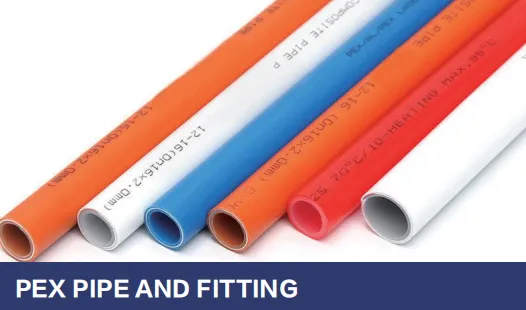
Construction projects are often celebrated for their grand final results—stunning skyscrapers, cozy homes, or state-of-the-art hospitals. But behind every successful build lies a complex web of collaboration, where every stakeholder plays a critical role. Among these, building material suppliers are the unsung heroes, quietly ensuring that the right materials arrive at the right time, in the right condition, and with the right support to turn blueprints into reality. For a material as versatile and widely used as PEX (cross-linked polyethylene) pipe and fittings, the supplier's role extends far beyond mere transactions. They are partners, problem-solvers, and guardians of project efficiency. In this article, we'll explore how a dedicated pex pipe and fitting supplier becomes an indispensable ally across every phase of a construction project, from the earliest design sketches to the final installation—and beyond.
Long before ground is broken, a construction project begins with ideas—architects drafting layouts, engineers calculating load-bearing capacities, and clients dreaming of spaces that meet their needs. This is where a proactive pex pipe and fitting supplier first steps in, not as a vendor, but as a technical collaborator. Architects and engineers rely on suppliers to provide more than just product catalogs; they need pex pipe and fitting solutions tailored to the project's unique demands.
Consider a residential high-rise in Riyadh, where space is at a premium and noise reduction is a priority. The architect might initially specify copper piping for the plumbing system, but a knowledgeable PEX supplier would step in with data: PEX pipes are flexible, reducing the need for elbow joints (which can be noise points) and allowing installation in tight spaces between floor joists. They might provide 3D models or BIM (Building Information Modeling) files of PEX fittings, helping the design team visualize how the system will integrate with other utilities. For a hospital project, where hygiene and durability are non-negotiable, the supplier could highlight PEX's smooth interior, which resists bacterial buildup, or its compatibility with hot water systems that require frequent temperature fluctuations.
Sustainability is another key factor in modern design, and suppliers play a vital role here too. A forward-thinking pex pipe and fitting supplier can share lifecycle assessments, showing how PEX's long lifespan (up to 50 years) and recyclability align with the project's green goals. They might also offer insights into water conservation—for example, PEX's smooth walls reduce water pressure loss, allowing for smaller pump systems that cut energy use. In short, during the design phase, the supplier transforms abstract concepts into tangible, feasible plans.
Once the design is taking shape, the project team faces a critical decision: which materials will bring that design to life? For plumbing, heating, and cooling systems, the options are plentiful—copper, PVC, CPVC, and PEX, to name a few. Here, the supplier's expertise becomes invaluable. They don't just sell PEX; they educate stakeholders on why it might be the best fit for their specific project, whether it's a residential development, a commercial office, or a public facility.
To illustrate, let's compare PEX with two common alternatives: copper and PVC. The table below breaks down key factors that influence material selection, with insights a supplier might share to guide the decision:
| Factor | PEX | Copper | PVC |
|---|---|---|---|
| Cost | Moderate upfront; lower labor costs due to easy installation | High upfront; higher labor costs for soldering joints | Low upfront; limited to cold water applications |
| Durability | Resists corrosion, freezing (if properly insulated), and scale buildup | Prone to corrosion in acidic water; can freeze and burst | Brittle; cracks under impact or freezing conditions |
| Installation Ease | Flexible; can bend around corners without elbows; crimp or push-fit connections | Rigid; requires precise measuring and soldering tools | Rigid; requires glue and drying time for joints |
| Applications | Hot and cold water, radiant heating, snow melting systems | Hot and cold water (limited to above-ground in some regions) | Cold water only; drain, waste, and vent (DWV) systems |
| Sustainability | Recyclable; lightweight reduces transportation emissions | Recyclable but heavy (higher transport costs); mining impact | Non-biodegradable; limited recycling options |
A supplier might walk a contractor through this table, then tailor the conversation to the project's needs. For a residential building materials supplier working on a housing complex, they'd emphasize PEX's affordability and speed of installation—critical for meeting tight construction timelines and keeping per-unit costs low. For a commercial project like a hotel, they might highlight PEX's noise reduction properties, ensuring guest comfort in rooms where plumbing runs are close to living spaces. In regions with extreme temperatures, such as parts of Saudi Arabia, the supplier could stress PEX's freeze resistance, a feature that can prevent costly pipe bursts during rare cold snaps.
Beyond comparisons, suppliers also help with material sizing and specification. A 3/4-inch PEX pipe might be ideal for a home's main water line, but a high-rise hotel might require 1-inch or larger diameters to meet demand. The supplier uses their knowledge of flow rates, pressure requirements, and local building codes to ensure the right products are selected—avoiding over-specification (which wastes money) or under-specification (which risks system failure).
Once the material is selected, the supplier's role shifts to ensuring that every foot of PEX pipe and every fitting meets the highest standards. This is where manufacturing and quality control come into play—and it's a phase that often goes unseen but is critical to project success. Reputable pex pipe and fitting suppliers don't just source products from any factory; they partner with manufacturers that adhere to strict industry standards, such as ASTM F876/F877 (for PEX pipes and fittings) or NSF/ANSI 61 (for drinking water safety).
Consider a scenario: A contractor orders 5,000 feet of PEX pipe for a residential development. The supplier's quality control team samples the batch, testing for cross-linking percentage (which affects strength), wall thickness consistency, and resistance to chemical degradation. If a sample fails—say, the cross-linking is too low, making the pipe prone to cracking—the supplier rejects the batch, even if it means delaying delivery by a few days. Why? Because a single faulty pipe could lead to a leak, water damage, and costly repairs down the line. For the supplier, protecting the client's reputation (and their own) is worth the short-term inconvenience.
Suppliers also ensure traceability. Each pipe or fitting might come with a lot number, allowing the supplier to track its origin, manufacturing date, and test results. If an issue arises later—say, a fitting leaks during installation—the supplier can quickly identify whether it's an isolated defect or a batch problem, and take corrective action. This level of accountability is rare in industries where "ship and forget" is the norm, but it's what sets great suppliers apart.
Even the highest-quality materials are useless if they don't arrive at the job site on time. Construction schedules are tight, and delays can cascade—missing a delivery date for plumbing materials might hold up the drywall team, which in turn delays painting, and so on. This is where the supplier's logistics expertise shines. Coordinating the delivery of PEX pipes and fittings requires careful planning, especially for large projects or those in remote locations.
Take, for example, a saudi arabia building materials supplier working on a commercial complex in Jeddah. The project requires 10,000 feet of PEX pipe, 500 fittings, and specialized tools for installation. The supplier must factor in customs clearance (if importing), local transportation, and storage conditions—Saudi Arabia's hot climate can warp plastic materials if left in direct sunlight. They might use climate-controlled trucks for delivery and provide guidelines for on-site storage, such as keeping pipes elevated and covered. For time-sensitive phases, like the plumbing rough-in, the supplier might offer "just-in-time" delivery, bringing materials to the site exactly when the crew is ready to install them, reducing the need for on-site storage space.
Logistics also involves flexibility. A sudden design change—say, the architect adds a guest bathroom to a hotel floor—could require an urgent order for additional PEX fittings. A responsive supplier will prioritize this request, tapping into local inventory or expediting manufacturing to meet the new deadline. As one project manager put it: "A good supplier doesn't just deliver materials—they deliver peace of mind. You know they'll find a way, even when plans change."
Once the materials are on-site, the supplier's job isn't done. Installation is where the rubber meets the road, and even the best products can underperform if installed incorrectly. That's why top pex pipe and fitting suppliers offer more than just products—they provide hands-on support to ensure the system works as intended.
Training is a big part of this. Many suppliers host workshops for contractors, teaching best practices for cutting PEX pipe, choosing the right fittings (crimp vs. push-fit), and testing for leaks. For newer teams or those unfamiliar with PEX, these sessions can be game-changers, reducing installation time and errors. Some suppliers even provide certification programs, giving contractors a credential that builds trust with clients.
On-site technical support is another key service. Imagine a contractor installing PEX in a hospital, where sterility and precision are critical. They encounter a tricky situation: a pipe needs to run through a concrete wall, and the fitting must be watertight to prevent mold growth. The supplier's technical representative visits the site, recommends a sleeve and sealant compatible with PEX, and demonstrates how to secure the fitting properly. This level of support turns a potential headache into a quick win, keeping the project on track.
Troubleshooting is also part of the package. If a leak occurs during pressure testing, the supplier can help diagnose the cause—was the crimp tool calibrated incorrectly? Did the fitting get damaged during installation? They might send a sample of the faulty part to the manufacturer for analysis, then work with the contractor to fix the issue and prevent it from happening again. As one plumber noted: "When you call the supplier, you're not just getting a customer service rep—you're getting someone who's seen it all. They know PEX inside out, and that expertise saves us hours of guesswork."
The project is complete, the building is occupied, and the PEX system is quietly doing its job—delivering hot water to showers, heating floors in winter, and keeping pipes frost-free. But the supplier's relationship with the client doesn't end here. Great suppliers understand that construction is a repeat business, and they aim to be the first call for the next project. That means staying engaged long after delivery.
Warranty support is a cornerstone of this. Most PEX products come with warranties—10, 25, or even 50 years—and the supplier ensures clients understand what's covered. If a pipe fails within the warranty period, the supplier coordinates with the manufacturer to replace it, handling the paperwork and logistics so the client doesn't have to. For a residential building materials supplier , this peace of mind is especially valuable—homeowners want to know their plumbing system is backed by a reliable partner.
Suppliers also seek feedback. After the project, they might check in with the contractor or client: How did the PEX perform? Were there any issues with installation or delivery? What could the supplier do better next time? This feedback loop helps them refine their services, whether it's improving their BIM file library, adding new fitting types, or adjusting delivery schedules to better align with construction phases.
Finally, suppliers stay ahead of industry trends, sharing insights with clients to help them future-proof their projects. For example, as smart homes become more common, a supplier might introduce PEX pipes with integrated sensors that monitor flow rates or detect leaks—adding value to the next residential development. Or, as sustainability regulations tighten, they might offer recycled-content PEX or tools that reduce installation waste.
In the world of construction, PEX pipe and fittings are compared to soaring glass facades or sleek interiors. But their role is foundational, and the supplier behind them is equally critical. From collaborating on design to ensuring quality, navigating logistics, supporting installation, and standing by post-delivery, the pex pipe and fitting supplier is a partner that transforms challenges into opportunities. They don't just supply materials—they supply confidence, knowing that every pipe, every fitting, and every interaction is building toward a successful project.
So the next time you turn on a faucet, walk into a warm room, or admire a newly built home, take a moment to appreciate the invisible network of PEX pipes—and the supplier that made sure they were there, in perfect condition, exactly when they were needed. In construction, success isn't just about what you build. It's about who you build it with.
Recommend Products












