
In the world of construction, every nail, beam, and pipe plays a silent but vital role in turning blueprints into reality. Yet, few materials carry the same weight of responsibility as plumbing components—especially when the project is critical. Whether it's a bustling hospital relying on steady water flow for patient care, a school prepping for the first day of classes, or a commercial high-rise racing to meet a grand opening deadline, the difference between success and costly delays often hinges on one factor: on-time delivery of essential building materials. For projects where plumbing is the lifeline, choosing the right PEX pipe and fitting supplier isn't just a logistical decision—it's a promise to keep the project on track, the team on schedule, and the end goal within reach.
As a trusted residential building materials supplier and commercial building materials supplier, we've seen firsthand how the smallest hiccup in material delivery can send ripples through an entire project. A delay of even a week can disrupt labor schedules, inflate costs, and erode client trust. That's why, for critical projects, the focus isn't just on what materials you use, but who delivers them. In this article, we'll dive into the world of PEX pipes and fittings—their unmatched advantages in modern construction—and explore how a reliable PEX pipe and fitting supplier becomes the backbone of on-time project completion. Because when the clock is ticking and stakes are high, you don't just need a supplier; you need a partner.
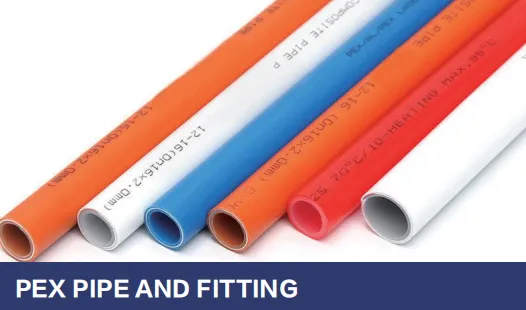
Before we unpack the critical role of delivery, let's start with the basics: What makes PEX pipes and fittings the go-to choice for so many residential and commercial projects? PEX, short for cross-linked polyethylene, is a flexible plastic piping material that's revolutionized plumbing since its introduction. Unlike rigid copper pipes or brittle PVC, PEX bends easily, resists corrosion, and handles temperature fluctuations—making it ideal for everything from home water lines to large-scale commercial systems.
Imagine a construction crew installing plumbing in a tight attic space. With copper pipes, they'd need to measure, cut, and solder joints with precision, often struggling to maneuver around beams and insulation. With PEX, the pipe bends smoothly around obstacles, reducing the need for elbow fittings and speeding up installation. For a school renovation project we worked on last year, this flexibility shaved nearly 40 hours off the plumbing phase alone—a game-changer when the deadline was tied to the start of the academic year.
PEX fittings, too, deserve a spotlight. Designed to create secure, leak-proof connections without soldering, they simplify the installation process even further. Push-to-connect fittings, for example, allow crews to join pipes in seconds, minimizing errors and ensuring a tight seal that lasts for decades. This combination of flexibility and ease of use has made PEX the material of choice for projects where time and reliability are non-negotiable—hospitals, senior living facilities, and apartment complexes, to name a few.
But here's the catch: The best materials in the world are useless if they don't arrive when you need them. A hospital expansion can't wait for delayed PEX pipes when operating rooms need functional water lines before patients move in. A hotel renovation stalls if the plumbing rough-in isn't done in time for drywall installation. That's where the role of a dedicated PEX pipe and fitting supplier shifts from "vendor" to "project partner." It's not just about selling products—it's about ensuring those products are there, on-site, exactly when the crew is ready to use them.
To understand why on-time delivery is make-or-break, let's walk through a scenario we've all heard (or lived through): A commercial building project is weeks from completion. The general contractor has scheduled electricians, plumbers, and drywall installers in a carefully choreographed sequence. Then, the plumbing materials—including PEX pipes and fittings—are delayed by a week. Suddenly, the plumbers can't start their work. The electricians, who were supposed to follow, are left twiddling their thumbs. The drywall crew, scheduled next, is now pushed back. By the end, what started as a 7-day delay balloons into a 3-week setback, costing the client tens of thousands in labor overruns and missed rental income.
In critical projects like hospitals or schools, the stakes rise even higher. Consider a children's hospital adding a new wing to accommodate more patients. The plumbing system isn't just about sinks and toilets—it's about life-saving equipment, sterile water for surgeries, and climate control. A delay in PEX pipe delivery could mean the wing opens late, leaving families waiting for care. For the construction team, it's not just a schedule issue; it's a moral one. "We had a project manager tell us once, 'These pipes aren't just metal and plastic—they're the reason a kid gets treated on time,'" recalls Maria Gonzalez, our logistics director. "That's the weight we carry when we promise delivery."
The financial toll of delays is equally stark. According to the Construction Industry Institute, a single day of delay on a commercial project costs an average of $12,000 in labor, equipment rental, and lost revenue. For a 10-day delay, that's $120,000—money that could have gone into better finishes, energy-efficient upgrades, or lowering tenant costs. And let's not forget reputation: A contractor who consistently misses deadlines risks losing clients, while a supplier known for delays gets crossed off bid lists faster than you can say "change order."
On the flip side, when materials arrive on time, magic happens. The crew stays motivated, the schedule stays tight, and the project gains momentum. We once supplied PEX pipes to a senior living facility that needed its plumbing done before winter. The delivery arrived a day early, giving the plumbers a buffer to handle unexpected issues (like a frozen water main that needed thawing). "That extra day saved us," the contractor later told us. "We finished on time, and the residents moved in before the first snow. You don't put a price on that kind of relief."
If on-time delivery is so critical, why do delays happen? The truth is, supplying PEX pipes and fittings isn't as simple as stacking boxes on a truck. The journey from manufacturing to job site is fraught with potential roadblocks—ones that even the most prepared suppliers must navigate.
First, there's the global supply chain. PEX is made from polyethylene resin, which is derived from petroleum. When oil prices spike or refineries face shutdowns, resin costs rise, and production slows. In 2022, for example, a resin shortage left many suppliers scrambling to fill orders, with lead times stretching from 2 weeks to 8. Add in shipping delays—port congestion, truck driver shortages, or even natural disasters like hurricanes disrupting transportation—and suddenly, "on-time" becomes a moving target.
Then there's demand volatility. The pandemic taught us that construction booms can happen overnight. When remote work spurred a surge in home renovations and commercial-to-residential conversions, PEX demand skyrocketed. Suppliers who didn't anticipate this spike found themselves with empty warehouses, while contractors faced bidding wars for limited materials. "We had clients calling at 7 a.m., begging for any PEX they could get—even if it wasn't their preferred brand or color," says John Lee, our inventory manager. "It was chaotic, but it taught us the importance of planning for the unexpected."
Logistics at the local level can also derail delivery. A job site in a busy urban area might have strict delivery windows (no trucks after 9 a.m. to avoid rush hour), while a rural project could require navigating unpaved roads that become impassable in rain. Even something as small as a miscommunicated delivery address or a missing work order can turn a smooth delivery into a day-long headache. "We once had a truck drive 2 hours to a site, only to find out the crew had moved to a different building on the same campus," Maria laughs. "Mistakes happen, but they cost time—time we can't afford to lose."
Finally, there's the challenge of balancing speed with quality. Rushing to meet a deadline shouldn't mean cutting corners on material integrity. PEX pipes must be stored properly (away from direct sunlight, which can degrade the plastic) and inspected for defects before shipping. A single damaged pipe in a batch can lead to leaks, callbacks, and costly repairs—negating the benefits of on-time delivery entirely. So, suppliers walk a tightrope: moving fast enough to meet deadlines, but slow enough to ensure every fitting and pipe is job-ready.
So, what separates a supplier who "tries" to deliver on time from one who guarantees it? It's not luck—it's a deliberate, systems-driven approach to overcoming the challenges we've outlined. Here's how the best PEX pipe and fitting suppliers turn "on-time" from a promise into a reality.
The foundation of on-time delivery is inventory. A reliable supplier doesn't wait for an order to start sourcing materials—they anticipate demand. We maintain regional warehouses across key construction hubs, each stocked with the most commonly used PEX sizes (1/2-inch, 3/4-inch, 1-inch) and fittings (crimp, clamp, push-to-connect). For specialty items—like oxygen-barrier PEX for radiant heating systems—we partner with manufacturers to secure priority production slots, ensuring we can fulfill even custom orders within 48 hours.
But inventory management isn't just about hoarding stock. It's about data. We use predictive analytics to track seasonal trends: For example, residential projects spike in spring, so we boost PEX inventory in February. Commercial projects often ramp up in fall, so we adjust accordingly. This way, we're never caught flat-footed when demand surges.
Relying on a single manufacturer is a recipe for disaster. That's why we work with three leading PEX producers, each with redundant production facilities. If one factory faces a resin shortage, we shift orders to another. During the 2022 resin crisis, this diversification let us keep 95% of our clients' orders on schedule, while competitors with single-source suppliers struggled. It's not just about having backups—it's about building relationships with manufacturers who share our commitment to reliability.
Gone are the days of "your delivery is 'on the way.'" Modern suppliers use real-time tracking systems to give clients visibility from factory to job site. Our platform lets contractors log in and see exactly where their PEX shipment is: when it left the warehouse, which truck it's on, and even an ETA updated every 15 minutes. If there's a delay (a traffic jam, a flat tire), the system alerts both our team and the client immediately, so we can pivot—rerouting a nearby truck or adjusting the delivery window—before the crew is left waiting.
We also use GPS to optimize delivery routes, grouping nearby job sites to reduce transit time and fuel costs. For urban projects with tight windows, we coordinate with site managers to schedule "just-in-time" deliveries—dropping off materials exactly when the crew is ready to install them, minimizing on-site storage and clutter.
Even with the best systems, issues arise. The difference is how a supplier communicates. A great supplier doesn't wait for you to call with questions—they reach out first. If a shipment will be 2 hours late due to weather, you'll get a text at 6 a.m., not a panicked call at 9 a.m. when the crew is already idle. If a fitting is backordered, they'll suggest a compatible alternative (with your approval, of course) and expedite delivery at no extra cost.
"Communication builds trust," says John. "When a client knows we'll be honest about delays and work with them to fix it, they're more likely to stay calm—and that keeps the project on track."
On-time delivery means nothing if the materials arrive damaged or defective. That's why we inspect every PEX pipe and fitting before it leaves our warehouse. Each batch undergoes pressure testing (to ensure it can handle water pressure up to 160 psi), UV resistance checks (to prevent degradation), and fitting pull tests (to verify connections won't leak). We also include a quality certificate with every shipment, so you have peace of mind that what you're installing meets industry standards (ASTM F876/F877 for PEX, CSA B137.5 for fittings).
To truly appreciate why PEX pipes and fittings are a favorite for critical projects, let's compare them to two common alternatives: copper and PVC. This table highlights how PEX's unique properties align with the need for speed, reliability, and on-time installation.
| Feature | PEX Pipes & Fittings | Copper Pipes | PVC Pipes |
|---|---|---|---|
| Installation Time | Fast: Flexible, no soldering; 30-50% faster than copper | Slow: Requires cutting, soldering, and cooling time | Moderate: Rigid, requires precise measuring and gluing |
| Flexibility | High: Bends around obstacles; reduces need for fittings | Low: Rigid; requires elbows/tees for turns | Low: Brittle; prone to cracking if bent |
| Corrosion Resistance | Excellent: Resists scale, rust, and chemical damage | Good, but prone to pinhole leaks from acidic water | Good, but can degrade in extreme temperatures |
| Cost | Moderate: Lower than copper, slightly higher than PVC | High: Expensive material and labor costs | Low: Inexpensive material, but higher long-term maintenance |
| Best For | Residential, commercial, hospitals, schools (fast, reliable plumbing) | Historic buildings, high-end homes (aesthetic preference) | Drainage, cold water lines (limited hot water use) |
As the table shows, PEX's flexibility and fast installation directly support on-time project completion. For a hospital renovation, where every day counts, choosing PEX over copper can cut plumbing time by weeks—time that translates to faster patient care and lower labor costs. For a school, it means the plumbing rough-in is done before the drywall crew arrives, keeping the entire project on schedule.
Let's put all this into context with a real-world example. In 2023, we partnered with a general contractor on the expansion of Cityview Regional Hospital, a 150-bed facility in the Midwest. The project included a new emergency department, operating rooms, and patient wings—all requiring extensive plumbing work, with PEX pipes chosen for their reliability and quick installation.
The deadline was non-negotiable: The emergency department needed to open by November 1 to handle winter patient surges. Any delay would mean diverting ambulances to other hospitals, risking longer wait times and potential lives lost. The plumbing phase was scheduled for August, with just 4 weeks to complete rough-in before drywall and electrical work began.
Three weeks before the scheduled PEX delivery, our logistics team noticed a potential issue: A trucking strike was looming in the region, which could delay shipments by 5-7 days. Instead of waiting to see if the strike would happen, we acted immediately. We rerouted the hospital's PEX order through a non-union carrier, arranged for expedited shipping, and coordinated with the job site to adjust the delivery window to 6 a.m. (before the crew arrived), ensuring materials were on-site and ready to go.
The strike did occur—but by then, the hospital's PEX pipes and fittings were already installed. The plumbing crew finished 2 days early, giving the drywall team extra time to work. The emergency department opened on November 1, as planned. "That early delivery wasn't just about pipes—it was about keeping our promise to the community," the contractor told us afterward. "And we couldn't have done it without you."
This case study illustrates a key point: On-time delivery isn't just about meeting a date on a calendar. It's about understanding the human impact of your work—and going the extra mile to ensure projects that matter, get done on time.
At the end of the day, construction is about people—building spaces where families live, children learn, and communities heal. And at the heart of those spaces is plumbing: the invisible network that makes daily life possible. PEX pipes and fittings have become the backbone of modern plumbing, but their true value is unlocked only when they arrive on time, every time.
When you choose a PEX pipe and fitting supplier, you're not just buying products—you're investing in your project's success. You're choosing a partner who understands the stress of tight deadlines, the frustration of delays, and the relief of seeing materials arrive exactly when needed. You're choosing someone who will fight for your project, navigate supply chain chaos, and communicate honestly when challenges arise.
So, as you plan your next critical project—whether it's a school, hospital, or commercial building—ask yourself: Is my supplier just selling me PEX, or are they committed to my success? Because in construction, time is money, but trust is priceless. And when you have both, there's no project you can't complete—on time, on budget, and ready to change lives.
For those ready to build with confidence, remember: The right PEX pipe and fitting supplier doesn't just deliver materials—they deliver peace of mind. And in a world where delays are common, peace of mind is the most valuable material of all.
Recommend Products












