
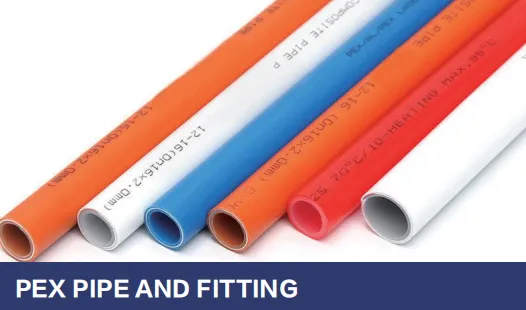
Walk into any modern construction site, and you'll likely hear the hum of power tools, the shuffle of workers, and the occasional clink of metal—but what you might not notice is the unsung hero running through the walls: PEX piping. Short for cross-linked polyethylene, PEX has revolutionized plumbing, heating, and cooling systems with its flexibility, durability, and cost-effectiveness. Yet, for all its benefits, PEX is only as reliable as the connections holding it together. Imagine a homeowner returning from vacation to find their basement flooded, not because of a storm, but because a mismatched fitting corroded away, or a DIY installer used a crimp ring meant for PEX-B on a PEX-A pipe. These aren't just hypothetical horror stories—they're real-world consequences of overlooking a critical detail: compatibility.
In this article, we'll dive deep into the world of PEX pipe and fitting compatibility, exploring why it matters, how to achieve it, and the role of a trusted pex pipe and fitting supplier in ensuring your system stands the test of time. Whether you're a seasoned plumber, a facility manager, or a homeowner planning a renovation, understanding compatibility isn't just about avoiding leaks—it's about building systems that are safe, efficient, and built to last.
Before we talk about fittings, let's get to know the star of the show: PEX pipe. At first glance, all PEX might look the same—flexible, lightweight, and available in rolls—but under the surface, there are key differences that impact compatibility. PEX pipes are categorized into three main types: PEX-A, PEX-B, and PEX-C. Each type is manufactured using a different cross-linking process, which affects their flexibility, temperature resistance, and how they interact with fittings.
PEX-A is made using the peroxide cross-linking method (Engel method), which creates the most uniform cross-links between molecules. This results in exceptional flexibility—PEX-A can be bent into tight curves without kinking, making it ideal for retrofits or installations in tight spaces. It also has superior resistance to freeze damage; if water inside the pipe freezes, PEX-A can expand and then return to its original shape without cracking. However, this flexibility comes with a catch: PEX-A requires specific fittings and connection methods to ensure a secure seal.
PEX-B is produced using the silane cross-linking method (Moisture Cure method), which is more cost-effective than PEX-A. While it's less flexible than PEX-A, it's still more pliable than rigid copper or CPVC, and it's known for its chemical resistance and durability. PEX-B is the most commonly used type in residential plumbing, thanks to its balance of performance and affordability. But here's the thing: its stiffer nature means it pairs best with certain fittings and connection techniques—use the wrong ones, and you risk leaks.
PEX-C uses electron beam cross-linking, a process that creates strong, consistent cross-links without chemical additives. It's often used in commercial applications, such as radiant heating systems or industrial piping, where high pressure and temperature resistance are critical. PEX-C is less common in residential plumbing but shares similarities with PEX-B in terms of flexibility and fitting compatibility. The key takeaway? Not all PEX is created equal, and the type you choose directly impacts which fittings will work.
If PEX pipes are the "bones" of a plumbing system, fittings are the "joints" that hold everything together. Fittings connect pipes to fixtures, change direction, split lines, and adapt to different sizes—and choosing the right one is just as important as choosing the right pipe. Let's break down the basics of PEX fittings, from materials to designs.
PEX fittings come in three primary materials, each with its own pros, cons, and compatibility considerations:
Fitting design goes hand-in-hand with connection method, and not all designs work with all PEX types. Here are the most common designs:
Now that we understand pipes and fittings, let's tackle the heart of the matter: compatibility. At its core, compatibility means ensuring that your PEX pipe, fitting, and connection method work together seamlessly—no leaks, no chemical reactions, no premature failure. But why is this so critical? Let's break it down.
When different materials meet, sometimes they don't play nice. Take brass fittings and PEX pipe, for example: most PEX is treated with antioxidants to prevent degradation, and some brass alloys contain lead or other metals that can react with these additives, causing the pipe to become brittle. Conversely, using a polymer fitting with a PEX pipe that's exposed to high temperatures (like in a radiant heating system) might cause the plastic to warp, breaking the seal.
Another common issue is galvanic corrosion, which occurs when two dissimilar metals (like brass fittings and steel pipe hangers) are in contact with water, creating a battery-like effect that eats away at the metal. Even something as simple as using a zinc-plated crimp tool on a brass fitting can introduce galvanic corrosion if the plating flakes off.
PEX pipes are measured by their inner diameter (ID), while fittings are sized by their outer diameter (OD)—and if these don't align, you're asking for trouble. A ½-inch PEX pipe might have an OD of ⅝ inch, and a ½-inch fitting must match that OD exactly. If the fitting is too small, it won't seat properly; too large, and the seal will fail. Even within the same nominal size, different manufacturers may have slight variations, which is why mixing brands is risky unless they're certified compatible.
Wall thickness matters too: PEX pipes come in different schedules (SDR 9, SDR 11, etc.), which indicate wall thickness relative to diameter. A fitting designed for a thick-walled SDR 9 pipe won't work with a thin-walled SDR 11 pipe, as the connection method relies on compressing the pipe to a specific thickness.
| PEX Type | Common Fitting Materials | Recommended Connection Methods | Best For |
|---|---|---|---|
| PEX-A | Brass, Polymer (Expansion-Specific) | Expansion, Push-Fit (Certified), Clamp | Retrofits, Tight Spaces, Freeze-Prone Areas |
| PEX-B | Brass, Polymer | Crimp, Clamp, Push-Fit | Residential Plumbing, Budget Projects |
| PEX-C | Brass, Polymer | Crimp, Clamp, Push-Fit | Commercial Radiant Heating, Industrial Systems |
Thankfully, you don't have to guess whether a pipe and fitting are compatible—there are standards to guide you. Organizations like ASTM International (ASTM F876 for PEX pipe, ASTM F1807 for crimp fittings), CSA Group (B137.5), and NSF International (NSF/ANSI 61 for potable water) set rigorous testing requirements for PEX components. A fitting marked with ASTM F1807 is certified to work with PEX pipes marked ASTM F876, for example. Always check for these certifications, as they're your best bet for ensuring compatibility.
Even with the best intentions, compatibility issues can slip through the cracks—and the results are rarely pretty. Let's look at some of the most common problems and their real-world impacts.
John, a plumber in Florida, recently encountered a puzzling case: a 5-year-old PEX system in a beachfront home was leaking from multiple brass fittings, even though the pipes looked fine. The culprit? Galvanic corrosion. The home's water supply had high salt content, and the brass fittings (which contained zinc) were reacting with the stainless steel crimp rings, creating a corrosion cell that ate through the fittings from the inside out. By the time the leaks were discovered, the damage had spread to walls and flooring, costing the homeowner thousands in repairs.
A property manager in Texas decided to save money by hiring a handyman to install a PEX manifold in an apartment complex. The handyman used PEX-A pipe but crimped it with rings meant for PEX-B, using a budget crimp tool that didn't apply enough pressure. Within six months, half the units had low water pressure, and several had leaks under sinks. The issue? PEX-A's flexibility requires either expansion fittings or high-quality clamps; the under-crimped rings couldn't hold the seal, leading to slow leaks that went undetected until mold started growing.
Many DIYers assume that "a PEX fitting is a PEX fitting," but that couldn't be further from the truth. Sarah, a homeowner in Colorado, purchased PEX-B pipe from Brand X and fittings from Brand Y to save a few dollars. Both were marked "½ inch," but Brand X's OD was 0.625 inches, while Brand Y's was 0.630 inches—a difference of just 0.005 inches. Over time, the slight mismatch caused the crimp rings to loosen, resulting in a pinhole leak that flooded her laundry room. The lesson? Even small variations between brands can lead to big problems.
If compatibility is the "what" and "why," then your pex pipe and fitting supplier is the "how." A reliable supplier doesn't just sell parts—they provide pex pipe and fitting solutions that are tested, certified, and designed to work together. Here's what to look for when choosing a supplier:
Reputable suppliers source PEX pipes and fittings that meet industry standards like ASTM, CSA, and NSF. They'll happily provide certification documents, test reports, and material safety data sheets (MSDS) upon request. Avoid suppliers who can't or won't share this information—if they're cutting corners on certifications, they're likely cutting corners on quality.
A good supplier doesn't just hand you a box of parts and wave goodbye. They employ technical experts who can help you select the right PEX type, fittings, and connection methods for your project. Whether you're installing a radiant floor heating system or retrofitting a hospital (where fire safety and hygiene are critical), they should be able to answer questions like, "Will this brass fitting react with our water chemistry?" or "Can I use PEX-A with push-fit fittings in a commercial kitchen?"
The best suppliers offer "systems" rather than individual parts—meaning pipes, fittings, tools, and accessories that are all designed to work together. For example, a supplier might offer a PEX-A kit that includes expansion tools, polymer expansion fittings, and certified PEX-A pipe, ensuring every component is compatible out of the box. This not only simplifies ordering but also eliminates the guesswork of mixing and matching.
Pro Tip: Ask your supplier about their warranty. A supplier who stands behind their products will offer warranties that cover not just defects in materials, but also compatibility-related issues. For example, some suppliers offer 25-year system warranties when you use their pipes, fittings, and connection methods together—far better than the 1-year warranty you might get from a discount retailer.
Even with a great supplier, compatibility is a team effort. Here are some best practices to ensure your PEX system is compatible from start to finish:
While some brands certify compatibility with others, sticking to a single manufacturer for pipes and fittings is the safest bet. Manufacturers test their own components together, so you can be confident they're designed to work as a system.
Even the best components fail if installed incorrectly. Ensure installers are trained on the specific PEX type and connection method you're using. Many suppliers offer training programs or webinars on proper installation techniques—take advantage of them.
Before crimping, clamping, or pushing, inspect every pipe and fitting for defects: cracks, deformities, rough edges, or discoloration. If a fitting looks off, or a pipe has a kink, don't use it—return it to your supplier and get a replacement.
After installation, pressure-test the system with air or water (per local codes) and check for leaks. A 24-hour pressure test at 80 psi (for residential systems) can reveal hidden issues before walls are closed up. For commercial systems, consider thermal imaging or ultrasonic testing to detect leaks behind walls.
To put this all into perspective, let's look at a real-world example of pex pipe and fitting solutions in action. A hospital in Riyadh, Saudi Arabia, was undergoing a renovation of its pediatric ward, requiring new plumbing for sinks, showers, and medical equipment. The project had strict requirements: the system needed to be lead-free, corrosion-resistant, and able to withstand frequent temperature fluctuations (from cold tap water to hot sanitizing cycles).
The hospital's engineering team partnered with a local pex pipe and fitting supplier who specialized in healthcare systems. The supplier recommended PEX-B pipe (for cost-effectiveness) with lead-free brass push-fit fittings certified to NSF/ANSI 61 for potable water. They also provided technical support, training the installation crew on proper push-fit techniques and ensuring all components were from the same manufacturer to avoid compatibility issues.
Today, three years later, the system has had zero leaks or failures, even with daily use and rigorous cleaning protocols. The key? A focus on compatibility from the start—choosing the right pipe and fittings, sourcing from a reputable supplier, and ensuring proper installation. As the hospital's facilities manager put it: "We didn't just buy pipes and fittings—we bought peace of mind."
PEX pipe and fitting compatibility isn't a technicality—it's the foundation of safe, reliable plumbing systems. From avoiding costly leaks to ensuring long-term performance, every decision—from pipe type to fitting material to supplier choice—plays a role in building systems that work. By understanding the differences between PEX types, choosing the right fittings and connection methods, and partnering with a trusted pex pipe and fitting supplier, you're not just installing plumbing—you're investing in durability.
So the next time you're standing in front of a shelf of PEX fittings, or debating between brands, remember: compatibility isn't optional. It's the difference between a system that lasts 5 years and one that lasts 50. And in a world where every drop counts, that's a difference worth investing in.
Recommend Products












