
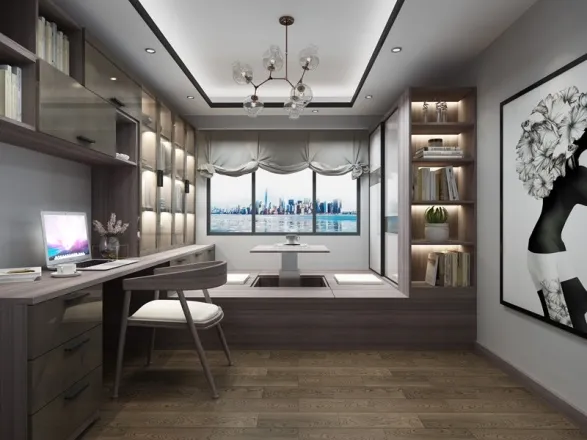
Imagine stepping onto flooring that feels like a warm embrace beneath your feet—soft, comforting, yet springy and responsive. This isn't just any ordinary floor covering, but a masterpiece born from ancient traditions harmoniously blended with cutting-edge innovation. Paper-weave tatami represents a remarkable evolution in the millennia-long story of paper, transforming a material once reserved for scrolls and books into a modern flooring solution that combines comfort, sustainability, and practicality.
The journey from pulped fiber to resilient flooring reflects human ingenuity at its finest. Like the paper itself that originated in ancient China, traveled through Central Asia to Baghdad, and eventually revolutionized Europe's communication systems, paper-weave tatami carries forward this legacy of innovation. This humble material has been reimagined for contemporary living, addressing the modern homeowner's desire for sustainable, low-maintenance, and beautiful living spaces.
But what makes paper-weave tatami stand out in today's crowded market of flooring options? Why should you consider it for your living space? Let's unravel the story, science, and practical magic behind this remarkable innovation.
Our story begins in 105 AD when visionary Chinese court official Ts'ai Lun first created paper from mulberry bark, hemp, old rags, and fishing nets. This revolutionary material would reshape human civilization—carrying knowledge across continents and centuries.
Paper's journey from ancient China to modern manufacturing plants is a testament to human persistence and ingenuity. By 751 AD, papermaking technology had traveled to Samarkand and reached Baghdad just four decades later. European paper mills emerged around the 14th century, primarily in Spain, Italy, France, and Germany—setting the stage for a communication revolution.
The monumental shift came with the invention of the printing press around 1450. Suddenly, paper wasn't just a luxury for scholars and nobility—it became the lifeblood of spreading knowledge to the masses. But this boom created a crisis: paper mills faced severe rag shortages as demand exploded. Resourcefulness prevailed, leading to the groundbreaking transition from scarce cotton and linen rags to abundant wood pulp at the dawn of the 19th century.
Modern papermaking represents an extraordinary technological evolution. Early manual processes where sheets were individually formed using molds gave way to continuous production machines invented by Nicolas-Louis Robert in 1798. The Fourdrinier brothers later refined this invention, creating machines that could produce uninterrupted paper sheets—making mass production possible.
Traditional tatami flooring has been at the heart of Japanese homes for centuries—a woven rush mat typically filled with rice straw that creates a firm yet comfortable surface. Paper-weave tatami maintains this cultural essence while revolutionizing the materials and manufacturing process.
At its core, modern tatami transforms specially engineered paper pulp into durable, resilient flooring. The process begins with selecting sustainable cellulose fibers from managed forests or recycled paper sources. These fibers undergo a rigorous preparation process:
The paper sheets are then cut into specialized strands and woven into intricate patterns using both traditional hand-weaving techniques and precision machinery. This weaving creates the distinctive textured surface that defines tatami, where each strand interlocks with its neighbors to form a cohesive, resilient whole.
The resulting material presents a revolutionary approach to sustainable flooring. It maintains tatami's signature properties—slightly yielding for comfortable standing, excellent insulating properties, natural sound absorption—while offering enhanced durability and moisture resistance suited for modern lifestyles.
| Feature | Traditional Tatami | Paper-Weave Tatami |
|---|---|---|
| Material Composition | Rush grass exterior, rice straw core | Engineered paper fibers with natural binders |
| Durability | Lasts 5-6 years with proper care | 10-15 year lifespan with minimal maintenance |
| Moisture Resistance | Vulnerable to humidity & spills | Enhanced moisture resistance treatments |
| Maintenance | Regular sunning & special cleaning | Simple wiping & occasional vacuuming |
| Environmental Impact | Natural materials, low carbon footprint | Uses recycled materials, renewable resources |
One of the most appealing aspects for modern homeowners is the low maintenance requirements. Unlike its traditional counterpart that requires seasonal sunning to prevent moisture damage and insect infestation, paper-weave tatami thrives with simple care:
Beyond convenience, paper-weave tatami promotes a healthier home environment. Its natural cellulose fibers won't harbor dust mites like carpets, and the tight weave minimizes allergen accumulation. For allergy sufferers, this represents a significant improvement over many flooring options.
The underfoot experience brings genuine physiological benefits. The slightly yielding surface reduces pressure on joints by approximately 15% compared to hardwood floors, making it comfortable for both standing and sitting. These properties also help with proper posture maintenance, making it an excellent choice for home offices.
The eco-conscious homeowner will appreciate paper-weave tatami's impressive environmental credentials. This flooring option represents a model of circular economy thinking:
Notably, paper-production forests play an active role in combating climate change. These managed forests constantly renew themselves—young trees absorb carbon dioxide rapidly, while mature forests preserve biodiversity. When trees are harvested for paper fiber, they're replaced immediately by new growth, continuing this carbon capture cycle.
The versatility of modern tatami flooring makes it suitable for numerous residential and commercial applications:
In homes, paper-weave tatami creates inviting spaces throughout living areas. Bedrooms benefit from its sound absorption qualities and comfortable underfoot feel when waking. Sunrooms and meditation spaces gain authentic Japanese aesthetics without demanding high maintenance. Modern tatami even works well in home offices, providing comfort during long working hours while maintaining a sophisticated appearance during video conferences.
Beyond homes, this innovative flooring creates distinctive environments in spas, yoga studios, and boutique retail spaces seeking a natural, calming aesthetic. Japanese restaurants incorporate it to create authentic dining experiences with significantly easier maintenance than traditional tatami. Offices and shared workspaces appreciate its acoustic absorption properties, which reduce echo and create quieter work environments.
Contemporary tatami comes in more than natural shades. Innovative dyeing processes offer a palette ranging from rich indigos to warm ochres and contemporary grays, all using plant-based pigments. The modular nature allows creative layouts—mix patterns in geometric designs, create borders, or transition smoothly to adjacent flooring materials. Advanced manufacturing has even produced curved tatami panels that conform to unusual architectural features.
Despite its modern reinvention, paper-weave tatami maintains a vital connection to centuries of cultural practice. The distinctive woven texture and precise 2:1 rectangle proportions honor traditions established during Japan's Muromachi period (1336-1573). The characteristic scent—formerly from fresh rush grass—now subtly recreated through essential oil treatments, continues to evoke emotional associations for many users.
This flooring continues to provide psychological benefits rooted in its heritage. The defined mat boundaries create a sense of order and calm, while the natural material visually connects inhabitants to nature—an increasingly valuable benefit in our digital age. The slightly raised platform installation continues to designate special spaces within rooms, maintaining traditional zoning concepts.
Paper-weave tatami represents just one frontier in the exciting world of advanced paper applications. Research is accelerating across multiple domains:
Ongoing improvements in paper-weave tatami focus on enhancing its structural performance. Laboratory prototypes have achieved compressive strengths rivaling lightweight concrete while maintaining flexibility. Moisture resistance continues to improve with developments in plant-based hydrophobic treatments that rival petrochemical alternatives.
The tatami industry's development of specialized packaging solutions for custom-shaped trims represents significant progress in protecting fragile components during shipment. This advancement solves the persistent challenge of safely delivering uniquely shaped tatami mats that require exact dimensions to maintain pattern continuity.
Paper-weave tatami flooring exemplifies how ancient wisdom and modern innovation can combine to create extraordinary living solutions. It transforms the simple paper fiber—a material that revolutionized human communication centuries ago—into a flooring that enhances how we experience our homes today.
With its unique blend of comfort, beauty, and practicality, this flooring option addresses our contemporary desire for sustainable living without sacrificing aesthetics or convenience. The durability and easy maintenance free homeowners to enjoy their spaces rather than constantly care for them. For those seeking wellness-focused interiors, its ergonomic and sensory benefits create genuinely nourishing environments.
As we become increasingly conscious of our environmental impact, paper-weave tatami stands out as a responsible choice that grows more compelling as manufacturing innovations reduce its footprint. Perhaps most importantly, it preserves cultural traditions while making them accessible for modern lifestyles. This remarkable material journey—from Ts'ai Lun's pulp vat to contemporary living rooms—demonstrates humanity's incredible capacity to reinvent resources in ways that improve how we live.
Recommend Products












