
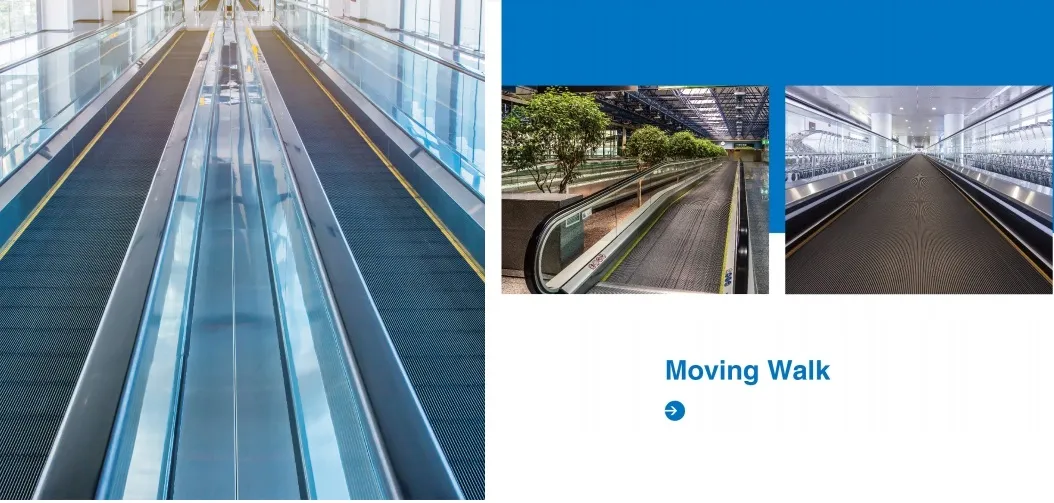
Picture this: You're rushing between meetings downtown. Instead of jostling through crowded sidewalks or waiting for a ride, you step onto a smooth-moving pathway that effortlessly glides you through the city. No traffic, no fumes – just you calmly adjusting your tie while covering three blocks in what feels like seconds. This isn't science fiction. Cities worldwide are reimagining moving walkways as serious transportation infrastructure rather than just airport novelties.
Transportation planners like Rockwood and Garmire have shown that properly designed variable-speed systems could move people at up to 27 km/h – competitive with bus transit. But the real magic happens when they're woven into existing neighborhoods rather than built as standalone systems. Imagine seamless transitions from subway platforms to elevated walkways to ground-level corridors.
Unlike traditional transit systems that stop and start, moving walkways provide continuous flow. You don't need to check schedules or wait at stations. Scarinci's research demonstrates how integrating accelerating walkways with pedestrian zones could reduce short urban commutes by 35%. That's hundreds of hours reclaimed annually for city residents.
For smart cities to work, they need to feel frictionless. Current transport options create what urban planners call "micro-frictions" – waiting for signals, boarding delays, payment queues. Each seemingly minor interruption adds stress and reduces system efficiency. Moving walkways could eliminate many of these pain points.
Research from Delft University shows thoughtfully placed walkway systems could increase urban mobility capacity by 15-20% without adding road space. How? By optimizing corridors too short for buses but too long for comfortable walking. These "goldilocks zones" exist around transit hubs, hospital complexes, university campuses, and business districts.
Unlike conventional transportation systems, moving walkways operate using green and environmentally friendly building materials throughout their construction. Their energy profile makes them sustainability superstars:
Urban planners initially worried walkways would become "people conveyor belts" that dehumanize cities. But research reveals opposite outcomes:
Variable-speed systems allow natural social interactions. You can walk on slower sections, then ride when tired. Curved designs enable viewing angles of storefronts and public art. Tokyo's trial installations showed 27% higher incidental retail spending along walkway routes versus parallel streets.
Modern installations handle accessibility better than traditional transit too. Continuous flat surfaces mean no stairs for wheelchair users. Emergency access and maintenance corridors are built in during fabrication, unlike retrofitted solutions in older transport systems.
For skeptical city councils concerned about costs, the numbers tell a compelling story:
| Infrastructure Type | Cost Per Mile | Maintenance Cost (Annual) |
|---|---|---|
| Subway | $1.2-2.5B | $10-15M |
| Light Rail | $100-300M | $3-5M |
| Moving Walkway System | $30-60M | $800K-1.5M |
Singapore's Marina Bay network demonstrated how walkways become economic catalysts. Property values near access points rose 9-14% above comparable areas. Foot traffic increased 22% for retailers along the routes. And safety improved significantly – accident rates decreased by 31% along pedestrian corridors replaced with managed walkways.
Envisioning the smart city of 2035, moving walkways won't exist in isolation. They'll be part of integrated mobility ecosystems:
Modular walkway sections will link directly with bike shares, scooters, and autonomous shuttles. Tap your phone once to reserve an e-scooter that awaits precisely where the walkway ends. Your fare automatically calculates based on distance traveled across all modes.
Intelligent systems will adjust speed and capacity based on real-time demand. Morning rush hours see acceleration zones extended. Quifter afternoons may feature slower "stroll mode" encouraging window shopping. Rain sensors deploy weather shields automatically.
Copenhagen and Seoul have already piloted prototype districts where 40% of trips under 1.5km happen on networked walkways. Residents report feeling the city has "shrunk pleasantly" – amenities feel closer even as neighborhoods grow. This psychological proximity might be walkways' greatest gift to urban living.
Implementing city-scale walkway networks requires rethinking three traditional constraints:
Perception Shift: Leaders must see walkways not as supplemental conveniences but primary transit corridors with economic ripple effects. Pilot projects like Houston's Medical Center corridor, replacing 15 shuttle bus routes, demonstrate how this mindset shift pays dividends.
Standards & Integration: Cities need shared design protocols ensuring walkways connect meaningfully with existing infrastructure. The Rotterdam-Brussels consortium is developing open-source specifications covering gradient limits, material durability, and accessibility standards.
Financing Innovation: Value-capture models show promise where adjacent property owners help fund installations benefiting their locations. Montreal's Quartier des Spectacles district used this approach, with owners contributing 35% of construction costs for walkways increasing their property values.
As Kusumaningtyas' research confirms, the technology is ready. What cities need now is the courage to see sidewalks not as end points, but as starting points for next-generation mobility that's cleaner, quieter, and fundamentally more human.
Recommend Products












