


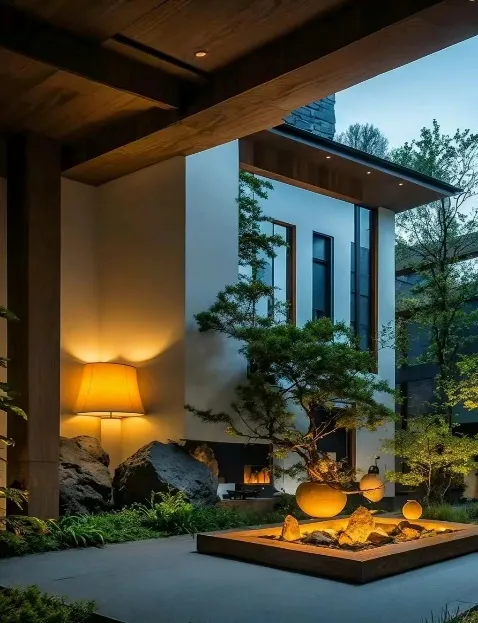
Picture this: You've spent months designing the perfect outdoor lighting setup for your property – elegant pathway lights, dramatic uplighting for trees, and ambient deck illumination. Then one stormy night, a single lightning strike fries your entire system. The financial loss stings, but what's worse is knowing it could have been prevented.
In this comprehensive guide, we'll walk through practical lightning protection strategies that work for everything from residential gardens to commercial campuses. Unlike technical manuals filled with jargon, we'll translate complex concepts into plain language every property owner can use. Let's start by understanding the real risks you're facing.
How Lightning Threatens Your Outdoor Lighting
Lightning doesn't just attack through direct strikes – it creates multiple pathways for destruction:
- Direct Impacts: Hits lighting poles or fixtures directly
- Ground Current: Travels through soil and attacks buried wiring
- Surge Induction: Creates power spikes through nearby electromagnetic pulses
- Sideflashes: Jumps from tall objects to lighting structures
Commercial properties with integrated lighting protection systems have reported up to 92% reduction in weather-related electrical damage. But the key word is integrated – piecemeal solutions create weak spots.
Core Components of Effective Protection
Think of these as your lightning defense team – each member has a critical role:
Protection System Anatomy
| Component | Function | Real-World Specs |
|---|---|---|
| Air Terminals | Intercept strikes before they hit lighting structures | 18-30" height, spaced 20-25ft apart for perimeter protection |
| Down Conductors | Channel current safely downward | 3/8"-5/8" copper/aluminum, bend radius >8" |
| Grounding System | Dissipate energy into earth | 8ft rods buried 10ft deep, low-resistance connections (<25 ohms) |
| Bonding Conductors | Prevent voltage differences between metal objects | Critical around pools & water features where conductivity increases |
| Surge Protection Devices (SPDs) | Stop power surges entering through lines | VPR rating matched to equipment sensitivity |
| Fittings & Connectors | Secure connections throughout system | Compression/brazed joints > crimped for longevity |
Modern systems like Early Streamer Emission (ESE) technology create larger protective zones around tall garden structures. But don't assume newer means better – proper installation trumps fancy features.
Designing Your Defense: Location-Specific Strategies
Cookie-cutter designs guarantee failure. Consider these specialized approaches:
Garden & Pathway Lighting
- Install "zone of protection" calculations for low-profile fixtures
- Use corrosion-resistant ground rods in moist garden beds
- SPDs at every transformer connection point
Uplighting & Architectural Features
- Terminal height must exceed tallest lit feature by 10" minimum
- Class II components for structures over 75ft
- Copper bonding for stone/metal features
Water Features & Pool Lighting
- Grounding grids instead of single rods in wet soil
- Double-insulated transformers 10ft from water
- Equipotential bonding grid around entire water area
Property with multiple elevations (like terraced gardens) needs tiered protection zones – a single-level approach leaves lower zones vulnerable.
Material Matters: What Really Works
Material Selection Guide
| Environment | Recommended Material | Avoid |
|---|---|---|
| Coastal Areas | Marine-grade stainless steel or bronze | Aluminum near salt spray |
| Chemical-Rich Soil | Copper-clad or solid copper rods | Zinc-coated steel |
| High-Corrosion Areas | Stainless steel with lead coating | Basic galvanized hardware |
| Vegetation-Dense Zones | Insulated conductors in protective conduit | Bare conductors near plants |
Surge Protective Devices (SPDs) are your lighting system's immune system – select them according to your risk level:
- Type 1: For properties with direct lightning exposure
- Type 2: Main distribution panels
- Type 3: Point-of-use protection for sensitive controllers
Maintenance That Actually Prevents Failure
Don't be that property owner who installs and forgets. Simple quarterly checks prevent disasters:
Seasonal Checklist
- Spring: Check for winter damage to terminals and fasteners
- Summer: Clean debris from air terminals before storm season
- Fall: Measure ground resistance after dry summer months
- Winter: Inspect connections in accessible areas
Professional inspections every 3 years (or after major storms) should include:
- Earth resistance testing with fall-of-potential method
- Continuity checks on every conductor segment
- Verification of SPD status indicators
- Zone of protection validation after landscape changes
Certifications That Actually Matter
Beware of "self-certified" installers. Legitimate credentials include:
Third-Party Certifications
| Standard | What It Covers |
|---|---|
| UL Master Label ® | Whole-system compliance with UL 96A |
| NFPA 780 Verification | Installation meets fire safety standards |
| ISO/IEC 17020 | Inspection agency qualifications |
Note that UL certifications require five-year renewals – if someone claims "lifetime certification," walk away. Proper documentation should include:
- As-built diagrams showing conductor paths
- Ground resistance test results
- Equipment listing certificates
- Warranty terms including coverage areas
Putting It All Together: Your Action Plan
Follow this sequence for bulletproof protection:
- Assessment: Document all lighting zones with photos
- Design: Create zone-specific protection plans
- Material Selection: Choose environment-appropriate components
- Installation: Hire certified professionals – don't DIY critical connections
- Verification: Obtain third-party certification
- Maintenance: Implement seasonal schedule
Lightning isn't predictable, but damage is preventable. With today's protection systems – properly installed and maintained – your outdoor lighting can weather any storm while creating the magical ambiance you envision. Because nothing ruins ambiance faster than sparks flying where they shouldn't!










