
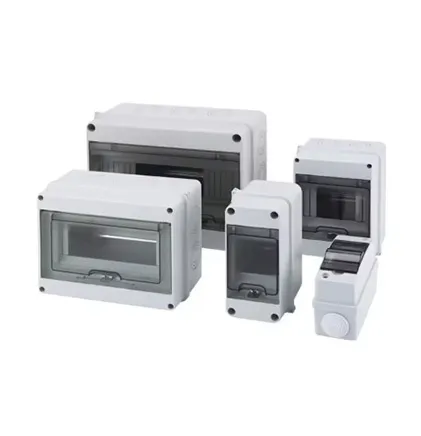
Hey there, project managers and engineers! Let's cut straight to the chase – nobody likes budget overruns. They're like uninvited guests crashing your project party. But what if we told you that cracking open an industrial distribution box (literally and figuratively) could save your budget? These metal workhorses power everything from manufacturing plants to data centers, but their costs often feel like a black box wrapped in concrete blocks.
We've all been there: You get a quote that makes you choke on your coffee, then spend weeks haggling over pennies while losing sight of the big picture. What if instead, we looked inside that box to understand the anatomy of its expenses? That's where the real treasure lies.
Reality Check: Distribution boxes account for up to 15-20% of industrial electrical budgets. But smart optimization can slash costs by 30% without sacrificing quality – funds you could redirect to innovation or workforce training.
Picture this as an orchestra conductor's podium. Every wire and component needs perfect harmony. When costs spiral, it's usually because we didn't understand these sections:
This isn't just a metal box. The enclosure keeps sensitive equipment safe from dust, moisture, and clumsy forklift operators. But why does stainless steel cost 3x more than aluminum?
These copper veins pump electricity where it needs to go. Copper prices fluctuate like crypto, but smart alternatives exist:
These silent guardians prevent catastrophic failure. Cutting corners here is like removing airbags from a racecar:
Alright, enough theory. Here's the battle-tested playbook:
Engineers love designing from scratch. Resist this! Stock enclosures cost 60% less than custom builds. Pro Tip: Most "unique" requirements fit standard DIN rail components.
Stop defaulting to stainless steel. Polycarbonate enclosures withstand UV and impact at half the cost, while coated aluminum handles moisture in non-marine environments. Evaluate risk vs. reality.
Build distribution panels like musical sections – power input, motor control, PLC interfaces. Add sections as needs grow instead of paying for unused capacity upfront.
Busbar optimization requires finesse:
Stop haggling over markup percentages. Instead, negotiate:
Labor eats 40% of installation budgets. Tools like:
cut installation time by half. Worth their weight in gold.
The cheapest box isn't truly cheap if maintenance requires dismantling the production line. Features to splurge on:
Here's where most teams stumble – they treat distribution boxes as a necessary evil rather than strategic assets. When you view it as modular architectural hardware , everything changes.
Transformative Perspective: Your distribution box isn't a cost center; it's a platform for scalability. An optimized box today becomes tomorrow's plug-and-play upgrade pathway for IoT sensors or renewable energy inputs. That's ROI beyond dollar savings.
Consider material selection not just for durability, but for compatibility with green certifications. Eco-friendly polycarbonate or recycled aluminum enclosures score LEED points while reducing carbon taxes.
At Riverside Manufacturing, engineers faced a headache: Their production line expansion needed 12 new distribution panels. Initial quotes? $320k. Ouch.
By applying modular design principles:
Result? 38% savings ($118k) and two-week faster installation. Bonus? Their modular design allowed painless upgrades when adding solar panels later. That's what happens when you treat distribution systems as living infrastructure.
Ready to stop hemorrhaging cash? Grab your latest project specs and:
Distribution optimization isn't about cheap fixes. It's about intelligent engineering meeting business wisdom. And that's how you build projects that shine – both electrically and financially. Now go crack open those cost black boxes!
Recommend Products












