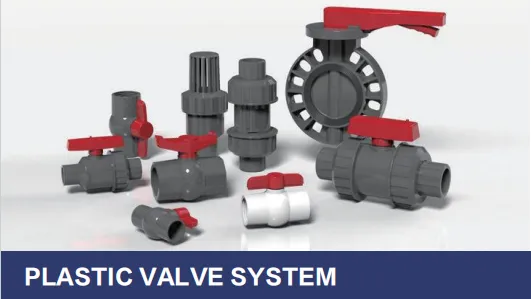
Choosing the right supplier for your construction or renovation project can feel like navigating a maze. With so many options—from companies that offer everything under the sun to those that focus on a single product line—it's easy to get overwhelmed. When it comes to critical components like plastic valve systems, the stakes are even higher: the wrong choice could lead to delays, budget overruns, or even safety risks. In this guide, we'll break down the two main players in the market: one-stop architectural solution providers and specialized plastic valve system suppliers. We'll explore their strengths, weaknesses, and which scenarios each excels in, so you can make a decision that aligns with your project's unique needs.
Picture this: You're managing a large-scale project, say a new hospital wing or a commercial complex. You need walls, flooring, ceiling solutions, pipes, valves, and maybe even custom furniture. Coordinating with a dozen different suppliers—each with their own lead times, pricing models, and communication styles—sounds like a logistical nightmare. Enter the one-stop supplier. These companies position themselves as your single point of contact for a wide range of building materials and solutions. Instead of juggling multiple vendors, you can source everything from plastic valve systems to bamboo charcoal board wall panels, or even class A fireproof CPL inorganic boards for hospitals, all from one company.
One-stop suppliers thrive on convenience. They often have partnerships with manufacturers across various product categories, allowing them to bundle offerings. For example, if you're working on a school renovation, a one-stop provider might offer not just
plastic valve system solutions for plumbing, but also upvc pipes, ppr pipe and fittings, and even the class A fireproof CPL inorganic boards required for safety compliance. Their goal is to simplify your workflow by reducing the number of contracts, invoices, and delivery schedules you need to manage.
The Pros of Choosing a One-Stop Supplier
1. Time and Resource Savings:
Let's start with the most obvious benefit: convenience. When you work with a one-stop supplier, you eliminate the need to research, vet, and manage multiple vendors. Instead of negotiating terms with a plastic valve supplier, a
flooring supplier, and a
walls supplier separately, you hash out details with one account manager. This frees up your time to focus on other aspects of the project, like design tweaks or client communication. For busy project managers, this alone can be a game-changer.
2. Streamlined Logistics:
Coordinating deliveries from multiple suppliers is a recipe for chaos. One supplier might deliver their plastic valve systems a week early, cluttering your job site, while another is delayed, holding up the entire plumbing phase. One-stop suppliers often handle logistics in-house, ensuring that materials arrive in the right order and at the right time. For example, if your project requires both plastic valve systems and pu stone wall panels, a one-stop provider can schedule deliveries so the valves arrive when the plumbing team is ready, and the wall panels follow when the carpenters start work—no more storage headaches or idle labor.
3. Bundled Pricing Incentives:
One-stop suppliers often offer discounts when you purchase multiple products. If you're buying
plastic valve system solutions, upvc pipes, and ppr fittings together, they might throw in a reduced rate or waive delivery fees. This can add up to significant cost savings, especially on large projects. For instance, a hotel construction project that sources plumbing materials (valves, pipes), wall panels (like mcm flexible cladding stone), and flooring (terrazzo tiles) from a single supplier could see 5-10% lower overall material costs compared to buying each category separately.
4. Simplified Communication:
Miscommunication between suppliers is a common cause of project delays. Imagine a scenario where your
flooring supplier uses a different measurement standard than your wall panel supplier, leading to mismatched dimensions. With a one-stop provider, everyone is on the same page. Your account manager acts as a liaison between their internal teams, ensuring that specifications for plastic valve systems align with pipe sizes, or that the color of your porcelain slab tiles matches the wall panels. This reduces errors and keeps the project on track.
The Cons of Choosing a One-Stop Supplier
1. Diluted Expertise in Specialized Products:
While one-stop suppliers offer a broad range, they may lack deep expertise in any single category—including plastic valve systems. A supplier that also sells cloud stone and terrazzo tiles might not have the same level of technical knowledge as a company that specializes solely in plastic valves. For example, if you're working on a high-pressure industrial system that requires specific ASTM D2846-compliant cpvc valves, a one-stop supplier's representative might not be able to answer detailed questions about material durability or pressure ratings. This could lead to choosing the wrong product for your needs.
2. Limited Product Depth:
One-stop suppliers often prioritize popular, mass-market products. If your project requires a niche solution—say, a custom plastic valve system for a chemical processing plant, or pex pipe fittings with unique certifications—they might not have it in stock. Instead, they may need to source it from a third party, adding extra time and cost. In contrast, a specialized supplier would likely have that niche product readily available, along with alternative options if your first choice isn't suitable.
3. Higher Costs for Premium or Niche Items:
While bundled pricing can save money on standard products, one-stop suppliers often mark up specialized items to offset the discounts on others. For example, if you need both basic upvc pipes (which they discount) and high-end Swiss stone wall panels (a niche product), the stone panels might cost more than if you bought them from a dedicated Swiss stone supplier. Over time, these markups can eat into your budget, especially if your project relies heavily on specialized materials.
4. Risk of Over-Reliance:
Putting all your eggs in one basket has its risks. If a one-stop supplier faces production delays, supply chain issues, or quality control problems, it could affect every aspect of your project. For example, if their plastic valve systems are on backorder, you can't just switch to another valve supplier—you might also be waiting on their ppr pipes and pvc dwv pipes. This creates a single point of failure that could derail your timeline.
On the flip side, specialized suppliers focus on a narrow product category—in this case, plastic valve systems and related solutions. These companies eat, sleep, and breathe valves: they know the differences between pvc, cpvc, and ppr valves; they stay updated on industry standards like DIN PN10 or SCH80 pressure ratings; and they often work directly with manufacturers to develop custom solutions. Unlike one-stop providers, their catalogs are deep, not broad. You won't find flooring or ceiling solutions here, but you will find a wide range of plastic valve types, sizes, materials, and configurations, along with expert advice on which one fits your project.
Specialized suppliers cater to clients who prioritize technical expertise and product quality over convenience. For example, a company that focuses solely on
plastic valve system solutions might offer everything from basic pvc dwv valves for residential plumbing to high-pressure cpvc sch80 systems for industrial use. They often invest in research and development, testing new materials and designs to stay ahead of industry trends. This specialization makes them a go-to for projects where precision and reliability are non-negotiable.
The Pros of Choosing a Specialized Supplier
1. Unmatched Technical Expertise:
This is where specialized suppliers shine. Their teams include engineers, product specialists, and industry veterans who understand the intricacies of plastic valve systems. If you're unsure whether a ppr valve or a pex valve is better for your hot water system, or if you need help calculating the pressure rating for a pvc-u sch40 pressure piping system, they can provide detailed, data-backed advice. They can also help troubleshoot issues—like leaks or corrosion—by drawing on years of experience with similar projects. This level of expertise is invaluable for complex or high-stakes projects.
2. Access to Niche and Premium Products:
Specialized suppliers thrive on offering products that one-stop shops can't match. Whether you need custom plastic valve systems with unique dimensions, valves certified for use in potable water systems, or pvc transparent pipe fittings for visibility in laboratory settings, they're likely to have it. They also stay updated on the latest innovations, such as eco-friendly valve materials or smart valves with IoT capabilities. For projects that require cutting-edge or hard-to-find solutions, a specialized supplier is often the only option.
3. Competitive Pricing on Core Products:
Since specialized suppliers focus on a single product line, they can negotiate better deals with manufacturers and pass those savings on to you—especially for high-volume orders. For example, if you're building a housing development and need 500 pvc dwv valves, a specialized plastic valve supplier might offer a lower per-unit cost than a one-stop provider that sources valves as a side product. They also have more flexibility to adjust pricing based on your specific needs, like bulk discounts or long-term contracts.
4. Dedicated Customer Support for Technical Issues:
When you run into problems with your plastic valve system—say, a leak in a ppr pipe fitting or a valve that fails to meet pressure requirements—a specialized supplier's support team is equipped to help. They might send a technical representative to your job site, offer warranty repairs or replacements, or provide guidance on installation best practices. In contrast, a one-stop supplier's customer service team might be spread thin, taking longer to address your issue or escalating it to a third party.
The Cons of Choosing a Specialized Supplier
1. Coordination Overhead:
If your project requires more than just plastic valve systems—say, flooring, walls, and pipes—you'll need to coordinate with multiple specialized suppliers. This means managing separate orders, deliveries, and invoices, which can be time-consuming. For example, if your plumbing team is waiting on pex pipe fittings from one supplier and your wall team is waiting on mcm flexible cladding from another, scheduling delays with either could hold up the entire project. It also increases the risk of miscommunication between vendors, like mismatched pipe sizes between your valve supplier and your
upvc pipe supplier.
2. No Bundling Discounts:
Without the ability to bundle products, you'll miss out on the cost savings that come with one-stop shopping. Each specialized supplier will charge their own delivery fees, and there's no incentive for them to offer discounts just because you're buying from multiple vendors. Over a large project, these extra costs can add up. For example, buying plastic valve systems from one supplier, ppr pipes from another, and wall panels from a third might cost 10-15% more than purchasing all three from a one-stop provider.
3. Limited Insight Into Cross-Product Compatibility:
Specialized suppliers know their own products inside out, but they may not be familiar with how they interact with other materials. For example, a plastic valve supplier might not be able to advise on whether their cpvc valves are compatible with the ppr pipes from another supplier, or if the valve's material will react with the chemicals in your plumbing system. This requires you to do extra research or hire a consultant to ensure all components work together, adding another layer of complexity.
One-Stop vs. Specialized: A Side-by-Side Comparison
|
Factor
|
One-Stop Supplier
|
Specialized Plastic Valve Supplier
|
|
Product Range
|
Broad (walls, flooring, pipes, valves, etc.)
|
Narrow (focused on plastic valve systems and related fittings)
|
|
Technical Expertise
|
General knowledge across categories; limited depth in plastics valves
|
Deep expertise in plastic valve systems, materials, and applications
|
|
Pricing
|
Discounted bundled rates for standard products; higher markups on niche items
|
Competitive pricing on core plastic valve products; no bundling discounts
|
|
Lead Times
|
May be longer for specialized items (sourced from third parties)
|
Shorter for core products; niche items often in stock
|
|
Customer Support
|
General support for all products; may escalate technical issues
|
Dedicated technical support for plastic valve systems
|
|
Risk of Delays
|
High (single point of failure affecting all products)
|
Low for valves, but higher overall if coordinating multiple suppliers
|
|
Best For
|
Large projects needing diverse materials; tight timelines; convenience prioritized
|
Projects requiring specialized valves; technical precision; niche applications
|
Factors to Consider When Choosing Between One-Stop and Specialized
Deciding between a one-stop and specialized supplier isn't a one-size-fits-all choice. It depends on your project's unique characteristics. Here are the key factors to weigh:
1. Project Size and Complexity:
For large, multi-phase projects—like a commercial mall or hospital—one-stop suppliers can simplify logistics. You'll have fewer vendors to manage, and bundled pricing can save money. For smaller projects or those with highly specialized needs—like a laboratory requiring custom plastic valve systems—a specialized supplier may be more efficient.
2. Technical Requirements:
If your plastic valve system needs to meet strict standards (e.g., Class A fire resistance, ASTM certifications, or high-pressure ratings), prioritize a specialized supplier. Their expertise ensures you get the right product. If your needs are standard (e.g., basic residential plumbing valves), a one-stop supplier's convenience may outweigh the need for deep technical knowledge.
3. Budget Constraints:
If you're working with a tight budget, calculate the total cost of using a one-stop (bundled discounts) vs. multiple specialized suppliers (no bundling, but lower per-unit costs on core items). For example, a mid-sized hotel project might save 8-10% with a one-stop provider, while a project needing mostly specialized valves might save by going direct to a specialized supplier.
4. Timeline Flexibility:
If you're on a strict deadline, a one-stop supplier's coordinated delivery schedule can help keep things on track. But if your timeline allows for some flexibility, and you need niche valves, a specialized supplier's faster access to those products might be worth the extra coordination.
5. In-House Expertise:
If your team includes engineers or procurement specialists who can manage multiple suppliers and ensure product compatibility, a specialized supplier may be feasible. If your team is small or lacks technical expertise, a one-stop supplier's turnkey support could reduce risk.
Real-World Scenarios: Which Supplier Wins?
Scenario 1: A New Hospital Wing in Saudi Arabia
You're managing the construction of a 50-bed hospital wing, which requires Class A fireproof materials, sterile wall panels, plumbing systems (including plastic valve systems), and custom cabinetry. The project has a strict 12-month deadline, and compliance with local safety codes is non-negotiable.
Best Choice: One-Stop Supplier.
A one-stop provider in Saudi Arabia that offers class A fireproof CPL inorganic boards,
plastic valve system solutions, and even hospital-specific sanitary fixtures can streamline compliance and delivery. They'll ensure all materials meet local fire and hygiene standards, coordinate deliveries to avoid site clutter, and act as a single point of contact for any issues. While their plastic valve expertise may not be as deep, the project's standard plumbing needs (upvc pipes, ppr fittings) don't require niche solutions.
Scenario 2: An Industrial Chemical Plant Expansion
Your client is expanding a chemical processing plant that handles corrosive substances. The project requires high-pressure cpvc valves (SCH80, ASTM D2846 compliant), specialized pex pipe fittings resistant to chemical corrosion, and custom plastic valve configurations. Technical precision is critical—even a minor leak could lead to safety hazards.
Best Choice: Specialized Plastic Valve Supplier.
A specialized supplier with experience in industrial chemical applications will have the technical expertise to recommend the right valves and fittings. They can provide material test reports, certifications, and on-site support to ensure the system meets pressure and corrosion resistance requirements. While you'll need to coordinate with a separate pipe supplier, the risk of using the wrong valve is too high to prioritize convenience.
Scenario 3: A Small Residential Renovation
You're renovating a 3-bedroom home, replacing the plumbing system (valves, upvc pipes), installing new porcelain slab tile walls, and updating the kitchen cabinets. The budget is tight, and you're acting as the general contractor with a small team.
Best Choice: Hybrid Approach.
Use a one-stop supplier for standard items like basic plastic valve systems, upvc pipes, and porcelain tiles—their bundled pricing will save you money and time. For the custom kitchen cabinets, however, hire a specialized custom furniture supplier to ensure quality and fit. This balances convenience and expertise without overcomplicating coordination.
Conclusion: It's All About Your Project's Needs
There's no universal answer to the one-stop vs. specialized supplier debate—it depends on your project's size, technical requirements, budget, and timeline. One-stop suppliers excel at simplifying logistics for large, diverse projects, while specialized plastic valve system suppliers bring unmatched expertise and niche products to the table.
If you're overwhelmed by the decision, start by defining your priorities: Is convenience more important than technical depth? Do you need niche products, or will standard offerings suffice? Once you've clarity on these, you can choose the supplier that aligns with your goals. And remember—there's no rule against mixing approaches. For example, you could use a one-stop supplier for most materials and a specialized supplier for critical components like plastic valve systems. The key is to find a balance that keeps your project on time, on budget, and up to standard.
At the end of the day, the best supplier is the one that makes your job easier while ensuring the quality and reliability of the materials you need. Whether you go one-stop, specialized, or a mix of both, the right choice will leave you with a successful project—and maybe even a little less stress along the way.