
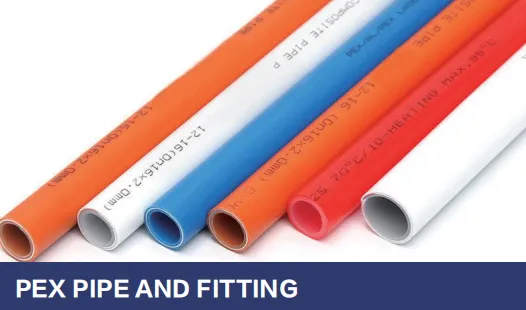
If you've ever tackled a plumbing project—whether you're a homeowner renovating a bathroom, a contractor managing a commercial build, or a project manager overseeing a multi-unit development—you know the drill. You need pipes, fittings, valves, and maybe even specialized tools. You start by Googling "PEX pipe supplier," then "PEX fittings near me," and before you know it, you're juggling five different websites, three sales reps, and a spreadsheet full of delivery dates. Sound familiar? The fragmented world of building material sourcing can turn even the simplest project into a logistical nightmare. But what if there was a better way? Enter the full-service PEX pipe and fitting supplier: a single partner that streamlines your entire process, from product selection to delivery. In this article, we'll dive into why one-stop shopping isn't just a convenience—it's a game-changer for anyone working with plumbing systems, especially when it comes to PEX pipes and fittings.
Let's start with the obvious: sourcing plumbing materials from multiple suppliers is a hassle. But beyond the frustration, it comes with real, tangible costs—both financial and logistical. Take a small example: Imagine you're a contractor hired to repipe a 10-unit apartment building. You order PEX pipes from Supplier A, brass crimp fittings from Supplier B, and push-to-connect fittings from Supplier C (because they had a sale). A week later, the pipes arrive, but the fittings from Supplier B are backordered. You delay the project, paying your crew to stand idle. When the fittings finally show up, you realize they're designed for a different PEX standard—too loose to create a watertight seal. Now you're stuck returning them, reordering from a fourth supplier, and explaining to your client why the project is three weeks behind schedule.
This isn't an exaggeration. Fragmented sourcing leads to mismatched products, communication breakdowns, and a never-ending game of "follow the delivery truck." Quality control becomes a guessing game, too. One supplier might prioritize durability, another might cut corners to hit a lower price point, and suddenly your system is a patchwork of materials that weren't tested to work together. And let's not forget the administrative overhead: tracking invoices from five vendors, coordinating overlapping delivery times, and resolving disputes when a shipment arrives damaged. It's enough to make you wonder: Why do we put up with this?
Before we jump into the benefits, let's clarify what we mean by a "full-service" supplier. This isn't just a company that sells PEX pipes and calls it a day. A true full-service PEX pipe and fitting supplier is a partner that offers end-to-end solutions for your plumbing needs. That means they stock not only PEX pipes (in every size, from ½-inch to 2-inch diameters) but also every fitting you could possibly need: crimp rings, clamp sleeves, elbows, tees, adapters, valves, and even tools like crimpers and cutters. But it doesn't stop there. The best ones go further, offering complementary products like PPR pipe and fitting solutions for hot water systems or UPVC pipe solutions for drainage lines, so if your project requires mixed materials, you're not starting from scratch. They also provide technical support, help with code compliance, and handle logistics—from warehousing to white-glove delivery. In short, they're not just selling products; they're selling peace of mind.
Now, let's get to the good stuff: the benefits of consolidating your sourcing with a single, reliable partner. We're not talking about minor conveniences here—these are advantages that directly impact your bottom line, your timeline, and the quality of your work.
PEX pipes are beloved for their flexibility, durability, and resistance to corrosion, but their performance hinges on one critical factor: compatibility with fittings. A PEX pipe rated for 200°F water won't do you any good if the fitting it's connected to melts at 180°F. When you source from a single supplier, every product—pipes, fittings, valves—is designed and tested to work together. They're manufactured to the same standards (think ASTM F876 for PEX pipes and ASTM F1807 for fittings), and often come with unified warranties. This isn't just about avoiding leaks; it's about building systems that last. For example, a full-service supplier might offer PEX pipe and fitting solutions that are certified for 50+ years of use, backed by third-party testing. When all components are engineered in harmony, you eliminate the guesswork and focus on what matters: getting the job done right.
Time is money, and in construction, every minute counts. With a one-stop supplier, you slash hours (if not days) off your project timeline. Let's break it down: Instead of spending 3 hours researching five different PEX suppliers, you spend 30 minutes on a single website. Instead of coordinating three separate delivery windows (and crossing your fingers they all arrive on the same day), you schedule one delivery. Need to adjust your order? One phone call to one rep, not a chain of voicemails. Even administrative tasks get simpler: one invoice, one payment, one point of contact for returns or replacements. For larger projects, this can translate to weeks of saved time. A 2023 survey by the Plumbing Contractors Association found that contractors using one-stop suppliers reported completing projects 15-20% faster than those using multiple vendors. That's not just a statistic—it's a competitive edge.
At first glance, buying from multiple suppliers might seem cheaper—after all, you can cherry-pick the lowest prices for each item. But those "savings" vanish when you factor in the hidden costs: shipping fees from five different locations, restocking charges for mismatched products, and labor costs from project delays. A full-service supplier, on the other hand, often offers bulk discounts when you order pipes and fittings together. They also negotiate better shipping rates (since they're sending larger, consolidated orders), passing those savings on to you. And because they handle logistics in-house, there's less risk of damaged goods or lost shipments—meaning fewer unexpected expenses. One contractor we spoke to estimated that switching to a one-stop PEX supplier cut their plumbing material costs by 12% annually, just by eliminating redundant fees and taking advantage of volume pricing.
Plumbing systems aren't one-size-fits-all. A residential radiant heating system requires different PEX (like PEX-A, for its flexibility) than a commercial potable water line (which might use PEX-B for durability). Local building codes can add another layer of complexity—some areas require specific certifications for lead-free fittings, for example. When you work with a full-service supplier, you're not just buying products; you're gaining access to a team of experts who understand the nuances of PEX applications. Their technical staff can walk you through material selection, help you troubleshoot installation issues (like how to properly crimp a fitting in tight spaces), and ensure your order meets local code requirements. It's like having a plumbing consultant on speed dial—at no extra cost. Compare that to calling three different suppliers, each of whom only knows their own narrow product line, and you'll see why expertise matters.
Let's talk about delivery—specifically, the nightmare of coordinating multiple deliveries. If you've ever waited on a loading dock for a shipment that never arrived, only to find out the driver went to the wrong address, you know the pain. Full-service suppliers take logistics seriously. They have dedicated delivery teams, real-time tracking systems, and contingency plans for delays (like bad weather or traffic). Many even offer scheduled deliveries, so you can plan your crew's workday around when materials arrive. Need to store excess inventory? Some suppliers provide warehousing options, so you don't have to clutter your job site with boxes of fittings. And if something does go wrong—a pipe is damaged in transit, or you ordered the wrong size—they handle replacements quickly, often with next-day shipping. It's logistics without the chaos.
While PEX pipes and fittings are the star of the show, the best full-service suppliers don't stop there. Many also offer complementary products that round out your plumbing toolkit. For example, if your project includes both potable water lines (where PEX shines) and drainage systems (which often use UPVC), a one-stop supplier can provide UPVC pipe solutions alongside your PEX order. Similarly, if you're working on a mixed-use building with hot water recirculation lines, they might offer PPR pipe and fitting solutions, which are designed for high-temperature applications. This cross-product availability is a huge advantage. Instead of managing two separate orders (and two separate suppliers), you can bundle everything into one, simplifying your workflow and ensuring all materials are delivered on the same timeline.
| Aspect | Traditional Sourcing (Multiple Suppliers) | One-Stop Shopping (Full-Service Supplier) |
|---|---|---|
| Number of Vendors to Manage | 3–5+ (pipes, fittings, tools, etc.) | 1 |
| Product Compatibility | Risk of mismatched parts (e.g., fittings that don't seal) | Guaranteed compatibility (all products tested together) |
| Delivery Coordination | Multiple delivery windows; risk of delays | Single, scheduled delivery; real-time tracking |
| Technical Support | Limited (each supplier knows only their products) | Comprehensive (experts familiar with all offerings) |
| Cost | Higher (shipping fees, admin costs, returns) | Lower (bulk discounts, consolidated shipping) |
The Challenge: A 50,000 sq. ft. office building in downtown Chicago needed a complete plumbing overhaul, including PEX water lines, UPVC drainage, and PPR hot water recirculation systems.
The Old Approach: The general contractor initially planned to source PEX from Supplier A, UPVC from Supplier B, and PPR from Supplier C. Within the first month, delays piled up: Supplier B's UPVC pipes were stuck in customs, and Supplier C sent the wrong PPR fittings (intended for residential, not commercial pressure). The project fell two months behind, and the client threatened to withhold payment.
The One-Stop Solution: The contractor switched to a full-service supplier that offered PEX pipe and fitting solutions, UPVC pipe solutions, and PPR pipe and fitting solutions. The supplier expedited a consolidated order, with all materials arriving within a week. Their technical team also identified that the original PPR fittings wouldn't meet commercial pressure standards, recommending a higher-grade alternative—avoiding a potential code violation.
The Result: The project got back on track, finishing just one week behind schedule (instead of two months). The contractor saved $18,000 in labor costs (from reduced downtime) and avoided a $50,000 penalty from the client. They now use the one-stop supplier for all plumbing projects.
Not all one-stop suppliers are created equal. To find the right partner, start by asking these questions:
Reading reviews from other contractors or project managers can also help—look for mentions of reliability, communication, and problem-solving (since even the best suppliers face hiccups; what matters is how they fix them).
At the end of the day, plumbing projects are stressful enough without adding supplier chaos to the mix. A full-service PEX pipe and fitting supplier doesn't just simplify your workflow—it transforms it. From consistent quality and cost savings to expert support and streamlined logistics, the benefits are clear. Whether you're a homeowner tackling a weekend project or a contractor managing a million-dollar build, one-stop shopping lets you focus on what you do best: building, renovating, and creating spaces that work. So the next time you find yourself juggling supplier websites and delivery dates, ask: What would it look like to have just one phone number to call, one order to track, and one partner invested in your success? For most of us, it looks like a project done on time, under budget, and without the headache. And in the world of construction, that's priceless.
Recommend Products












