
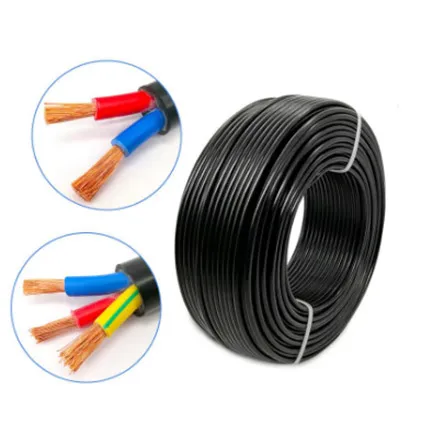
Imagine you're building a high-rise apartment or redesigning a commercial space. Instead of wrestling with dozens of separate wires in cramped shafts, prefabricated branch cables arrive as a single, intelligent system - like a tree trunk with perfectly placed branches. They're pre-designed assemblies that combine a main cable (the trunk) with integrated branches connecting to endpoints. This isn't just about saving installation time; it's about guaranteeing reliability from the factory floor to your building's electrical room.
Think about what happens when you try splicing wires on-site: dust gets in connections, weather affects workmanship, inconsistencies creep in. Prefabricated systems solve this by creating clean, sealed joints under controlled factory conditions. The cables come with industrial-grade waterproofing at junctions, maintaining integrity even in humid environments or outdoor installations.
What really makes these cables flexible is their customization capacity. Unlike rigid busbar systems, they snake through tight spaces with bending radii as small as 6 times the cable diameter. This bendability combined with modular designs means they adapt to both new construction and renovations seamlessly.
Before touching a cable, teams laser-scan cable pathways to identify conflicts with HVAC ducts or plumbing. Detailed shop drawings convert design specs into millimeter-accurate cable maps. This preparation is crucial - mistakes here could mean pulling and redoing entire cable runs.
Instead of random coil drops, cables feed systematically from fixed reels using specialized cable cradles. Teams maintain tension control to avoid damaging the inner conductors. Every bend receives soft-radius guidance to protect the cable’s structure during placement.
Connectors get cleaned with manufacturer-approved solvent wipes before mating. Torque wrenches ensure terminals tighten to exact specifications - this precise pressure prevents overheating later. After locking joints, technicians apply sealing tape as a secondary moisture barrier.
Before energizing the system, a dedicated team visually inspects every termination while electrical testers conduct three-phase checks including dielectric strength validation. This final verification creates a legally documented quality chain.
The moment cables arrive, inspectors conduct forensic-level examinations:
During installation, supervisors maintain live checklists tracking conductor bending angles and support spacing compliance. Thermal imaging cameras scan connections after initial energization to detect "hot spots" before they become problems. As experienced engineers say: "You can't inspect quality into a project after completion - you build it in through process control."
Implementing such careful power cables handling procedures reduces faults by over 60% compared to traditional methods. This attention to detail extends cable lifespan while minimizing maintenance headaches down the road.
The seismic factor matters too. Buildings in earthquake zones need extra slack loops at structural expansion joints. Contractors in Tokyo install specialty dampers that absorb building sway without transferring stress to conductors.
Perhaps the most underappreciated tip: create simple laminated connection guides for technicians. Visual instructions with torque settings and taping sequences reduce errors more effectively than verbal briefings alone.
Beyond just installation speed, consider lifetime value. A Hong Kong hospital replaced traditional cabling with prefabricated branch systems and documented results:
Economically, the factory-based construction approach centralizes labor costs while reducing expensive on-site electrician hours. For a 40-story Dubai tower, engineers saved approximately $560,000 in labor by choosing prefabricated systems.
From environmental benefits to enhanced safety, these cables demonstrate that smarter approaches to electrical equipment create better outcomes for every stakeholder.
High-density residential towers increasingly adopt these systems after experiences like London's "The Scalpel" skyscraper. Maintenance teams praise the color-coded branches that simplify circuit tracing - a lifesaver during midnight emergency calls.
Tunneling projects leverage their corrosion resistance. Melbourne's Metro Tunnel uses submarine-grade cables encased in heavy-duty jackets to withstand constant groundwater exposure.
Healthcare facilities benefit from minimized electromagnetic interference. The clean power delivery prevents disruption to sensitive imaging equipment and critical care monitoring systems.
These diverse scenarios demonstrate that prefabricated branch cables offer far more than convenience; they deliver resilient, future-proof power distribution across modern infrastructure projects.
Recommend Products












