
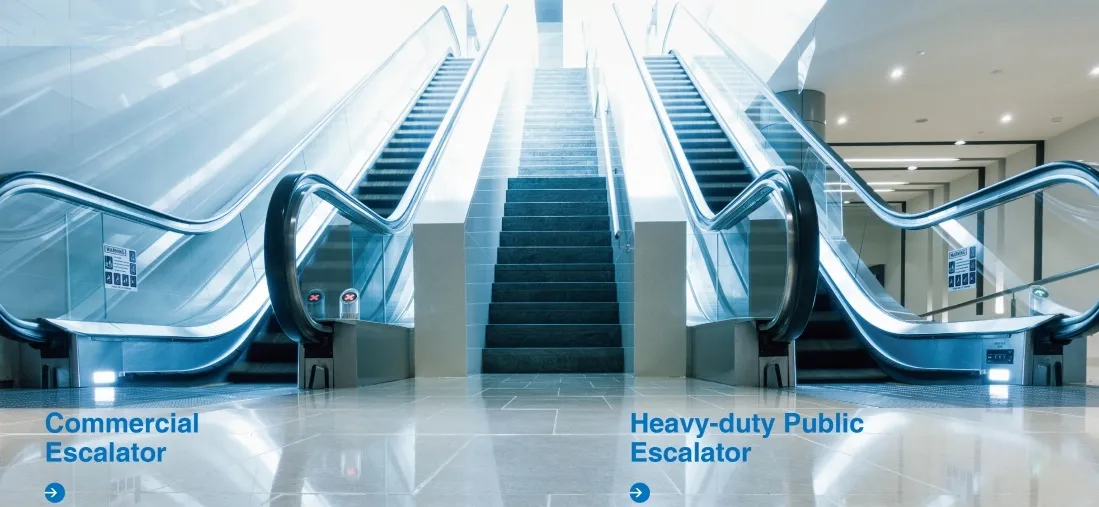
Picture this: You're rushing through a bustling airport or shopping mall, coffee in hand, barely glancing at the moving staircase that effortlessly carries you between floors. But beneath your feet lies an engineering marvel that arrived in pieces like a giant metallic puzzle. Installing commercial escalators isn't just construction work – it's a carefully choreographed ballet involving cranes, lasers, and specialists who speak the language of step chains and comb plates.
Unlike regular construction projects, escalator installation demands surgical precision. We're talking millimeter-level tolerances where a fraction of an inch could mean the difference between smooth operation and a grinding mechanical nightmare. The stakes? Thousands of passengers daily relying on equipment that must perform flawlessly from day one.
Fun Fact: A single commercial escalator can weigh over 15 tons – that's like lowering three adult elephants between building floors. No wonder structural engineers lose sleep over load calculations!
Months before the first component arrives, engineers are crawling through dusty construction sites with laser scanners, mapping every beam and conduit. "You'd be amazed how often existing structures don't match original blueprints," says Maria Chen, lead engineer with over twenty escalator installations under her belt. "Finding a surprise sewer pipe where your drive motor should go? That's a bad Monday."
Every project dances to the rhythm of these non-negotiable milestones:
| Phase | Duration | Key Activities | Potential Pitfalls |
|---|---|---|---|
| Blueprint Validation | 3-4 weeks | Laser scanning, load verification, utility mapping | Structural discrepancies, hidden utilities |
| Regulatory Tango | 4-8 weeks | Permitting, ADA compliance checks, fire safety signoffs | Municipal red tape, changing codes |
| The Component Countdown | 12-16 weeks | Truss fabrication, custom component ordering | Supply chain delays, shipping damage |
| Site Readiness | 2-3 weeks | Opening floor penetrations, reinforcing structures | Unexpected structural weaknesses, scheduling clashes |
Permitting alone can feel like running an obstacle course. Modern escalators must satisfy a dizzying array of regulations from ASME A17.1 safety codes to local accessibility requirements. "I've seen projects delayed six months because someone overlooked a new seismic regulation," Chen adds with a weary smile.
Delivery day transforms the construction site into a carefully orchestrated logistical ballet. The main truss – often spanning over 40 feet – requires special transport and police escorts navigating through city streets. "It feels like moving dinosaur bones through a china shop," quips veteran site manager James O'Reilly.
Each escalator arrives as a cast of specialized characters waiting for their cue:
O'Reilly emphasizes the human element: "These components arrive with a small army of manufacturer specialists. They're like Swiss watchmakers but for giant people-moving systems."
Installation begins with the delicate mating dance of truss and building structure. Using hydraulic jacks and laser alignment tools, teams position the massive truss at exactly 30-35 degrees – an angle that balances speed, safety, and comfort.
Here's what happens in that critical first week of assembly:
| Day | Primary Focus | Tolerance Level | Special Tools Used |
|---|---|---|---|
| 1 | Truss positioning | ±2mm | Laser levels, hydraulic jacks |
| 2-3 | Drive system installation | ±1mm | Digital torque wrenches, vibration sensors |
| 4 | Step chain alignment | ±0.5mm | Calibrated tension gauges, infrared thermometers |
| 5 | Initial step installation | ±0.3mm | Step gauges, digital protractors |
"People don't realize each step is its own mini engineering project," explains lead technician Amir Hassan. "They have to nest together perfectly under load, yet separate cleanly at top and bottom. Too tight? Catastrophic jam. Too loose? Uncomfortable bump."
Tech Insight: Modern escalators now include thousands of sensors monitoring everything from step alignment to motor temperature. This data helps technicians achieve those hair-splitting tolerances.
Hidden beneath the gleaming steps lies a web of safety systems that would impress a spy movie set designer. Today's commercial escalators include:
"My favorite is the missing step detection," says safety engineer Luis Gutierrez. "If a step somehow becomes misaligned by just a quarter inch, sensors immediately trigger a safe shutdown. We've designed them to fail safely, never dangerously."
Before that magical first ride, each escalator undergoes a testing regimen that would exhaust Olympic athletes. The commissioning process unfolds in three escalating phases:
Technicians scrutinize every bolt and connection under load with hydraulic rigs simulating years of operation. "We're essentially trying to break it before the public uses it," Gutierrez explains. "If something fails, better here than with people aboard."
The escalator wakes up! Tests include:
Finally, the ultimate trial: 168 consecutive hours (1 week) of non-stop operation with simulated passenger loads. Temperature sensors monitor every bearing and gear, while technicians analyze thousands of data points.
Reality Check: This exhaustive testing uncovers about 65% of potential issues before public use. The remaining flaws typically relate to building-specific factors like vibrations from nearby equipment.
Even as we master current escalator technology, innovation marches forward:
The next time you absentmindedly step onto that moving staircase, remember the hundreds of specialists and thousands of precision components working together. From blueprint to final safety check, it's a journey more complex than most passengers could ever imagine – ensuring your effortless glide between floors, one step at a time.
Recommend Products












