
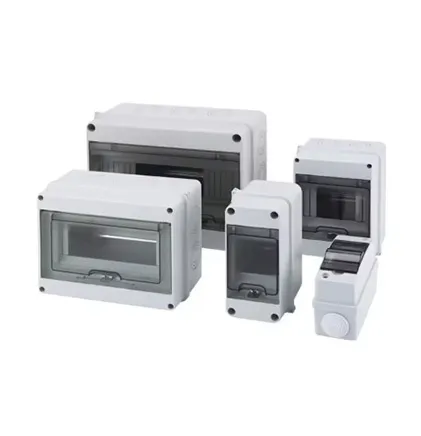
When it comes to protecting your electrical equipment and wiring, the humble distribution box rarely gets the spotlight it deserves. Yet this unsung hero is crucial for organizing, protecting, and controlling your electrical circuits – the backbone of any building's power system. For decades, metal boxes dominated the scene, but a new player has entered the arena: non-metal distribution boxes made from materials like fiber-reinforced polyester and advanced plastics.
These innovative alternatives aren't just cheaper versions of their metal counterparts – they bring unique strengths that solve specific problems electricians face daily. From better electrical safety to surprising resilience in harsh environments, non-metal boxes deserve a closer look whether you're installing systems in homes, factories, or specialized facilities.
Let's start by understanding what makes these boxes different . While traditional metal enclosures rely on their conductive nature for grounding, modern non-metal versions cleverly overcome this limitation through engineering:
The star material is typically fiber-reinforced polyester. Imagine thousands of microscopic glass strands woven into a plastic matrix – that's essentially what gives these boxes their remarkable properties. This combination creates a material that shares some strengths with both glass and plastic but behaves uniquely as a composite.
More than just molded plastic containers, quality non-metal boxes incorporate thoughtful engineering features:
Let's address the electrical elephant in the room first. Non-metal boxes provide surprisingly superior electrical safety compared to metal:
What does this mean practically? Fewer electrical faults, reduced shock risk, and added protection in damp environments like basements or outdoor installations.
Where metal enclosures corrode and degrade, non-metal alternatives thrive. These boxes laugh at threats that would destroy metal:
The secret? Advanced polymers provide inherent resistance that coatings can't match. Where paint chips off metal enclosures, the plastic itself remains impervious.
Don't mistake "plastic" for "flimsy." Fiber reinforcement changes the game:
Picture carrying twenty metal enclosures up a ladder versus twenty non-metal units. The difference isn't just about convenience – it's about workplace safety and installation efficiency.
Where metal fails, composites shine:
These properties translate directly to longevity in demanding environments where daily knocks and vibrations are inevitable.
Sun and temperature swings degrade most materials over time – except well-designed non-metal enclosures:
They don't expand and contract like metal, preserving the critical seal against moisture and dust year after year.
Of course, no solution is perfect everywhere. Before choosing non-metal boxes, consider these scenarios:
While resistant to moderate heat, most begin softening around 150°C/300°F. Metal boxes withstand much higher temperatures without deformation.
Though strong, they can't match hardened steel against deliberate vandalism or heavy falling objects. Industrial smelters or lumber mills might still prefer metal.
Certain high-voltage applications require chassis grounding to metal. The solution? Quality units include integrated grounding plates, but verify compatibility.
Some electricians remain skeptical about durability despite evidence. "Plastic just doesn't feel permanent" is a bias still being overcome through proven track records.
The real magic happens when we match the technology to environments where metal struggles:
On the jobsite, these properties translate to genuine benefits:
Let's confront the skepticism directly with facts:
Cheap plastic does become brittle – but engineering-grade composites don't. UV inhibitors are built into the material itself, not just the surface. Rigorous testing shows less than 50 microns of surface degradation after two decades of sun exposure.
While not fireproof like steel, modern glass-reinforced polymers actually:
Non-metal distribution boxes aren't just alternatives to metal boxes – they're specialized solutions solving specific problems that have troubled electricians for decades. By combining surprising strength with inherent corrosion resistance, excellent dielectric properties, and UV stability, they've earned their place in modern electrical installations.
Sure, they have limitations in extreme environments, but for the majority of installations – especially those battling moisture, chemicals, or weight concerns – they offer compelling advantages. As materials science advances, we're seeing even better formulations enter the market, pushing performance boundaries further.
Next time you specify or install an electrical distribution system, take a closer look at non-metal options. You might just find they solve headaches you didn't know you could avoid. In a world increasingly demanding specialized solutions, these humble boxes remind us that sometimes the most innovative solutions come in unassuming packages.
Recommend Products












