
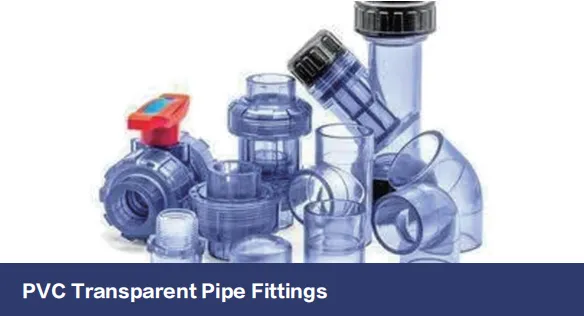
Ever installed perfect-looking clear pipes only to find them turning foggy or yellow after a few months? That frustration is all too common. Quality pipe fittings shouldn't look like old Tupperware after a few seasons. The transparency promise of PVC isn't just about looking pretty during installation - it's a long-term commitment.
This article unpacks why premium PVC transparent pipe fittings maintain their crystal-clear appearance year after year. Forget the headache of cloudy pipes and discover how top-tier materials and smart engineering make discoloration worries a thing of the past.
Clear PVC pipes aren't just a designer whim - they serve practical purposes that go beyond looks. In laboratories, manufacturing facilities, and even modern home brewing setups, visible flow monitoring matters. When pipes yellow, it's not just an eyesore - it becomes harder to spot contamination or flow issues.
"Maintaining clarity in piping systems isn't vanity - it's vigilance. You wouldn't accept windows that clouded over after one rainy season, why accept pipes that do the same?"
- Dr. Elena Torres, Materials Engineer
The battle against UV exposure and chemical interactions isn't won at installation - it's ongoing. Unlike temporary solutions that might look great out of the box, truly durable PVC maintains its personality throughout its service life.
All PVC starts clear, but not all stays that way. The fading or yellowing many experience isn't fate - it's chemistry in action. When UV light interacts with substandard PVC, it breaks down the polymer chains, creating carbonyl groups that absorb visible light differently. The result? Your once-clear pipes start looking like forgotten plastic patio furniture.
Premium PVC incorporates advanced UV inhibitors that act like permanent sunscreen for pipes. Unlike cheaper alternatives that simply coat surfaces, these molecular guardians penetrate throughout the material matrix:
These components work as a defense system - each part plays a role in preserving that "just installed" appearance. As an experienced building material supplier would explain, you can't simply paint on UV protection and expect it to last decades - true protection gets woven into the material's DNA.
Material choice is just the opening act. How PVC gets shaped into pipe fittings determines whether clarity sticks around. Temperature precision during extrusion isn't just about avoiding burn marks - it ensures uniform crystallization. Slight overheating causes molecular breakdown that manifests later as cloudiness.
The cooling stage after extrusion often gets overlooked, but it's where clarity gets locked in. Rapid cooling traps imperfections; gradual, controlled cooling allows organized crystallization. Think of it as the difference between flash-freezing and controlled tempering.
"We learned the hard way that saving 20 minutes on the cooling cycle meant replacing entire piping systems after 18 months. Premium pipe fittings give you that 'forever clarity' because manufacturers aren't racing against the clock."
- Marcos V., Facility Manager
Beyond temperature control, dust-free environments matter more than most realize. Microscopic contaminants become focal points for chemical changes that spread hazing. It's why top manufacturers maintain cleanroom conditions - they're preserving clarity at the molecular level.
Certifications tell part of the story, but real-world validation matters more. While standard UV testing involves intense 1000-hour light boxes, premium pipe fittings undergo accelerated environmental cycles that mimic decades of seasonal changes.
These exhaustive trials don't just measure "survival" - they quantify exactly how much clarity gets maintained. Where cheaper pipes might show 30-40% light transmittance loss after testing, premium fittings keep losses below 5%. That's the difference between slight aging and noticeable deterioration.
From tropical aquaculture farms to Scandinavian industrial facilities, stable PVC maintains visual integrity where it matters most:
In pharmaceutical manufacturing, compromised visibility isn't just inconvenient - it's potentially dangerous. Maintaining constant visual monitoring of fluid transfer is non-negotiable. Premium PVC prevents the subtle yellowing that could hide contamination or air bubbles.
Chemical processing plants face similar challenges. When technicians need to quickly identify flow direction or spot sludge buildup, they can't squint through foggy pipes. Discoloration-resistant materials provide decades of reliable visibility.
"We switched to true UV-stable PVC three years ago after constant pipe replacements. The difference? Not a single complaint about 'losing visibility' since. The fittings haven't just held up - they've maintained crystal clarity through Mediterranean summers and winters."
- Sofia R., Plant Operations Director
While higher-quality fittings might carry a 20-30% premium upfront, they deliver savings that compound yearly. Consider:
The true cost of discolored pipes goes beyond materials - it includes labor, facility downtime, and operational risks. Premium PVC essentially pays you back in avoided headaches and replacement costs.
There's another layer to the longevity story. While the world battles plastic waste, fittings that last decades without degradation create less landfill burden. Extended service life means lower environmental impact - an unsung benefit of materials that refuse to fade or yellow.
Building material suppliers with environmental commitments recognize this. By specifying permanently clear PVC, projects reduce lifetime material consumption by preventing unnecessary replacements. That's sustainability through engineering, not just recycling.
Not all PVC is created equal, despite what marketing claims. Genuine long-term clarity comes down to three manufacturer commitments:
Reputable suppliers provide detailed documentation of their stabilizer systems and validation testing. They'll explain exactly how their materials resist yellowing mechanisms, not just claim "UV resistance." That openness matters because with PVC, what you don't know will eventually yellow your pipes.
"We've tested supposedly UV-resistant pipes that yellowed within 6 months. The difference? Top-tier producers design degradation resistance into their formulations from day one. It's about preventing damage rather than delaying it."
- Laboratory Testing Report Excerpt
Discoloration in PVC pipes isn't inevitable - it's a choice. Choosing fittings engineered to maintain clarity reflects an understanding that performance includes permanence. The transparency isn't just about seeing through pipes today; it's about seeing decades ahead without clouded vision.
This stability guarantee represents materials science at its best - turning what could be a disposable component into a lasting solution. In a world of planned obsolescence, permanently clear pipe fittings are a revelation. They show that sometimes, the most advanced engineering creates the illusion of simplicity: pipes that simply stay clear, year after year.
Recommend Products












