


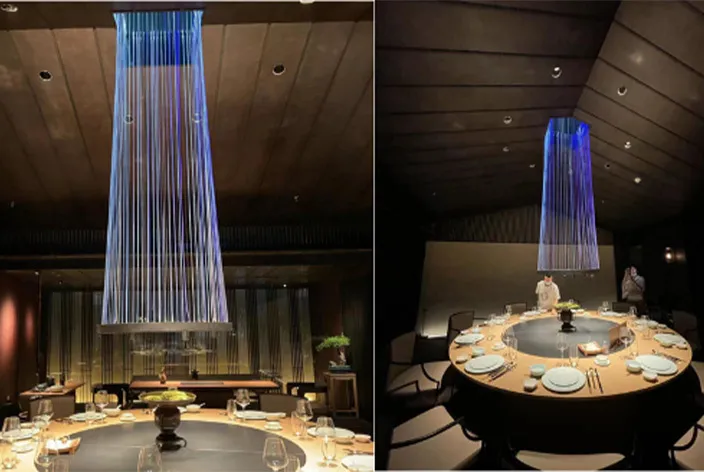
Lighting isn't just about seeing your plate - it's about
feeling the space
around you. Picture this: you walk into a restaurant where the entrance has this soft, welcoming glow that makes you instantly relax. Then you move to the bar area where playful neon accents get your energy up. Finally, you settle in your booth where warm, intimate lighting makes you lean in closer to your date without even thinking about it. That's the magic of smart lighting design.
Did you know?
A Cornell University study found customers spent 24% longer in spaces with warm lighting than those with brighter lighting. Good lighting isn't decorative - it's profitable.
The Art of Layered Lighting
Think of lighting like seasoning - too little makes everything bland, too much overpowers the dish. The magic happens when you combine different flavors:
Ambient: Your foundation flavor
This is your base - the gentle wash of light that fills the entire space without hitting anyone directly in the eyes. We're talking ceiling-mounted fixtures or cove lighting that bounces softly off walls. Keep this layer warm (about 2700K) like honey butter spreading across toast. Places like cozy bistros love this because it makes everyone look good under its forgiving glow.
Task: Where function meets form
Now let's get practical - where people actually need to
do things
. Kitchen counters need bright, shadow-free lighting (look into high-CRI LED strips under cabinets). Tables need adjustable pendants that brighten when customers are deciding between options from the menu, then subtly dim when they're lingering over dessert. For servers carrying hot plates, make sure pathways have clear but subtle guide lighting along floor edges.
Accent: The flavor bombs
This is where you bring the drama! Tiny spotlights that make cocktails shimmer like liquid gems. Backlit display cases where desserts look Instagram-ready. Wall grazing techniques that turn brick walls into textured masterpieces. And don't forget feature walls with integrated lighting that practically whispers "sit here" to customers.
Creating Light Partitions: A Space Within a Space
The real game-changer? Using light to create invisible walls. Instead of physical dividers that clutter space, light partitions let you carve out different zones while keeping everything flowing. Here's how to do it:
The Grand Entrance Experience
First impressions last 7 seconds - make yours count. A modern Vietnamese spot I love uses dramatic uplights on lush tropical plants, casting jungle-like shadows on the path. Then right at the door, LED strips frame the entrance like a welcoming hug. Their host stand has a custom LED-lit sculpture that subtly highlights reservation books without blinding anyone.
Pro tip:
Add motion-activated lighting near doors - it saves energy and creates that "magic welcome" effect customers love.
Bar Areas: Energize without overwhelm
Bars need buzz but not chaos. For Shelly's Tavern downtown, they clustered Edison bulb pendants at varying heights over the bar - creating pools of light that naturally grouped people. LED strip lighting on back shelves makes bottles glow like jewels, while under-counter lighting creates a sci-fi vibe on the bar surface itself. Neon signage at the cocktail station adds playful energy without shouting.
Intimate Dining Zones
Romance needs shadow! Private booths benefit from personal lighting controls - table lamps with USB ports (so guests can charge phones without killing the vibe) or tiny clustered tea lights that create flickering intimacy. One Italian spot uses light-filtering screens between booths that look like lace during the day but become glowing privacy walls at night.
Beyond the Basics: Clever Lighting Secrets
Playing with Time and Temperature
The same space needs different moods at different times. Smart systems let you:
• Morning (2700-3000K): Crisp but warm light that pairs perfectly with coffee and omelets
• Lunch (3500K): Neutral brightness for efficient service and quick turnarounds
• Evening (2200-2700K): Amber tones encouraging guests to order that extra dessert
• Late night: Color-changing LEDs that shift with live music or special events
• Morning (2700-3000K): Crisp but warm light that pairs perfectly with coffee and omelets
• Lunch (3500K): Neutral brightness for efficient service and quick turnarounds
• Evening (2200-2700K): Amber tones encouraging guests to order that extra dessert
• Late night: Color-changing LEDs that shift with live music or special events
Surprise Elements
The lighting fixtures are part of the drama too! A farm-to-table spot uses fixtures crafted from repurposed wine barrels with integrated lighting. Another suspends custom glass orbs that look like floating bubbles during the day but become glowing moons at night. These become conversation starters themselves.
Practical Magic: Solving Real Challenges
Energy & Sustainability
Green doesn't mean boring:
• Solar-powered floodlights for outdoor patios
• Motion-activated lighting in storage hallways
• Dimmable LED panels that use 90% less juice
• Programmable systems that automatically optimize energy use
• Solar-powered floodlights for outdoor patios
• Motion-activated lighting in storage hallways
• Dimmable LED panels that use 90% less juice
• Programmable systems that automatically optimize energy use
Problem Corners
That awkward column? Wrap it in LED strips and make it a feature. Low ceilings? Try recessed indirect lighting that floats above like a glowing cloud. Long, narrow spaces? Use floor LED strips to create visual pathways guiding guests naturally through the space.
Remember:
Always include safety lighting - non-slip step markers in darker zones, clearly lit exit signs, and anti-glare lighting on stairs. Safety lighting shouldn't feel like an afterthought - integrate it beautifully.
The ROI of Getting Lighting Right
This isn't just decoration - it's strategy:
• Warm lighting = 20-30% longer stays = more courses/drinks
• Well-lit menu boards = quicker decisions = higher table turnover at lunch
• Instagrammable lighting = free marketing (their customers become your advertisers)
• Flexible zoning = private events without construction
• Warm lighting = 20-30% longer stays = more courses/drinks
• Well-lit menu boards = quicker decisions = higher table turnover at lunch
• Instagrammable lighting = free marketing (their customers become your advertisers)
• Flexible zoning = private events without construction
Final Thoughts: Lighting as Atmosphere Chef
At its core, great restaurant lighting is like being a DJ mixing the perfect mood playlist. You blend bass notes (ambient), rhythmic beats (task), and soaring melodies (accent). Then you use light partitions like crossfaders between sections. The result? Customers won't say "the lighting was great" - they'll say "that place just
felt
amazing" without knowing why.
So start thinking beyond the bulbs. How should people
feel
when they walk through your door? Lean in at their tables? Remember your bar? That's the true power of lighting design. When you get it right, you're not just serving food - you're crafting unforgettable experiences with light as your secret ingredient.










