
Ever walked into your kitchen one morning to find your expensive refrigerator fried? Or discovered your security system completely dead after a storm? These aren't just inconvenient accidents - they're the invisible work of electrical surges. The problem is, electricity behaves much like water: if there's a sudden pressure increase somewhere in the system, that energy's gotta go somewhere. And unfortunately, that "somewhere" is often your delicate electrical equipment .
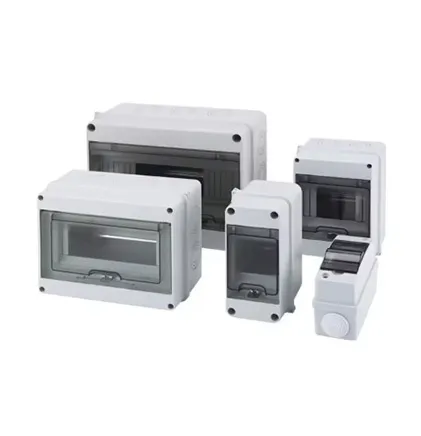
Think of your distribution box as the main water valve for your home's electrical system. Surge protectors act like precision pressure-release valves that stop your expensive electronics from becoming surge casualties when lightning strikes or power fluctuations happen.
Here's the uncomfortable truth: surges happen constantly. They're not just during thunderstorms either. About 60-80% originate right inside your home. Your air conditioner kicking on, your dryer starting its cycle, even your neighbor's lawnmower can create dangerous power spikes. The distribution box becomes ground zero where these mini-electrical tsunamis get routed through your home unless that surge protector stands guard.
Surge protectors aren't complicated devices - they're incredibly clever. They constantly monitor voltage like a hawk. When voltage stays within the normal range (120V in the US, 220V in Europe), they chill in standby mode. But when voltage starts climbing toward dangerous territory? That's when their microscopic warriors kick into action.
Without this protection, that lightning strike hitting a utility pole blocks away could travel through power lines, blow past your service panel, and annihilate anything plugged in around your house. I've seen $30 surge protectors save $15,000 worth of home theater equipment more times than I can count.
Most homeowners think plugging their TV into a $9 power strip is enough. That's like putting a screen door on a submarine! Effective protection requires layers:
The Triple-Shield Strategy:
Skipping the middle layer (distribution box) leaves your system vulnerable to medium-sized surges that primary protectors ignore but that will still fry electronics.
The distribution box surge protector acts as your home's central nervous system guardian. It stops moderate-level surges caused by downed power lines, transformer problems, or large appliances cycling on/off. Even if you have whole-house protection at the meter, the distribution box protector adds redundancy - because when it comes to protecting your home, two security layers are always better than one.
Big lightning strikes get all the attention, but the real assassin works slowly. Micro-surges constantly chip away at your electronics' lifespan without any dramatic sparks or burnt smells:
Think of it as electronic arthritis - small, constant damage accumulates until one day your expensive appliance simply won't power on. Distribution box protectors smooth out these daily assaults, making that 10-year-old refrigerator last 12 years, and helping your big-screen TV survive long past its warranty.
Don't just grab the cheapest surge protector at the hardware store. These specs determine survival odds:
The Critical Specs:
Spending an extra $50-100 on a quality unit pays dividends in replacement costs avoided. Quality protectors like those from industry leaders feature modular designs so you don't need to replace the whole unit after a major surge event. They also typically come with connected equipment warranties up to $500,000 to guarantee their protective capabilities.
Today's smart homes have increased vulnerability paradoxically. More sensitive electronics combined with unstable renewable grids create perfect storm conditions:
Meanwhile, grid transformers frequently see power fluctuations as solar and wind farms fluctuate. This combination makes surge protectors more essential than ever. They're the shock absorbers for our increasingly sophisticated electrical grid and digital lifestyle. Without them, you're trusting $100,000 worth of home systems to infrastructure designed decades before these devices existed.
So here's the bottom line: That $150-$300 investment in a distribution box surge protector might be the difference between replacing a $1,200 HVAC control board every few years and getting 15 trouble-free years from your heating system. Given that most homeowners will experience at least two significant surge events per decade, it's not if you'll need it but when.
Recommend Products












