
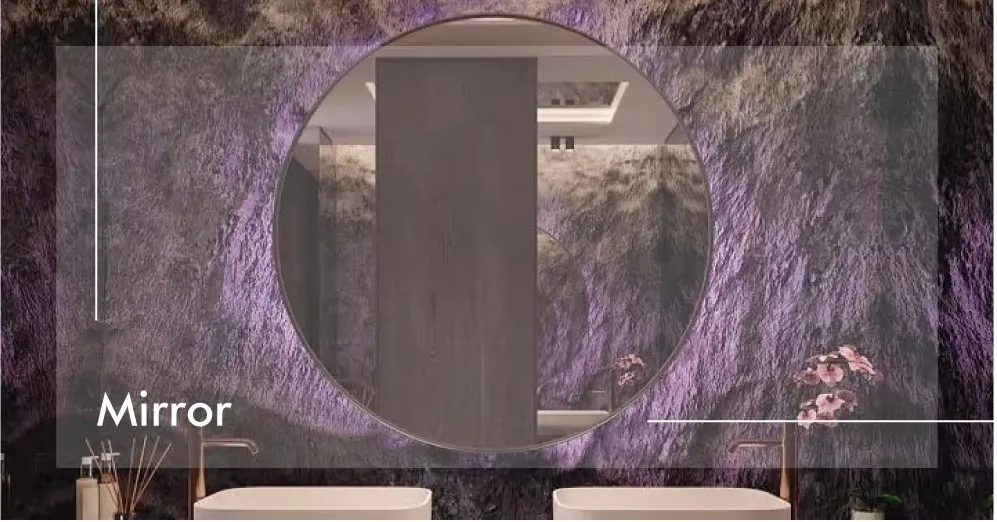
There's something magical about how sunlight dances across wooden surfaces in the morning. That warm, honey-toned glow that makes your space feel instantly alive – like stepping into a forest clearing. When I help clients create nature-inspired sanctuaries at home, wooden frame mirrors become secret weapons. They're not just functional pieces; they're storytellers weaving organic beauty into our daily rituals.
Remember that gnarled oak tree you loved climbing as a kid? Or the smooth driftwood you collected at the beach? Wood carries memories and textures that plastic simply can't replicate. And when shaped into mirror frames, it transforms how light moves through a room, how colors interact, how we see ourselves amidst natural elements. Let's explore how to harness that earthy magic.
Choosing wood for mirror frames isn't just about aesthetics. Different species bring unique personalities:
Reclaimed Barn Wood: Full of character with weathered grooves and nail holes – perfect for farmhouse or industrial spaces. Shows the beautiful scars of time.
Walnut: Rich chocolate tones with dramatic grain patterns. Adds sophisticated depth to minimalist or mid-century modern rooms.
Maple: Pale creams with subtle figuring. Wonderful for Scandinavian or coastal spaces where light reflection matters.
Live Edge Slabs: Unfinished natural edges preserve the tree's organic shape. These become stunning focal points above consoles or freestanding bathtubs.
Last summer, a client brought me a salvaged cedar branch from her childhood home. We carved it into an asymmetrical frame wrapping half her dresser mirror. Now, every morning, she sees not just her reflection but the tree she played under growing up. That's emotional design.
Smooth polished wood has its place, but true nature-inspired design thrives on tactile variety:
Try hand-carved fluting that mimics reeds along a riverbank. Or burnt shou sugi ban finishes where charred wood shows contrasting grain patterns like topographic maps. One of my favorite projects used frames with deep bark texture preserved under resin – catching light differently throughout the day.
Position matters. In a reading nook, place a textured frame where late afternoon sun rakes across its surface, casting shadow patterns on the wall. These become living artworks that change with the seasons.
Your wooden mirror shouldn't live in isolation. Create vignettes that tell nature-inspired stories:
Notice how bathrooms become personal sanctuaries when we combine function with natural poetry? That reflection of ferns in your teak mirror while steaming water flows... that's soul medicine.
Wood interacts with light unlike any material. Capitalize on this:
Backlighting: Install LED strips behind deep-set frames. Creates a halo effect as if the mirror floats on dawn light.
Candle Companions: Position pillar candles slightly below circular frames. The wood absorbs and reflects flame-dance in unexpected ways.
Golden Hour: Map where sun hits walls during sunset. Hang ashwood frames there to transform them into glowing amber panels.
I once positioned a cherrywood frame to catch a client's chandelier reflection at night. The frame's reddish tones blended with the light, bathing her room in warm sunset hues after dark.
True nature connection respects origins. Seek out:
Commissioned a frame made from fallen storm trees in your area? That local connection makes the piece more than decor – it's ecological poetry.
Wood evolves with us. Keep it vibrant:
Every spring, I rub beeswax into my oak frames while opening windows to let birdsong in. This ritual conditions the wood while connecting me to seasonal cycles. For kitchens/bathrooms, apply food-grade mineral oil monthly. Enjoy watching the grain deepen like aged whiskey.
Scratches? Leave them! They're life stories. My favorite frame has my daughter's height marks carved into the side – a living timeline.
Ultimately, nature-inspired design asks: what do we see when we pause before wood and glass? Not just hairstyles or makeup, but our place within organic patterns. That crooked walnut frame wrapping your reflection says: you're part of this wild, imperfect, beautiful world.
Start small. Maybe a single floating driftwood shelf-mirror in your hallway. Watch how visitors instinctively touch its surface. That's wood working its tactile magic. Before long, you'll have entire rooms pulsing with warmth that synthetic materials can't replicate.
After all, what good is seeing ourselves clearly if the frame holding us doesn't tell the truth about our earthly belonging?
Recommend Products












