
How a single component connects to seamless project success—especially in the fast-growing landscapes of Saudi Arabia's construction boom
Let's start with a scenario we've all heard (or lived through): A mega project in Riyadh—say, a 40-story commercial tower or a 500-bed hospital—hits a wall six months in. The issue? Electrical delays. The general contractor is juggling three suppliers for cables, two for fixtures, and a last-minute vendor for distribution boxes. Each blames the other for hold-ups, and suddenly, the project timeline slips by 12 weeks. Sound familiar?
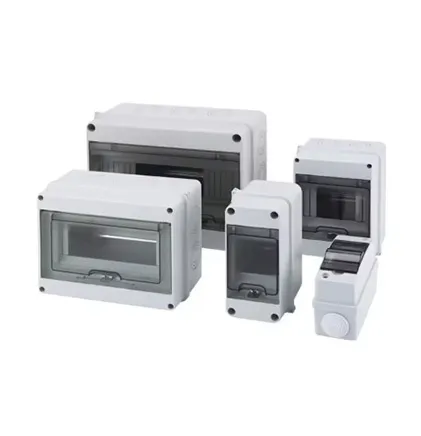
Here's the thing: In large-scale builds, electrical systems are the circulatory system—without them, nothing else works. And at the heart of that system? Power distribution boxes. Specifically, 50 Amp Power Distribution Boxes have become the unsung heroes for projects that demand reliability, safety, and scalability. Think about it: Hospitals can't risk power fluctuations during surgeries. Commercial centers can't afford downtime in retail spaces. Schools need consistent energy for labs and classrooms. A 50 Amp box isn't just a metal container with wires—it's the control center that keeps everything running, even when the stakes are highest.
But why 50 Amp specifically? These boxes are engineered to handle medium-to-high electrical loads without overheating, making them ideal for spaces with dense power needs. They're the sweet spot between smaller residential boxes (which max out too quickly) and industrial-grade units (which are overkill for most commercial or institutional projects). And when paired with the right materials—like Class A fireproof casings, which resist high temperatures and prevent flame spread—they become non-negotiable for safety compliance, especially in Saudi Arabia where building codes for public spaces are (and for good reason).
Let's pull back the curtain on traditional electrical procurement for a second. Most project managers will tell you: It's a logistical puzzle with too many pieces. You need distribution boxes, but also the right cables to connect them. Then there are the fixtures—emergency lights, panel boards, switches. Oh, and don't forget the technical specs: Does the cable gauge match the box's capacity? Are the fixtures rated for the same voltage? Suddenly, you're coordinating with five different suppliers, each with their own lead times, quality standards, and communication styles.
Take a recent example from a school construction project in Jeddah. The team sourced cables from a local supplier, distribution boxes from a European brand, and fixtures from a third vendor. Four weeks in, they realized the cables were 2mm thinner than required for the 50 Amp boxes—compromising safety and violating local regulations. By the time they reordered, the project was delayed by six weeks, and the budget had ballooned by 15% to cover rush shipping and rework.
This isn't just about delays, though. Fragmented procurement also means zero accountability. If a cable fails, the cable supplier blames the box. If the box overheats, the box supplier blames the installation. Meanwhile, the project manager is stuck in the middle, trying to fix a problem they didn't create. It's frustrating, inefficient, and avoidable.
Enter Coloria. For decades, we've operated as more than just a building material supplier —we're a partner that understands the chaos of mega projects because we've lived it. As a one-stop architectural solution provider , we don't just sell products; we solve problems. And when it comes to electrical procurement, that means everything from the 50 Amp Power Distribution Box to the last cable tie—so you can focus on building, not coordinating.
Our secret? We've built our model around three truths:
A 50 Amp Power Distribution Box is only as good as the system it's part of. That's why we don't stop at boxes—we deliver the entire electrical ecosystem. Let's break down what that looks like for a typical mega project:
Still skeptical about the "one-stop" difference? Let's put it side by side with traditional procurement:
| Aspect | Traditional Procurement | Coloria One-Stop Solution |
|---|---|---|
| Supplier Coordination | 5-7 vendors to manage; endless email chains and follow-ups | Single point of contact; one contract, one team, zero finger-pointing |
| Lead Time | 8-12 weeks (per component); delays compound across suppliers | 10-14 business days for full electrical package (boxes + cables + fixtures) |
| Quality Assurance | Each supplier has its own standards; no unified testing | 100% compatibility testing in our labs; full system warranty (5 years) |
| Cost Efficiency | Hidden costs (rush shipping, rework, delays) add 15-20% to budget | Transparent pricing; bulk discounts on bundled packages; no surprise fees |
Saudi Arabia's 2030 Vision isn't just a plan—it's a revolution. With $500 billion invested in mega projects (think NEOM, Qiddiya, and Riyadh's King Abdullah Financial District), the demand for reliable, efficient building solutions has never been higher. And as a Saudi Arabia building materials supplier with deep roots in the region, we're not just watching this revolution—we're helping build it.
Our local agency in Riyadh isn't just an office; it's a hub of expertise. Our team includes Saudi engineers who know the ins and outs of local regulations, from safety codes to sustainability mandates. For example, when a client in Dammam needed 50 Amp boxes for a LEED-certified hospital, we didn't just supply the boxes—we recommended energy-efficient components that aligned with the project's green building goals, helping them secure LEED Gold certification.
We're also committed to the human side of 2030 Vision. By investing in local talent—training Saudi engineers and technicians—we're not just creating jobs; we're building a workforce that understands the unique needs of Saudi projects. That means faster response times, better communication, and a partner who speaks your language (literally and figuratively).
In electrical systems, "good enough" isn't enough—especially in spaces with hundreds (or thousands) of people. That's why our 50 Amp Power Distribution Boxes are built with safety at their core. Let's dive into the details:
But safety isn't just about the box itself. It's about the entire ecosystem. That's why we also supply electrical fixtures & cables that meet the same rigorous standards. Our fire-retardant cables, for example, prevent flame spread in case of a short circuit—buying precious time for evacuation in emergency scenarios.
At the end of the day, mega projects aren't just about concrete and steel—they're about trust. Trust that your suppliers will deliver on time, on budget, and on quality. Trust that when challenges arise (and they always do), someone has your back.
For us, that trust starts with transparency. We provide real-time tracking for every order, so you know exactly when your 50 Amp boxes (or cables, or fixtures) will arrive. It continues with support: Our technical team is available 24/7 during installation, ready to troubleshoot everything from wiring questions to layout adjustments. And it ends with accountability: If something goes wrong (which, let's be honest, is rare), we fix it—no blame, no delays, no extra cost.
So, what does this mean for your project? It means fewer headaches, faster timelines, and a final result that meets (or exceeds) every standard. It means turning a fragmented electrical system into a streamlined, reliable network that powers your project for decades to come.
Ready to stop coordinating and start building? Let's talk. Because in the world of mega projects, the right partner isn't just a luxury—it's a necessity.
Recommend Products












