
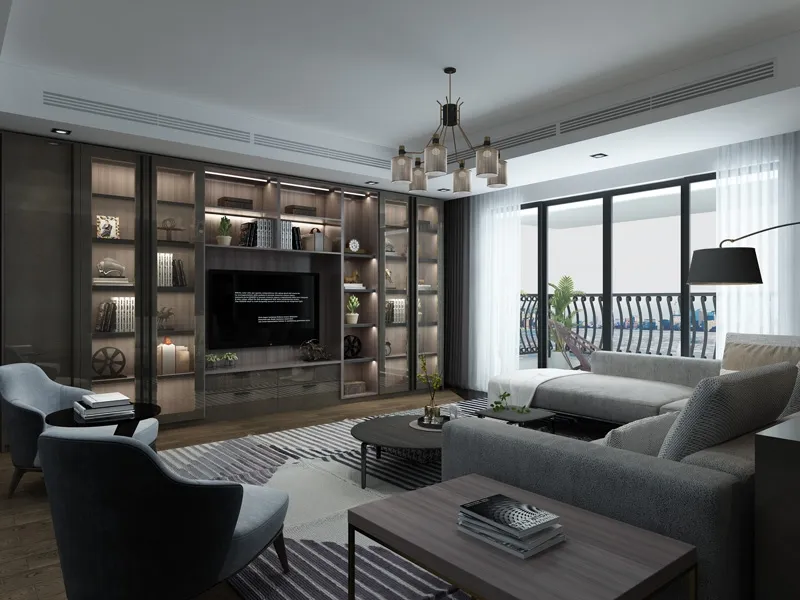
How furniture evolves from screen housing to artistic centerpiece in the age of spatial computing and sustainable living
Remember the frustration of wrestling with molded plastic packaging? That era is ending faster than you can say "sustainability report." Brands like IKEA and Article have pioneered flat-pack solutions, but 2025 takes this further through material innovation. The new TV cabinet arrives in packaging made of mushroom mycelium or sugarcane pulp that dissolves in your backyard compost within 90 days. Inside, you won't find petroleum-based foams but organic cotton padding dyed with beetroot extract.
The "furniture unboxing" TikTok trend shows designers using the packaging itself as raw material – cutting the biodegradable panels into drawer dividers or plant stands. It's a mindset shift: what was once waste becomes the first customization opportunity.
TV bezels continue their vanishing act – Samsung's 2025 Frame measures just 4mm thick – enabling radical cabinet integration. The new norm is three-mode functionality:
London-based design firm Studio Ore has prototype units using electrochromic glass that transitions from opaque to transparent with voice commands. "We're not hiding the television," explains lead designer Elara Vance. "We're giving people permission to rediscover physical space."
Forget "sustainable" as a buzzword – the new metrics are carbon-positive manufacturing. The materials leading this charge:
Grown from agricultural waste in 9 days. Water-resistant, fire-retardant, and fully compostable. Density matches birch plywood.
Developed by UC San Diego researchers. Absorbs CO₂ during production. Self-healing properties when scratched.
Treated bamboo with graphene infusion. Conducts heat better than aluminum, eliminating vents.
The shift toward these materials represents not just sustainability but performance enhancement – cabinets that actively improve indoor air quality and thermoregulate electronics.
The one-size-fits-all cabinet is going extinct. Dutch company Tylko now uses smartphone LiDAR scanning to create room-specific designs accounting for:
China's Coloriagroup.net reports 73% of their custom furniture orders now include biometric integrations – fingerprint-locked medication compartments or posture-triggered reminders to stretch during binge sessions. Personalization moves from aesthetics to biomechanics.
The cabinet as power distribution hub reaches its zenith with resonant wireless charging:
| 2024 Solution | 2025 Revolution |
| Cable management sleeves | 3-meter range wireless charging surfaces |
| Ventilation cutouts | Phase-change material cooling in cabinet walls |
| Surge protectors | AI-managed microgrid integration |
WiTricity's living room demo transmits 150W through solid oak – enough to power everything from game consoles to cocktail refrigerators. The cabinet becomes an invisible power plant using principles adapted from EV charging pads.
Paradoxically, the most advanced cabinets feature hand-blown glass doors and hand-forged iron accents. Portland's Bridge City Forge combines medieval blacksmithing techniques with parametric design:
As screens become ephemeral, the cabinet rediscovers its role as a tactile artifact. "We want people to touch the grain and feel the history," says master artisan Louisa Chen. "The TV disappears nightly – the cabinet remains as heritage."
With spatial computing, cabinet surfaces become input devices:
Google's experimental Aurora system transforms cabinet fronts into contextual displays – weather forecasts in the morning, recipe timers at dinner, meditation guides at night. This isn't a screen replacement but environmental integration – information dissolves into living spaces.
The TV cabinet's evolution follows technology's greatest trend: the best technology disappears. Not into thin air, but into material intelligence and spatial awareness. What remains isn't furniture to hide technology, but curated space that honors both digital content and physical presence. The 2026 cabinet isn't just where the TV lives – it's where you rediscover the art of presence between binge sessions.
As Sony's Living Space Lab puts it: "We're not designing for pixels anymore. We're designing for eyelashes." The distance between your screen and your sofa matters less than the quality of air you breathe while watching, the warmth of the wood grain beneath your fingertips, and the knowledge that your entertainment hub is quietly healing the planet rather than harming it.
Recommend Products












