
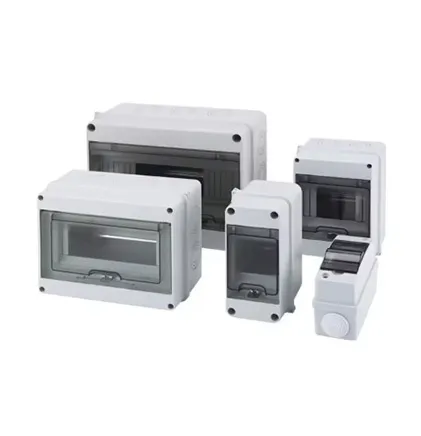
When it comes to building safe, reliable electrical systems—whether in a cozy home, a bustling commercial space, or a large-scale construction project—every component matters. And at the heart of many low-voltage setups lies a unsung hero: the 12 volt power distribution box. But not all distribution boxes are created equal. The secret to a box that lasts, performs, and protects? It all starts with the materials. Let's dive into why high-quality materials make all the difference, and how a trusted building material supplier like Coloria is redefining durability in this essential component.
Think about where a power distribution box lives. It might be tucked away in a utility closet, mounted on a wall in a commercial kitchen, or even installed outdoors in a covered area. It's exposed to temperature fluctuations, humidity, dust, and sometimes even accidental bumps or spills. A box made with cheap plastics or flimsy metals might work for a few months, but over time? Cracks form, connections loosen, insulation breaks down—and suddenly, you're looking at short circuits, power failures, or worse, safety hazards.
A 12 volt system is often used for sensitive electronics: home automation controls, LED lighting, security cameras, or low-voltage appliances. These systems rely on stable power flow, and a faulty distribution box can disrupt everything from your morning coffee maker to a hospital's critical monitoring equipment. That's why material quality isn't just about lifespan—it's about reliability, safety, and peace of mind.
At Coloria, we've spent decades understanding the unique demands of electrical systems in diverse environments, from the scorching heat of Saudi Arabia to the humid climates of coastal regions. As a one-stop architectural solution provider, we don't just supply components—we engineer them to fit the full lifecycle of a building, from design to delivery. And when it comes to our 12 volt power distribution boxes, we leave no stone unturned in choosing materials that stand the test of time.
So, what makes a distribution box "high-quality"? Let's break down the critical components and the materials that set top-tier boxes apart. Coloria's 12 volt power distribution boxes are built with a focus on four core material categories, each selected for specific performance benefits:
The outer housing is the box's first line of defense. It needs to resist impact, block dust and moisture, and withstand temperature extremes. While some manufacturers cut corners with thin, brittle plastics, we opt for reinforced polycarbonate (PC) blends or powder-coated aluminum alloys , depending on the application.
Reinforced PC is a game-changer. It's virtually unbreakable—imagine dropping a tool on it during installation, and it barely scratches. It's also heat-resistant, handling temperatures from -40°C to 120°C without warping. For outdoor or industrial settings, we use powder-coated aluminum, which adds an extra layer of corrosion resistance. Unlike untreated metals, this finish won't rust or fade, even in salty coastal air or dusty desert conditions.
Inside the box, the terminals, bus bars, and insulation materials are where the real work happens. Cheap terminals might use low-grade brass or even copper-plated steel, which corrode over time, leading to poor conductivity and overheating. We use high-purity electrolytic copper for our terminals and bus bars. Why? Copper is an excellent conductor, and its natural resistance to corrosion (when properly treated) ensures consistent performance for decades. Each terminal is also coated with tin to prevent oxidation, a small detail that makes a big difference in long-term reliability.
Insulation is another critical factor. We choose flame-retardant polyamide (PA66) for terminal blocks and internal dividers. PA66 is self-extinguishing, meaning if a spark occurs, the material won't catch fire or spread flames. It's also resistant to chemicals, so even if cleaning agents or oils come into contact with the box, the insulation stays intact.
A box is only as good as its ability to keep out dust and moisture. That's where seals and gaskets come in. Many budget boxes use generic rubber gaskets that harden and crack after a few years of temperature cycles. We use food-grade silicone rubber for our gaskets. Silicone maintains its flexibility in extreme heat and cold, creating a tight seal that blocks dust, water, and even insects. It's also UV-resistant, so even if the box is installed near a window with direct sunlight, the gasket won't degrade.
It might seem trivial, but the screws, brackets, and mounting clips that hold the box in place matter too. We use stainless steel hardware for all mounting components. Stainless steel resists rust and corrosion, ensuring the box stays securely attached to the wall or panel, even in humid environments like bathrooms or kitchens. No more stripped screws or brackets that snap when you need to access the box for maintenance.
Pro Tip: When shopping for a 12 volt distribution box, ask the supplier about material certifications. Look for standards like UL 94 (flame resistance), IP65 (ingress protection), or RoHS (restriction of hazardous substances). These certifications are proof that the materials meet rigorous safety and durability benchmarks.
As a leading building material supplier with decades of experience in the Middle East and beyond, Coloria doesn't just "source" materials—we curate them. Our 12 volt power distribution boxes are a perfect example of how our global network, local market knowledge, and commitment to quality come together.
We work with trusted suppliers across Europe, Asia, and the Middle East to source raw materials. For example, our polycarbonate housing is sourced from specialized manufacturers in Germany, known for their strict quality control. Our copper terminals come from suppliers in Turkey with a reputation for high-purity metals. And because we're a saudi arabia building materials supplier with a local office in Riyadh, we understand the unique challenges of the region—like extreme heat and dust—and adjust our materials accordingly. For instance, boxes destined for Saudi projects include extra dust filters and heat-resistant silicone gaskets to handle temperatures that often exceed 45°C in summer.
Before any distribution box leaves our facility, it undergoes a battery of tests. We subject samples to 1,000 hours of salt spray testing to check corrosion resistance, thermal cycling from -40°C to 120°C to simulate desert days and cold nights, and mechanical shock testing to ensure they can handle rough handling during installation. We even test the gaskets for compression set—how well they bounce back after being squeezed for years—to ensure long-term sealing performance.
The result? A box that's not just compliant with industry standards, but exceeds them. While many competitors offer a 2-year warranty, we stand behind our materials with a 5-year warranty on all 12 volt distribution boxes. That's how confident we are in the materials we choose.
| Test Type | Industry Standard | Coloria's Performance |
|---|---|---|
| Salt Spray Resistance | 500 hours (no rust) | 1,000 hours (no rust or pitting) |
| Thermal Cycling | -20°C to 85°C (50 cycles) | -40°C to 120°C (100 cycles, no warping) |
| Impact Resistance | 10J impact (no cracks) | 20J impact (no cracks, minimal deformation) |
| IP Rating | IP54 (dust and water splashes) | IP65 (dust-tight, water jets from any direction) |
It's one thing to talk about materials in a lab, but how do they perform in real buildings? Let's look at a few scenarios where Coloria's 12 volt power distribution boxes have proven their mettle, thanks to high-quality materials.
Modern homes are full of low-voltage devices: smart thermostats, LED lighting, security systems, and even outdoor landscape lights. A 12 volt distribution box is often the central hub for these systems. In a luxury villa project in Jeddah, Saudi Arabia, we installed our distribution boxes in 50+ homes. Five years later, during a routine maintenance check, the boxes looked as good as new. The polycarbonate housing hadn't yellowed, the silicone gaskets were still flexible, and the copper terminals showed no signs of corrosion—even in the humid coastal air. Homeowners reported zero issues with power disruptions, and the local electrician noted that the boxes were still easy to open and rewire, thanks to durable hinges and stainless steel screws that hadn't seized up.
In busy commercial settings like restaurants or retail stores, distribution boxes take a beating. They're accessed frequently by maintenance crews, exposed to grease (in kitchens) or cleaning chemicals (in malls), and need to handle constant power draw. A hotel in Riyadh installed our boxes in their kitchen and laundry areas three years ago. The kitchen boxes are near ovens and dishwashers, subject to high heat and steam, while the laundry boxes are exposed to detergent fumes. When we checked in recently, the boxes were still operating flawlessly. The powder-coated aluminum housing in the kitchen had resisted grease buildup and was easy to clean, and the silicone gaskets in the laundry area had prevented detergent residue from seeping into the internal components. The hotel's facilities manager noted, "We used to replace distribution boxes every 2-3 years. With Coloria's boxes, we haven't had a single failure. The materials really make the difference."
For outdoor installations like construction sites or agricultural facilities, the challenges are even greater: rain, dust, extreme temperatures, and rough handling. A solar farm in the Saudi desert uses our 12 volt boxes to distribute power from solar panels to monitoring equipment. The boxes are mounted on poles, exposed to direct sunlight and sandstorms. After two years in the desert, the polycarbonate housing is still clear (no UV damage), the seals have kept out sand, and the internal components are corrosion-free. The project engineer commented, "We were worried about the heat and dust, but these boxes have held up better than we expected. The materials are clearly designed for harsh conditions."
At the end of the day, a power distribution box is just one component in a larger building puzzle. But when you choose Coloria, you're not just getting a box—you're getting the support of a one-stop architectural solution provider that understands every part of your project.
Need electrical fixtures & cables to go with your distribution box? We've got you covered. Looking for other building materials like flooring, ceiling panels, or even custom furniture for the same project? Our full (full-category integration) means you can source everything from one supplier, ensuring compatibility and saving time. And with our local presence in Saudi Arabia, you get on-the-ground support, fast delivery, and technical expertise tailored to the region's unique needs.
We also believe in sustainability. Many of the materials in our distribution boxes are recyclable, and we're constantly exploring greener alternatives—like using recycled polycarbonate for housing or low-VOC powder coatings. It's part of our commitment to Saudi's Vision 2030, which emphasizes sustainable development and local manufacturing.
A 12 volt power distribution box might not be the most glamorous part of a building, but it's one of the most critical. And when it comes to this small but mighty component, skimping on materials is never worth the risk. A box made with high-quality polycarbonate, copper, silicone, and stainless steel isn't just more durable—it's safer, more reliable, and ultimately more cost-effective. After all, replacing a failed box costs far more than investing in a quality one upfront.
At Coloria, we're proud to stand behind materials that make a difference. Whether you're building a home, a hotel, or a skyscraper, we're here to provide distribution boxes that last as long as your project—and beyond. Because when it comes to electrical systems, peace of mind starts with the materials inside.
Recommend Products












