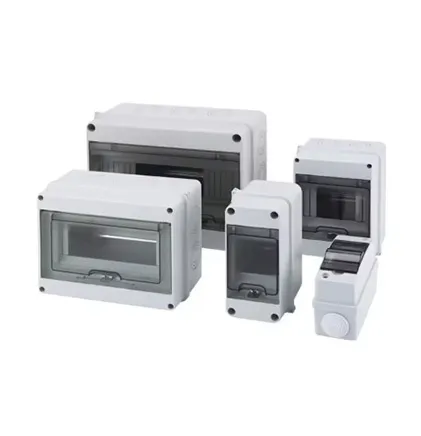
Every building project, whether a single-family home or a multi-story commercial complex, depends on a reliable electrical infrastructure. At the heart of that infrastructure sits the
12 volt power distribution box, a component that routes and protects low-voltage circuits powering everything from LED lighting systems to security cameras and access control panels. While often overlooked in the early planning stages, the quality and configuration of your distribution box can make the difference between a maintenance-free installation and years of callbacks.
What Is a 12 Volt Power Distribution Box and Why Does It Matter?
A
power distribution box is a centralized enclosure that takes incoming electrical power and distributes it across multiple output circuits, each protected by its own fuse or circuit breaker. In 12-volt systems, which are standard for low-voltage applications like LED lighting, CCTV, smart home devices, and telecom equipment, the distribution box ensures that each connected device receives stable, protected power.
The importance of selecting the right unit goes beyond basic functionality. A well-designed distribution box prevents overloads, simplifies troubleshooting, and keeps the installation organized. In commercial settings where dozens of circuits may run through a single enclosure, a poorly chosen box can create a safety hazard and complicate future maintenance. For residential projects, a clean distribution setup means homeowners can easily identify and reset tripped circuits without calling an electrician.
Key takeaway: The distribution box is not just a housing, it is the command center of your low-voltage electrical system. Investing in quality here protects everything downstream.
12V vs Higher-Voltage Distribution: When to Choose Each
The choice between 12V, 24V, and standard mains-voltage distribution depends on the application. Twelve-volt systems are the industry standard for security cameras, LED strip lighting, door access systems, and many smart home controllers. The lower voltage is inherently safer, permits smaller-gauge wiring in many cases, and aligns with the input requirements of most consumer and commercial low-voltage devices.
For projects that combine low-voltage and mains-voltage equipment, a hybrid approach is common: a dedicated
electrical fixtures & cables infrastructure handles the 12V distribution while a separate panel manages the 120V or 240V circuits. This separation simplifies code compliance and makes it easier to expand or modify either system independently.
The key factors to evaluate when deciding on voltage are the total connected load, the distance from the power source to the devices, and the local electrical code requirements. Longer cable runs at 12V experience more voltage drop than at 24V, so larger-gauge wire may be needed. For projects where runs exceed 50 feet, a 24V system or a step-up/step-down configuration may be worth considering.
Essential Features to Look for in a Distribution Box
Not all distribution boxes are built equal. When sourcing for a project, here are the features that separate a professional-grade unit from a budget compromise:
Individual circuit protection: Each output channel should have its own fuse or resettable circuit breaker. This prevents a fault on one device from taking down the entire system.
Clear labeling: Circuits should be clearly marked for quick identification during installation and troubleshooting. A unit with a built-in labeling strip or write-on surface saves time on every service call.
Enclosure quality: Look for a flame-retardant, impact-resistant enclosure rated for the installation environment. Indoor units need adequate ventilation; outdoor units require weatherproof IP-rated housings.
Adequate terminal capacity: The input and output terminals should accept the wire gauge required by the project. Undersized terminals lead to loose connections, overheating, and intermittent faults.
Expansion headroom: Choose a box with more channels than currently needed. A 20% to 30% spare capacity buffer accommodates future additions without requiring a complete replacement.
Integrating Distribution Boxes into the Broader Electrical System
A distribution box does not work in isolation. It connects to upstream circuit protection, downstream devices, and often to complementary components like
switches & socket panels and cable management systems. Planning the complete electrical layout before ordering components ensures that every part fits together seamlessly.
For larger projects, especially commercial and multi-unit residential developments, sourcing all electrical components from a single supplier eliminates compatibility issues and simplifies logistics. When distribution boxes, cables, switches, and sockets all come from one coordinated source, the installer works with consistent terminal types, matching color codes, and uniform quality standards across the entire installation.
This is where a
distribution box sourced through a comprehensive building materials provider becomes a strategic advantage. Instead of juggling multiple vendors with different lead times, minimum order quantities, and quality standards, project managers can consolidate procurement and focus on the build itself.
Common Installation Mistakes and How to Avoid Them
Even experienced contractors encounter pitfalls when installing distribution boxes. The most frequent issues include:
Overloading circuits: Tally the total wattage of all connected devices and confirm it stays below the rated capacity of each channel. Account for inrush current on devices like motors and LED drivers.
Ignoring voltage drop: On long cable runs, the voltage at the device end can drop below the required operating range. Use a voltage drop calculator during the design phase and upsize conductors when necessary.
Mixing wire types: Stick to the recommended wire type for the terminal block. Mixing solid and stranded wire without proper ferrules or crimp terminals leads to loose connections over time.
Poor grounding: A floating or high-resistance ground path can cause erratic device behavior and create a shock hazard. Verify ground continuity at every connection point.
Inadequate ventilation: Distribution boxes generate heat. Installing them in sealed, unventilated cavities leads to premature component aging and nuisance tripping.
Sourcing Strategy: What to Look for in a Supplier
The quality of the distribution box is only as good as the manufacturer behind it. When evaluating suppliers, consider these factors:
Product range breadth: A supplier that carries distribution boxes, cables, switches, sockets, and related electrical components can provide a coordinated package rather than a piecemeal assortment.
Quality certifications: Look for compliance with international standards such as IEC, CE, and UL where applicable. Certifications are not just paperwork, they are proof that the product has been independently tested to meet safety and performance benchmarks.
Customization capability: For large-scale or specialized projects, the ability to customize enclosure sizes, circuit configurations, and labeling can significantly reduce on-site labor.
Logistics and lead times: Consistent availability and reliable shipping schedules prevent costly project delays. A supplier with established export experience and overseas agent networks can navigate international logistics more efficiently.
Future-Proofing Your Electrical Infrastructure
Building projects have long lifecycles. The electrical system installed today needs to accommodate technologies that may not yet exist. Plan for expansion by running spare conduits to key locations, leaving room in the distribution enclosure for additional circuit breakers, and documenting the as-built layout so future technicians can work efficiently.
As smart building technologies continue to evolve, the demand for clean, reliable low-voltage power distribution will only increase. From automated shading systems to networked sensor arrays, the 12-volt backbone of a modern building carries more critical functions than ever before. A thoughtfully designed distribution system built with quality components is an investment that pays dividends over the entire life of the structure.
Partner with a One-Stop Building Materials Supplier
At COLORIA GROUP, we supply a comprehensive range of
12 volt power distribution box solutions alongside the full spectrum of building materials for residential and commercial projects. From electrical fixtures and cables to walls, flooring, sanitary ware, customized furniture, and elevators, our product portfolio covers all 13 categories of construction materials under one roof.
With our headquarters in Foshan, China, and an established agent network in Saudi Arabia, we serve contractors, developers, and project owners across the globe. Our team combines decades of industry experience with a commitment to quality, competitive pricing, and reliable delivery schedules.
Whether you are outfitting a single villa or sourcing materials for a large-scale commercial development, COLORIA GROUP is your trusted partner. Contact us today to discuss your project requirements and discover how our one-stop solution can simplify your procurement and elevate your build quality.